
OBSERVER: Exploring the EU Space Programme through the new EU Space website
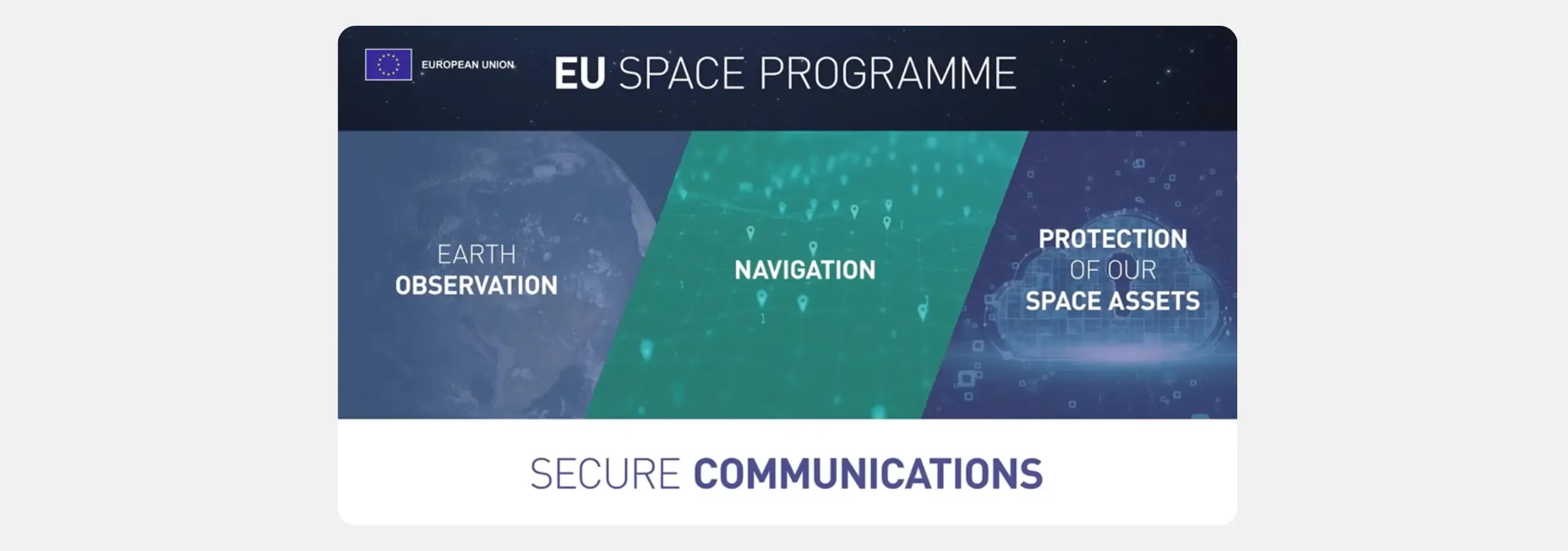
Launched at the European Space Conference, the new EU Space website brings information about the EU’s space activities together onto a single platform. Designed as a central entry point for information about the EU Space Programme, the platform provides a clearer overview of space-based services and their applications. The website consolidates information which was previously spread across several institutional websites and platforms. By organising content around thematic areas and practical applications, it presents EU space activities in a way which is easier for citizens to understand and explore. In this Observer, we explore the new EU Space website and some of its key features.
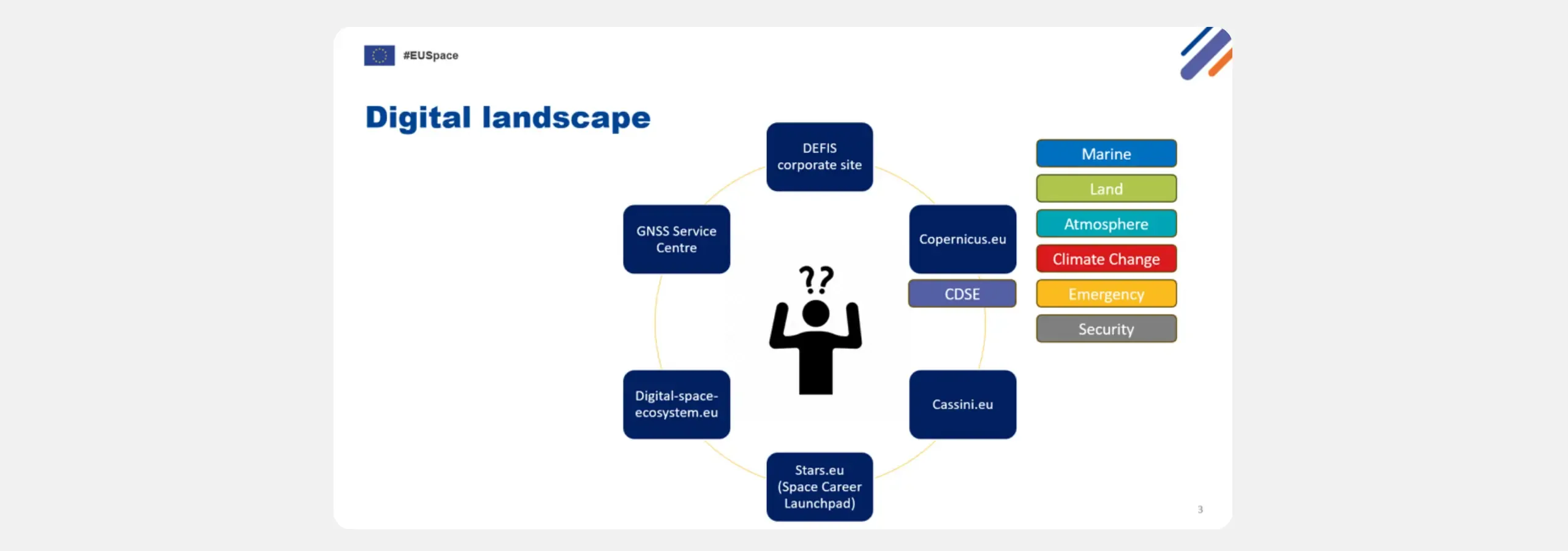
The EU Space Programme is composed of a wide range of activities, services, and initiatives. Information about these activities were previously presented across different websites and platforms, each developed for specific audiences. This arrangement created a decentralised online presence, with information distributed across multiple domains. Each website used its own style, tone, structure, and terminology. Users therefore needed to refer to and compare several sources to obtain a comprehensive overview of the EU’s many activities in space.
A user seeking Earth Observation (EO) data would have visited copernicus.eu and its individual service pages. Users seeking information on navigation services, space safety, or business and innovation opportunities would have turned to the European Union Agency for the Space Programme (EUSPA) website. Those following policy developments, by contrast, would have consulted the relevant European Commission websites.
The new EU Space website addresses this challenge by creating a single gateway to the EU’s space activities. By bringing together information which was previously dispersed across multiple sites the platform delivers a clearer and more accessible overview of Europe’s space endeavours. The website presents information about the EU Space Programme within a consistent structure and visual identity. Designed with accessibility in mind, it caters to a broad audience including citizens, policymakers, researchers, businesses, and students interested in the European space sector.
Rather than functioning as a technical repository, the website serves as a public-facing portal which explains how space-based services support society. By simplifying how information is presented and organised, the platform helps users explore all the components of the EU Space Programme more easily. It also helps users understand the Programme’s role within the EU and beyond.
A website organised around users and practical applications
Satellite-based services depend on complex technologies and infrastructure, but many of their applications support everyday activities. A central objective of the website is to explain the benefits of the EU Space Programme more clearly.
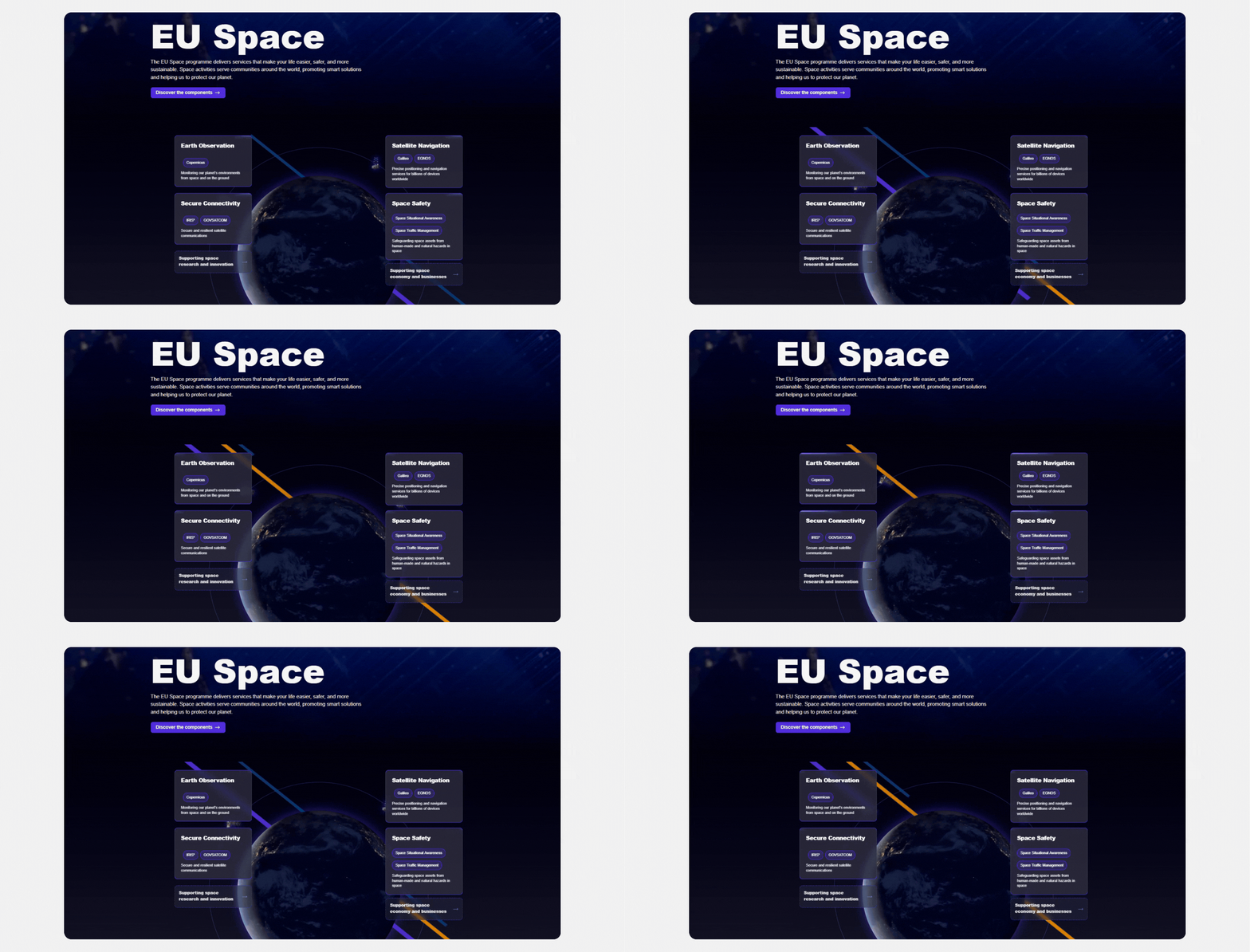
The website presents EU space activities through thematic areas which reflect practical applications of space technologies. Sections on Earth Observation, satellite navigation, secure connectivity, and space safety explain how European space infrastructure supports public and commercial services. These services help users monitor the environment, improve transport systems, respond to crises and emergencies, and prepare for potential disruptions.
This approach also makes the website more accessible. By focusing on practical applications rather than institutional structures, the platform supports readers unfamiliar with the names of specific EU Space Programme components. The readers can therefore understand how EU space activities support services relevant to society. This structure provides a clearer and more user-oriented explanation of the EU Space Programme’s societal value.
A developing platform for EU Space information and opportunities
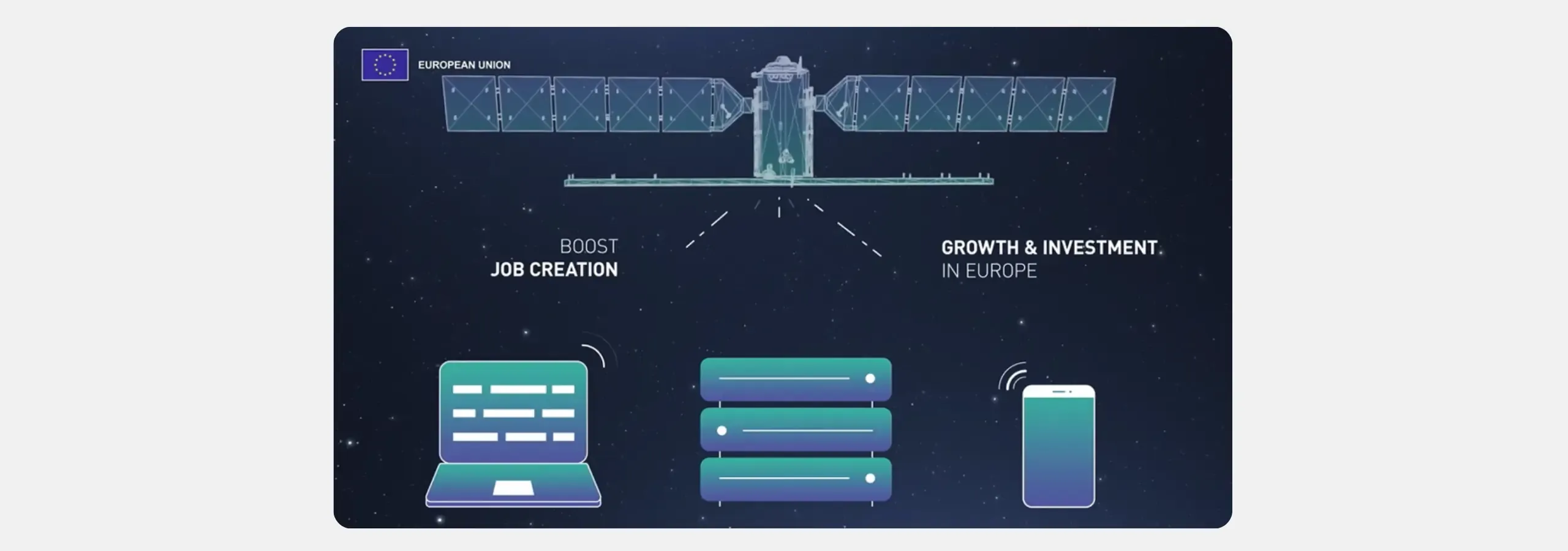
Beyond providing information about space services, the website also highlights the wider ecosystem surrounding Europe’s space activities. This includes research initiatives, entrepreneurship programmes, and collaboration networks which support the growth of the European space sector.
The website contains dedicated sections for researchers, entrepreneurs, and industry representatives. Initiatives such as CASSINI support start-ups and small and medium-sized enterprises seeking to develop innovative space-based solutions. Information on access to space and innovation opportunities also helps companies and researchers identify pathways for participation in European programmes.
The website also provides resources intended to support collaboration across the sector. The Digital EU Space Ecosystem page, for example, connects organisations interested in partnering on space-related projects, while the EU Space Networks section presents communities and organisations active in the field.
At the same time, the website places a strong emphasis on the next generation of space professionals. Through initiatives such as the Space Career Launchpad, students and early-career professionals can discover opportunities to connect with employers and explore career paths within Europe’s growing space sector. These audience-specific sections form part of a broader effort to make the platform easier to navigate and use.
An important planned development is the creation of a centralised repository of EU space-related funding opportunities. At present, funding calls connected to the space sector can be found across different instruments and programmes. The proposed repository will bring these together in a single place, helping researchers, companies, and innovators identify opportunities more easily. As its content expands, the website will become a central source of information about collaboration and opportunities in the European space sector.
Ensuring continuity across the EU Space Programme
While the new platform consolidates information about the EU Space Programme, the underlying infrastructure and services supporting the EU’s space activities will remain unchanged. Some component websites have already been archived as part of the transition, while others continue to operate as their content is progressively integrated into the new platform. Throughout this process, access to services and data will remain uninterrupted.
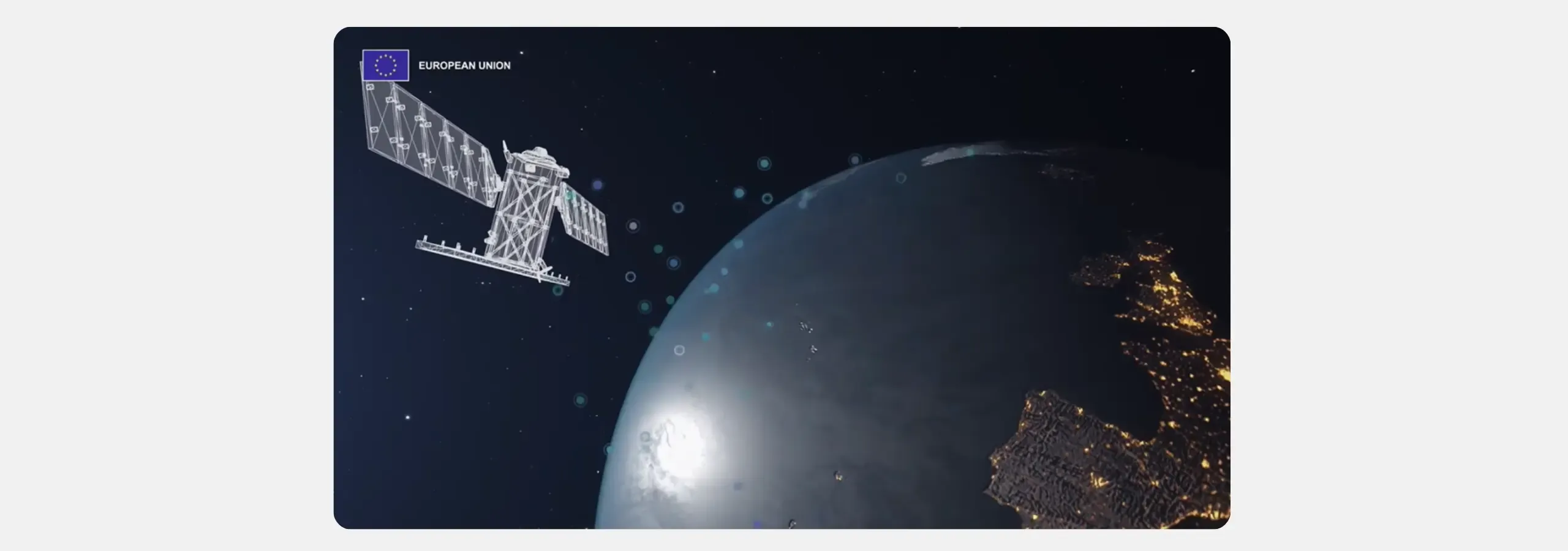
Importantly, the migration does not affect the technical infrastructure supporting EU space services. Systems delivering satellite data, navigation signals, and other operational services will continue to run as before, ensuring continuity for users and stakeholders.
As information and resources are consolidated on the new platform, legacy websites will be archived, establishing the EU Space website as the central hub for information about Europe’s space activities. The EU Space Observer will continue to be published as the dedicated information channel of the EU Space Programme. It will be hosted on the new website, in which readers can find the latest articles alongside easier access to information on all components of the Programme.