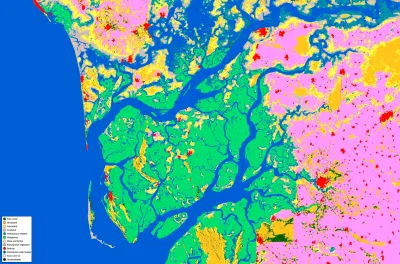
The global population has quadrupled in just a century, reaching eight billion in 2022. A growing population means rising demand for food, making sustainable agriculture more critical and necessary than ever. Yet, modern farming faces mounting challenges, including soil degradation linked to pesticide use and plastic pollution, as well as more...
Results (253)
Europe’s space strategy does not only rely on satellites and launch systems, but also on the digital infrastructures which connect people, ideas, and capabilities across the continent. As Europe’s space landscape grows both in scale and in complexity, so does the need for an accessible way to join and participate. The Digital Space Ecosystem...
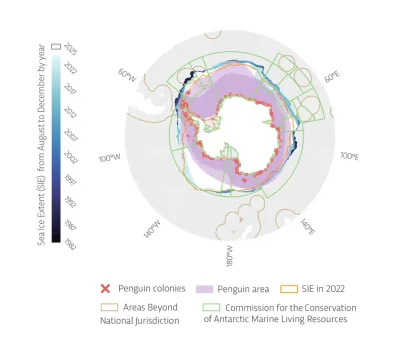
Data from the Copernicus Atmosphere Monitoring Service (CAMS) confirmed the closure of the 2025 Antarctic ozone hole on 1 December, marking the weakest and shortest‑lived ozone hole in five years. For the second year in a row, the average extent and duration of the ozone hole were notably less compared to the very large, long‑lasting holes...
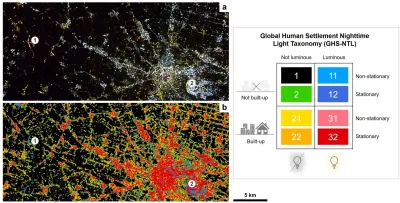
Urbanisation is reshaping the world at a pace which has surpassed earlier expectations, altering how people live and how societies plan for housing, transport, and essential services.
The EU Space Networks have grown from more than a decade of EU-funded activities which explored how to bring satellite data closer to users. These early efforts evolved into the Copernicus Academy and Copernicus Relays, which would eventually grow to more than 300 members worldwide. Their success in supporting Copernicus user uptake inspired...
Following their successful launches in 2025, two new Copernicus satellite missions, Sentinel-1D and Sentinel-5A, have returned their first images, representing important progress in the EU’s capacity to monitor the planet’s surface and atmosphere.
Europe is facing an increasingly complex mix of natural, technological, and human-driven risks, and the need for science which can guide preparedness is stronger than ever. At the EU Science for Preparedness conference in Turin, experts from research, policy, and crisis response discussed how scientific evidence can help anticipate hazards,...
The summer of 2025 in Europe highlighted the growing impact of extreme heat. According to the Copernicus Climate Change Service (C3S) Climate Bulletins, successive heatwaves in June, July, and August pushed “feels-like” temperatures to dangerous levels in parts of the continent. These recurring events highlight a clear, data-backed...
Across Europe, the demand for space skills is rising quickly, with new projects creating opportunities which extend well beyond engineering. From climate monitoring to digital services enabled by space-based assets, space is more than ever part of our everyday lives. This growth is also opening the door to new career opportunities for young...
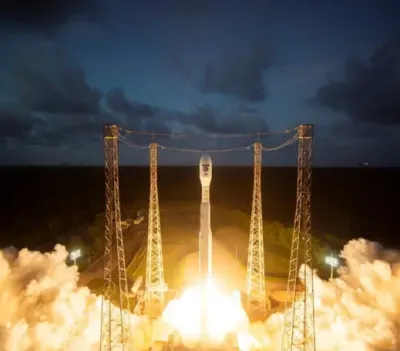
The Copernicus Sentinel 1-D satellite successfully launched last night, 4 November, aboard an Ariane 6 rocket from Europe's Spaceport in Kourou, French Guiana.
As November approaches, the EU Space Programme is preparing for its next milestone in Earth Observation (EO): the launch of Copernicus Sentinel-6B, the second of two identical satellites in Europe’s sea-level monitoring mission.
As November approaches, the EU Space Programme is preparing for its next milestone in Earth Observation (EO): the launch of Copernicus Sentinel-6B, the second of two identical satellites in Europe’s sea-level monitoring mission. Set to launch from Vandenberg Space Force Base in California, the satellite carries a sophisticated radar altimetry...
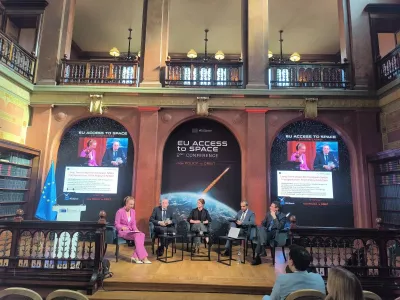
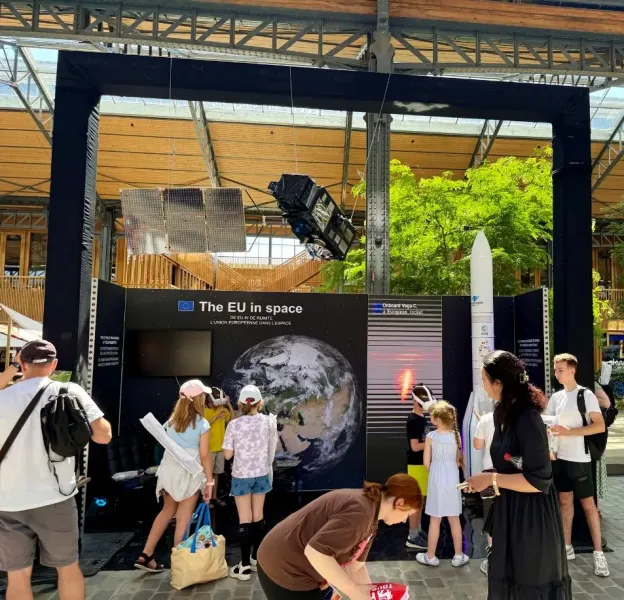
Under the Danish Presidency of the Council of the European Union, the 2025 Space Conference in Aalborg brought together policymakers, researchers, entrepreneurs, and students to discuss Europe’s priorities in space, defence, and innovation. The European Commission contributed across the programme, from the opening plenary to exchanges with...
Under the Danish Presidency of the Council of the European Union, the 2025 Space Conference in Aalborg brought together policymakers, researchers, entrepreneurs, and students to discuss Europe’s priorities in space, defence, and innovation.
Over the past seven years, the Caroline Herschel Framework Partnership Agreement (FPCUP) has strengthened the connection between the European Union’s Earth Observation programme and its user community. Through more than 220 actions carried out by 50 partners across 23 countries, it has supported the wider use of Copernicus data, encouraged...
Over the past seven years, the Caroline Herschel Framework Partnership Agreement (FPCUP) has strengthened the connection between the European Union’s Earth Observation programme and its user community.
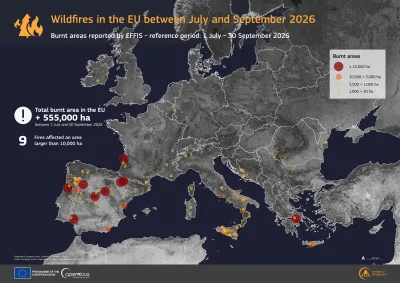
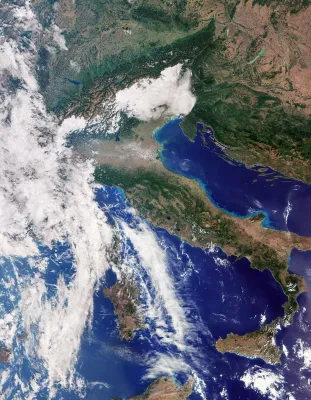
The summer of 2025 significantly affected Europe’s atmosphere. From record-breaking wildfires in southern and western Europe, to intense Saharan dust intrusions and repeated peaks in surface ozone during prolonged heatwaves, air quality was negatively impacted by multiple events. Data from the Copernicus Atmosphere Monitoring Service (CAMS)...
The summer of 2025 significantly affected Europe’s atmosphere. From record-breaking wildfires in southern and western Europe, to intense Saharan dust intrusions and repeated peaks in surface ozone during prolonged heatwaves, air quality was negatively impacted by multiple events.
2025 is another milestone year for the EU Space Programme. Following the successful expansion of Copernicus with the launch of Sentinel-5A and Sentinel-4A earlier in the year, on 4 November 2025, Sentinel-1D will lift off from Europe’s Spaceport in Kourou, French Guiana, ensuring the continuity of services on which a wide range of end users...
This year’s edition of the Copernicus Ocean State Report (OSR 9) highlights the deep and widespread links between ongoing ocean change and changes in marine ecosystems, human society, and the economy. The global ocean is affected by record-breaking temperatures, accelerating sea level rise, and continued acidification, with no part of the ocean...
Showing 1-20 of 253 results