
OBSERVER: Precise timekeeping with Galileo
Across much of Europe, people are currently enjoying long summer evenings, with clocks set one hour ahead of standard time. In October, most connected clocks will move back by one hour automatically, although some clocks still need to be changed by hand. Having the wrong time on an oven clock or even an alarm clock, can be inconvenient, but the consequences are usually minor. For Galileo, however, the margin for error is far smaller. Europe’s Global Navigation Satellite System (GNSS) relies on atomic clocks accurate to within a billionth of a second, because even a tiny error becomes a positioning error of several metres. This precision underpins space-based Positioning, Navigation, and Timing (PNT) and the essential services across finance, transport, and emergency response which depend on it. In this Observer, we examine Galileo’s timing capabilities, how they support international timing coordination, and what lies ahead for the EU’s satellite navigation system.
Clocks are an integral part of daily life, and even though many people now rely on their smartphones to tell the time, modern timekeeping developed on the basis of analogue mechanisms. Traditional clocks measure time through periodic, repeating processes such as the motion of a swinging pendulum or the oscillations of a quartz crystal. Quartz clocks prove sufficient for everyday use, but applications such as satellite navigation and the synchronisation of telecommunications networks demand far greater accuracy. Atomic clocks cater to this need.
Atomic clocks can measure time with precision down to billionths of a second. Unlike conventional clocks, their time base is derived from the behaviour of atoms transitioning between different energy states. Their long-term stability makes them well suited to satellite navigation, including use on board the Galileo satellites.
From atomic clock timing to position
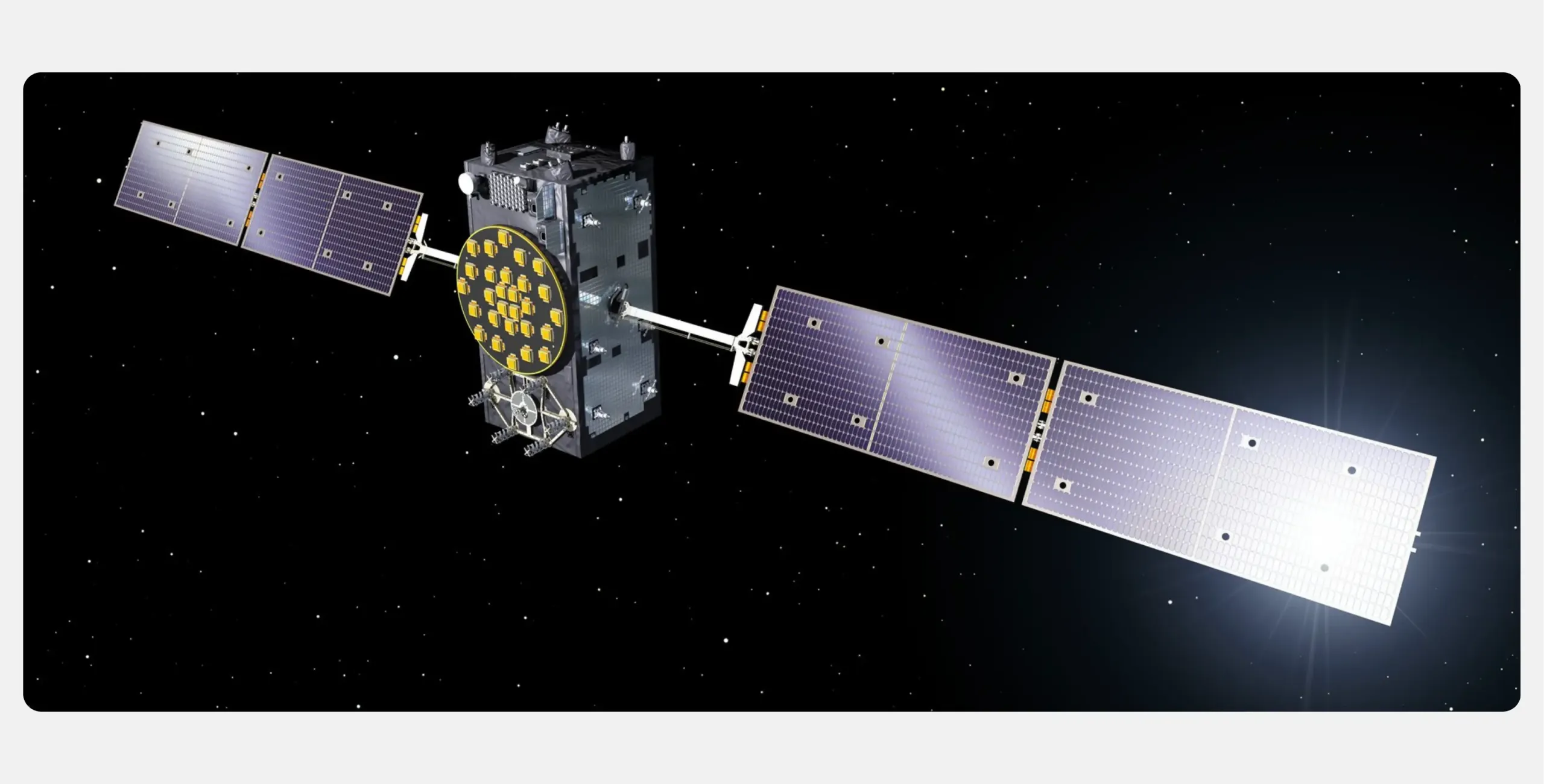
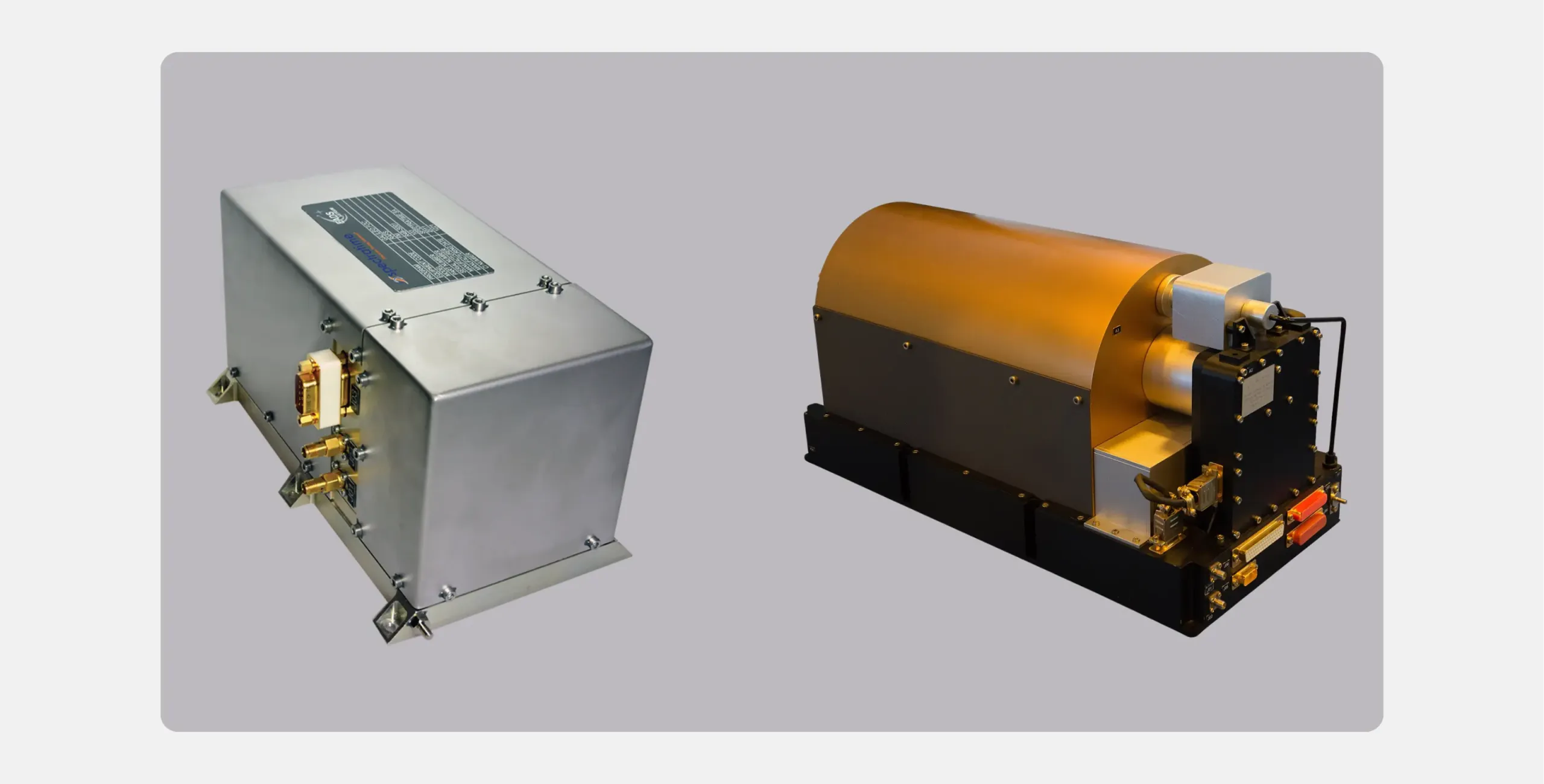
Each First Generation Galileo satellite is equipped with four atomic clocks of two types: two rubidium atomic frequency standards and two passive hydrogen masers. These clocks are essential for Galileo’s transmission of navigation signals.
Each satellite continuously broadcasts a signal containing the transmission time. A ground receiver compares the transmitted time with its own clock to calculate how long the signal took to arrive. Because the signal travels at a known speed, the measured travel time provides an estimate of the distance to the satellite. Combining measurements from several satellites allows the receiver to determine its position and correct its clock offset. This is why the clocks aboard Galileo must be exceptionally stable. Even a small timing error of a few nanoseconds, or billionths of a second, could result in a positioning error of several metres.
While it may be difficult to comprehend the scale of a billionth of a second, such precision is essential for navigation services and many systems used in daily life. Energy distribution and financial trading, for example, both rely on highly accurate timekeeping, which Galileo timing signals support.
Keeping time with Galileo
Coordinated Universal Time (UTC) is the international reference used to coordinate civil time around the world. Local time zones are expressed as offsets from UTC, with seasonal clock changes applied separately. However, UTC is not produced by a single master clock. Around 80 national and institutional time laboratories maintain atomic clocks and produce real-time local realisations of UTC, known as UTC(k), with ‘k’ identifying the laboratory. The laboratories also compare their time scales using satellite signals and other methods and submit clock and comparison data to the International Bureau of Weights and Measures (BIPM), based in Sèvres near Paris. The BIPM combines these measurements to calculate an international atomic time scale, from which UTC is derived.
Every month, the BIPM publishes ‘Circular T’. The publication reports the difference between UTC and the UTC(k) maintained by each contributing laboratory, generally at five-day intervals. These values show how closely each local realisation matched UTC and provide traceability between national or institutional time references and the international standard.
A dedicated section of Circular T reports the differences between the true international UTC and the predicted UTC broadcast by various Global Navigation Satellite Systems (GNSS). In June 2024, the BIPM added Galileo and BeiDou to this section, alongside GPS and GLONASS. This meant that Galileo’s broadcast UTC prediction would be independently compared with UTC every month on the same basis as those of the other GNSS. The inclusion of Galileo confirmed the international recognition of the quality of its timing measurements.
This was not, however, Galileo’s first contribution to international timekeeping. In June 2023, Galileo measurements were used for the first time in the official comparison of one contributing laboratory’s local realisation of UTC. Galileo measurements had previously served as a backup method but were selected for the official comparison because they were considered the most reliable available for that laboratory during the month.
The next generation of Galileo timing
Scientists and engineers are developing the next generation of Galileo with new timing capabilities and a redesigned satellite architecture.
Galileo Second Generation satellites will be equipped with six improved atomic clocks, up from four in the current generation, and will feature inter-satellite links which will provide additional time-synchronisation and ranging measurements. These measurements are intended to improve knowledge of the satellites’ orbits and clock offsets. These satellites are also designed for higher-rate communication with the ground segment and have an operational lifespan of 15 years. Additionally, they will have fully digital payloads, which can be reconfigured while the satellite is in orbit, allowing them to be more readily adapted to respond to the evolving needs of users.
The current Galileo Open Service already provides timing information. Galileo Second Generation is also being developed to support a dedicated Timing Service, which will provide additional monitoring and status information for timing users.
Beyond the clocks already designed for the first Galileo Second Generation satellites, European companies, with funding from the European Union (EU) and the European Space Agency (ESA), are developing new timekeeping technologies to broaden the diversity of European clocks qualified for space. This work is funded through the EU’s Horizon Europe programme, with development managed by ESA. Of seven designs developed by European companies, three have been selected for hardware development ahead of a possible first flight: a rubidium pulsed optically pumped clock from a consortium led by Leonardo S.p.A. (Italy), an iodine optical clock from a consortium led by SpaceTech (Germany), and a mercury ion clock from a consortium led by Safran Timing Technologies (Switzerland). The furthest along in development is Leonardo’s rubidium pulsed optically pumped clock. Under a €12 million contract signed in 2024, the consortium is developing an engineering qualification model, and, subject to successful qualification, an experimental flight model of the clock is expected to fly on a Galileo Second Generation satellite to support early in-orbit verification. The optical and ion clocks remain at earlier stages, and the European Commission will decide on any operational use once their in-orbit performance has been assessed.
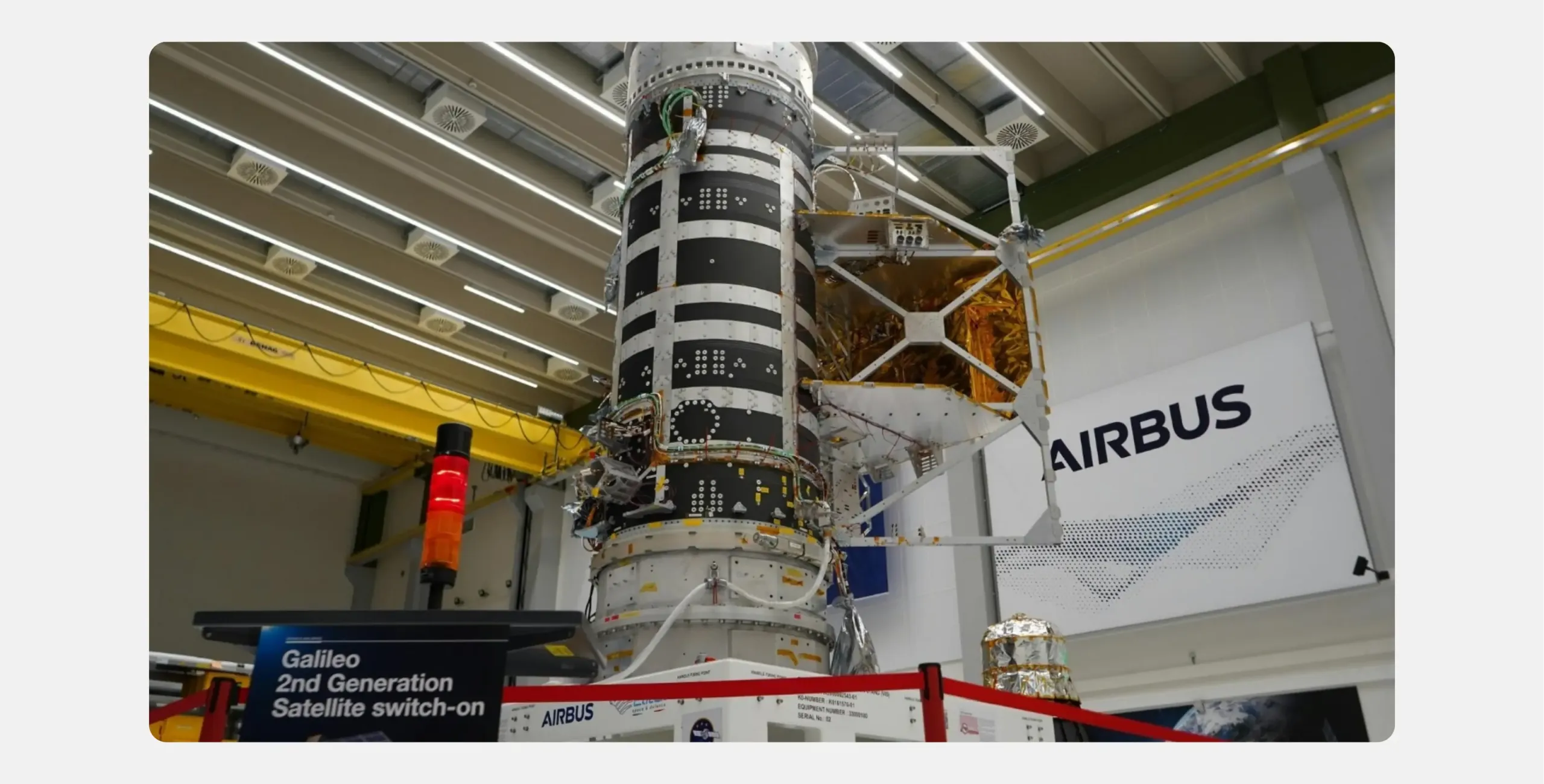
This new atomic clock technology is expected to be more precise than any of the current Galileo clocks, with a decrease in energy consumption and a mass reduction of more than 40% compared to Galileo's current passive hydrogen maser clocks.
Galileo continues to evolve to meet changing user needs and growing demand for accurate positioning, navigation, and timing services. As digital services become more deeply integrated into daily life and essential infrastructure, Galileo will become increasingly important for the operation of essential services such as navigation, telecommunications, electricity-grid management, and financial systems.