
OBSERVER: Ten years of space safety and sustainability made in the EU
With the increased number of satellites being placed in orbit, there is a rising risk of collisions with other spacecraft or debris, break-ups in orbit scattering new fragments, and some objects re-entering the atmosphere uncontrolled. For the past ten years, EU Space Surveillance and Tracking (EU SST) has helped protect space operations by monitoring these risks and providing timely warnings to satellite operators and relevant authorities. In 2016, five Member States pooled their national sensors with this objective. Today EU SST involves 19 Member States and the SST Front Desk managed by EUSPA. Together, they help protect more than 700 satellites and serve more than 400 organisations worldwide. On 21 October 2026, the European Commission brought together Member States, users, industry, and international partners to mark the anniversary. In this Observer, we look at how EU SST has evolved over the past decade and share some highlights from the anniversary celebration.
Satellites support many aspects of our daily lives, from the navigation signal on a smartphone to the weather forecasts which farmers, airlines, and emergency services use to plan their operations. Keeping those satellites safe is becoming harder. More than 1 million pieces of space debris larger than 1 cm already orbit the Earth, and more than 50,000 new satellites are expected to be launched over the next decade. A collision with another spacecraft, or even with a small fragment, can damage or destroy a satellite and disrupt the services which depend on it.
Space Surveillance and Tracking (SST) reduces this risk. Sensors such as ground-based radars and telescopes detect and follow objects in orbit, and processing centres turn these observations into warnings for satellite operators. In the EU, this capacity is implemented by EU Space Surveillance and Tracking (EU SST), a subcomponent of the Space Situational Awareness (SSA) component of the EU Space Programme.
On 21 October 2026, the European Commission gathered the EU SST community at Brussels’ Fine Arts Museum to mark 10 years of EU SST operations. Representatives of the EU SST Partnership and the EU Agency for the Space Programme (EUSPA) joined users, industry, and international partners to look back on the first decade and ahead to the next. Opening the event by video message, Andrius Kubilius, European Commissioner for Defence and Space, summed up the occasion: ‘The 10-year anniversary of EU SST means celebrating 10 years of keeping space safe.’ The celebration also included an interactive quiz on EU SST facts and figures and closed with a birthday cake, a family photo, and drinks to toast the next decade.
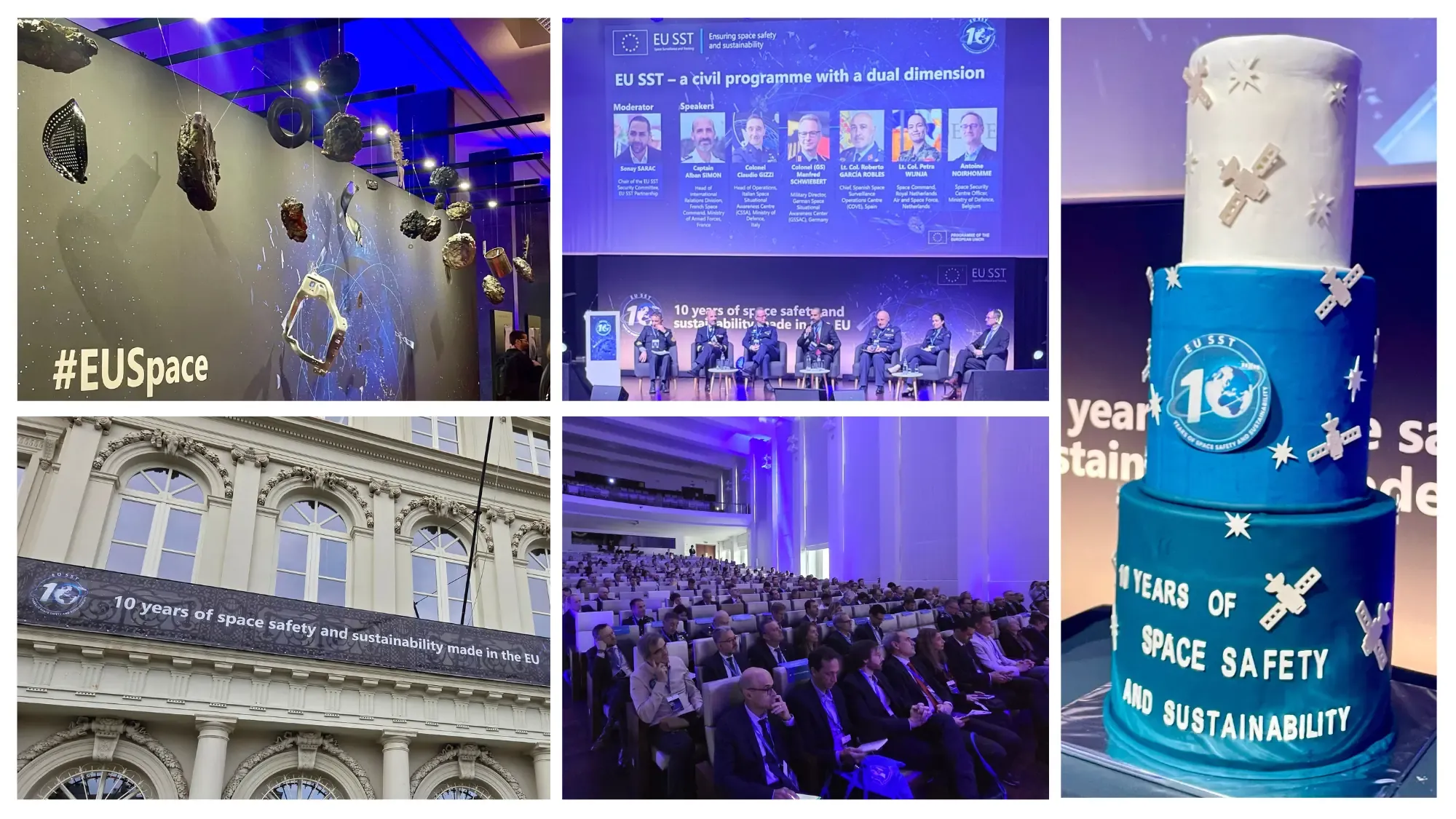
Building a shared capability
The EU laid the legal groundwork in 2014, when it adopted a framework to support SST at European level. Operations began on 1 July 2016, when five Member States networked their national sensors and processing capabilities and started providing services to a handful of EU-based satellite operators.
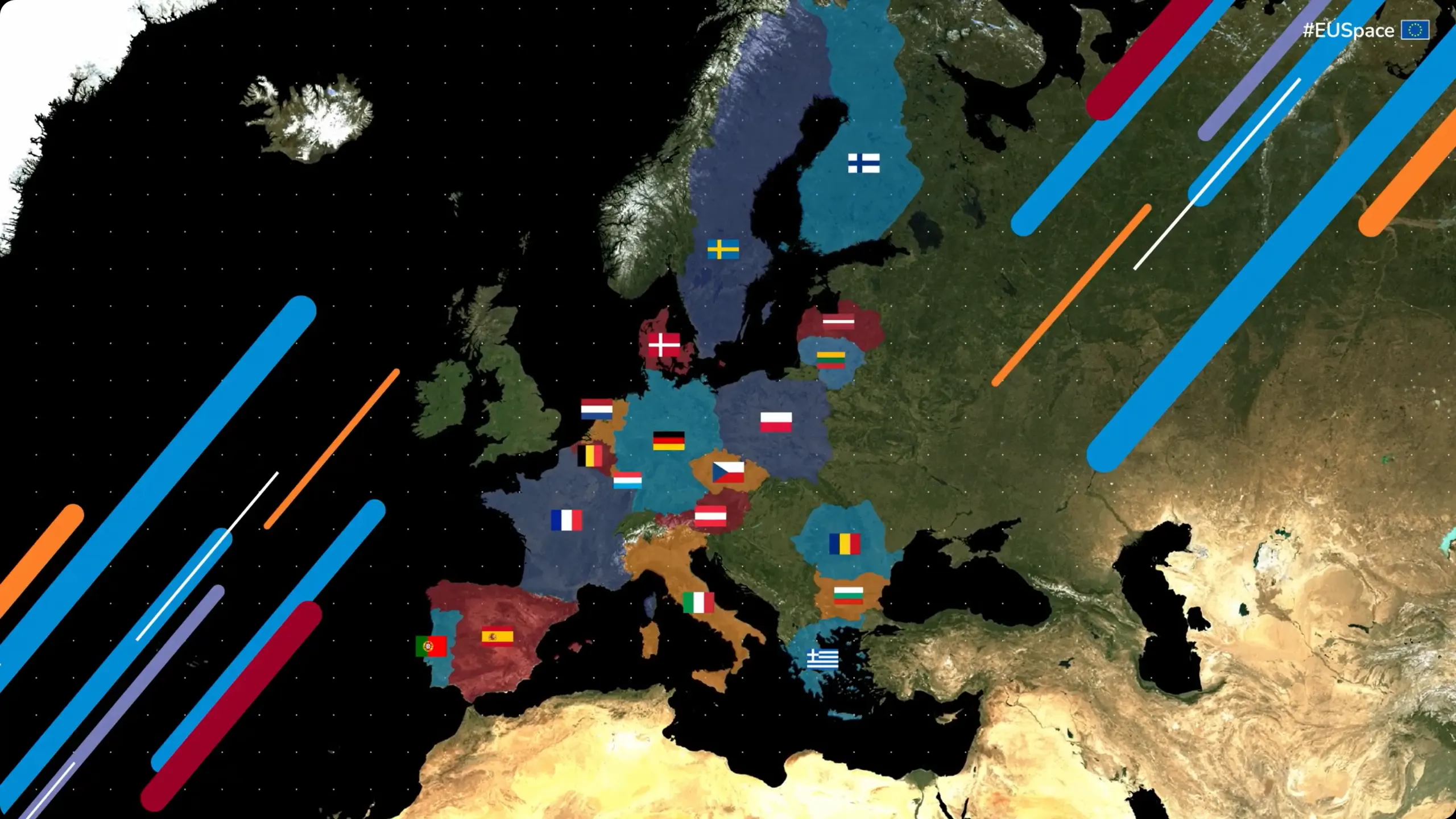
In 2021, Regulation (EU) 2021/696 integrated EU SST into the newly established EU Space Programme. In 2022, the original EU SST Consortium gave way to the EU SST Partnership, which included 15 Member States. In June 2025, the European Commission adopted an Implementing Decision setting out how further Member States could join, and on 12 April 2026 the Partnership welcomed Belgium, Bulgaria, Lithuania, and Luxembourg, bringing the total to 19 Member States.
France, Spain, and Italy each run an Operations Centre, with Germany managing measurements, the database, and cataloguing. The SST Front Desk operated by EUSPA serves as the focal contact for users. Member States contribute a worldwide network of sensors and processing capabilities, complemented by commercial assets from the EU space surveillance industry.
Together, they deliver three services around the clock and free of charge. Collision Avoidance assesses the risk of close encounters between spacecraft, or between spacecraft and debris, and alerts operators. Re-entry Analysis estimates when and where objects falling back to Earth in an uncontrolled way could land. Fragmentation Analysis detects and characterises break-ups and collisions in orbit.
A decade on, EU SST helps protect more than 700 satellites. More than 400 organisations within and outside the EU use its services, and around 70 national and commercial sensors contribute observations.
Space safety as a common good
EU SST provides its services free of charge, on the principle that a safer orbit benefits everyone who depends on space applications. Satellite operators such as the European Organisation for the Exploitation of Meteorological Satellites (EUMETSAT), the communications operator Hellas Sat, and the small-satellite company EnduroSat use collision warnings to decide when to move a satellite away from other spacecraft or debris. The benefit also reaches the ground. EUROCONTROL, the European organisation for the safety of air navigation, uses re-entry information to help air traffic managers assess risks to airspace. All four joined the anniversary to share their experience as users.
Built on cooperation
EU SST rests on the national sensors of its Member States, many of them operated by defence organisations. Space commands and space surveillance centres from France, Italy, Germany, Spain, the Netherlands, and Belgium were among those represented in Brussels. Bringing these mainly military assets together to support a civil service has given the EU its own capability to survey and track objects in orbit, which increases its strategic autonomy and resilience.
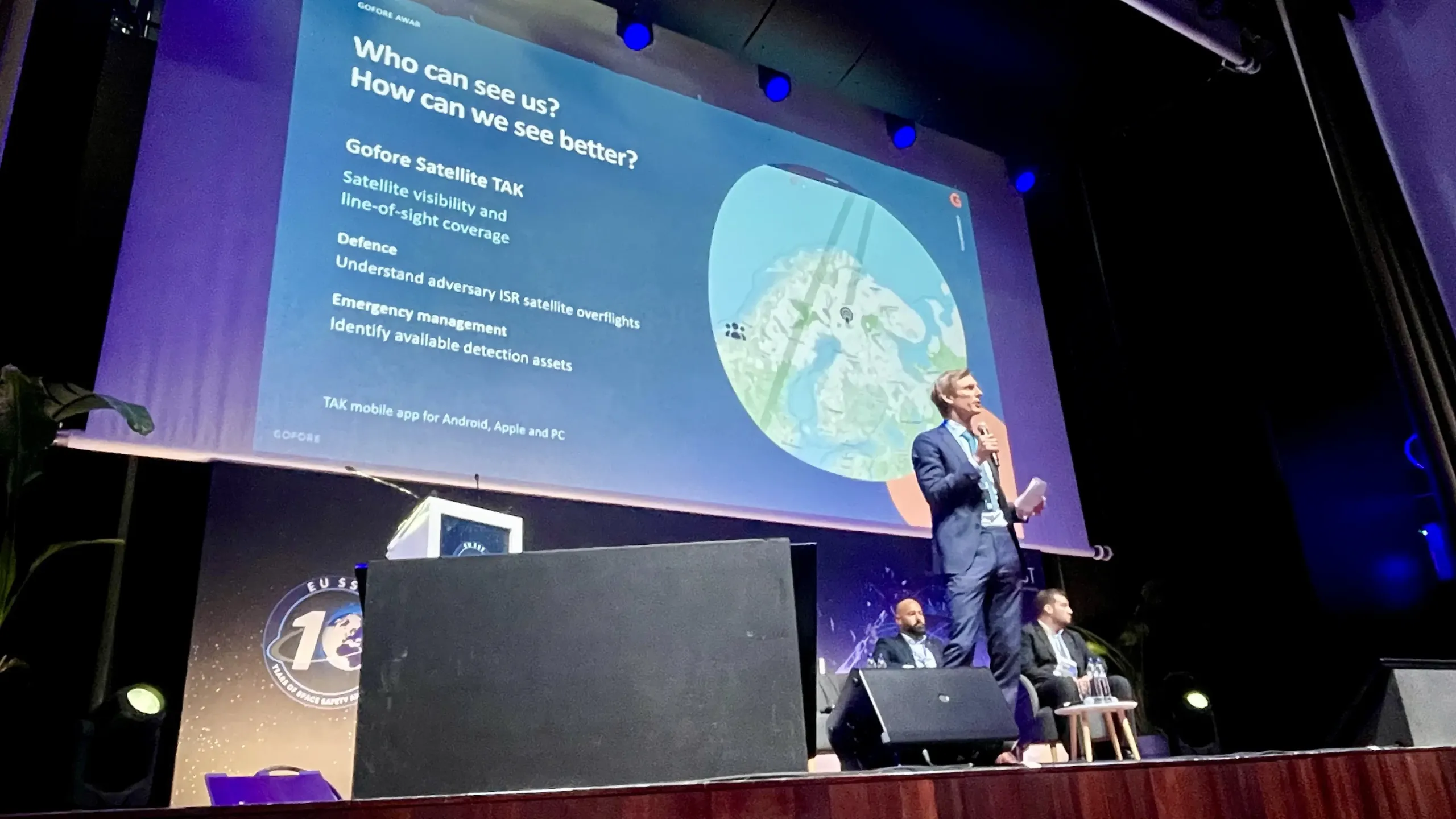
Industry extends that capability. More than 70 EU companies, from start-ups and small and medium-sized enterprises (SMEs) to larger industrial firms, help improve the view of EU SST on objects in orbit, and 11 of them presented their solutions at the event. Through the EU Industry and Start-ups Forum (EISF), co-chaired by the European Commission and the EU SST Partnership, these companies help set research and development priorities for the field.
Cooperation also extends beyond the EU. Two of the three services, Collision Avoidance and Re-entry Analysis, are open to operators from outside the EU. This openness has made EU SST a trusted partner internationally. Aarti Holla-Maini, Director of the United Nations Office for Outer Space Affairs (UNOOSA), and Alastair East of the UK Space Agency took part in the anniversary event, reflecting the role of EU SST in keeping orbits safe and usable for all operators.
The next decade
As orbits grow busier, EU SST will continue to serve as the operational backbone of the EU approach to Space Traffic Management (STM), which the European Commission and the High Representative of the Union for Foreign Affairs and Security Policy set out in a 2022 Joint Communication. To coordinate traffic in space, the EU needs precise information on where objects are and where they are heading, and EU SST provides it.
After 10 years of operations, EU SST shows how Member States and EU bodies, working with industry, can pool national assets into a service used by operators around the world. In its second decade, it will keep improving its capabilities and expanding its sensor network and services to meet the needs of a growing user community. This will also strengthen EU non-dependence and strategic autonomy in an increasingly congested and contested space environment.