Lake Koroneia in northern Greece shrinks to a fraction of its former extent
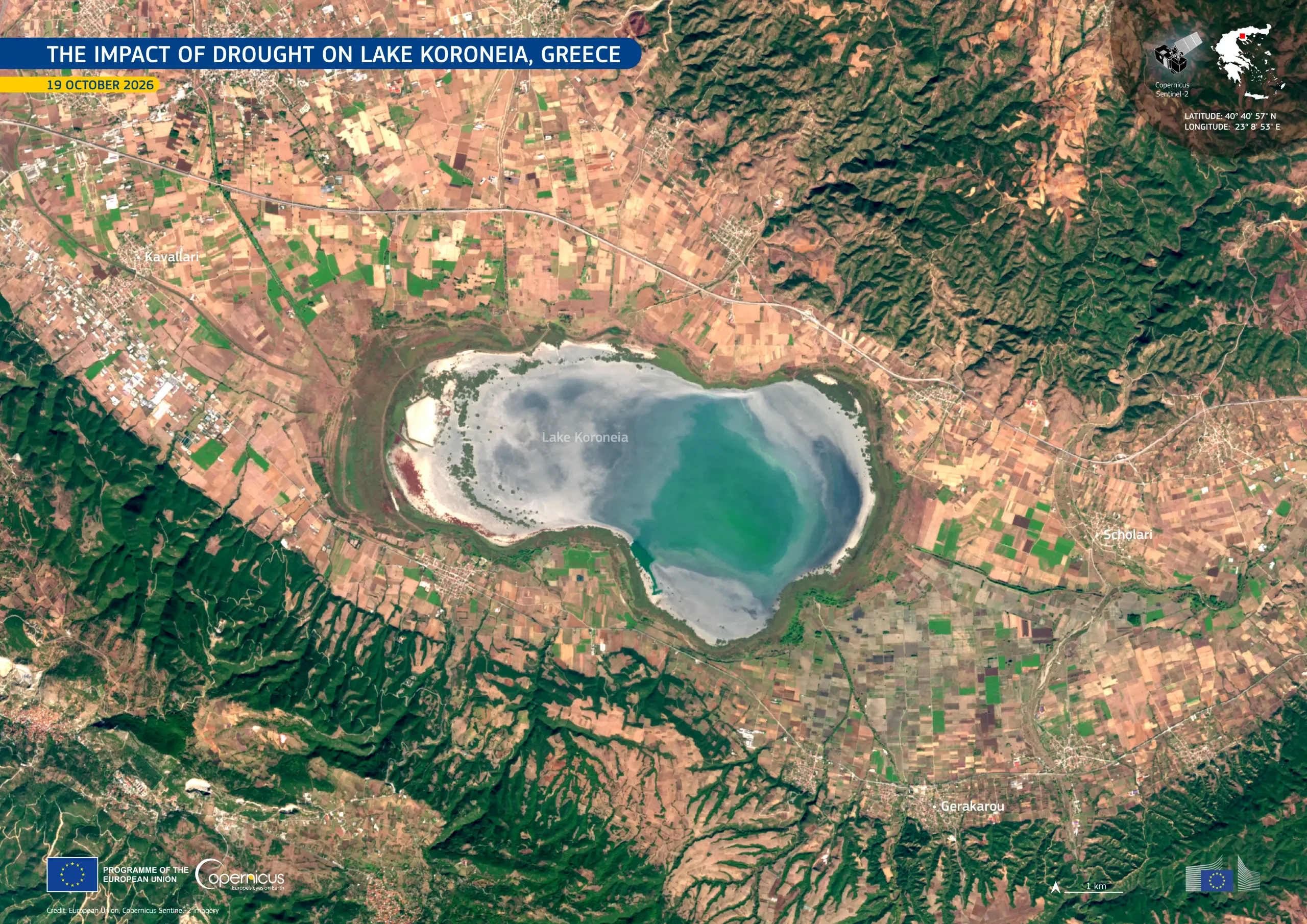
Lake Koroneia, a protected wetland north-east of Thessaloniki in northern Greece, was once the fifth-largest lake in the country. According to the National Observatory of Athens, its surface area has decreased from 42.8 km² in 1984 to 34.4 km² in 2016 and to about 2.7 km² in 2026, around 6 % of its 1984 extent. The Greek Biotope and Wetland Centre notes that rainfall in the lake’s catchment, the land which drains into the lake, has averaged about 400 mm a year over at least the past five years, around 150 mm below the average of previous decades.
This image, acquired by one of the Copernicus Sentinel-2 satellites on 19 October 2026, shows the lake surrounded by agricultural fields. Pale grey areas of exposed lakebed and shallow water cover much of the basin, while greenish water remains only in the south-eastern part.
Copernicus Sentinel-2 data support the monitoring of changes in inland water bodies, providing useful information for drought assessment and water resource management.