Surtsey, Iceland: a 63 years-old volcanic island
On 14 November 1963, an underwater volcanic eruption was observed off the southern coast of Iceland. By the following day, a new island had emerged from the Atlantic Ocean: Surtsey. The eruption continued until June 1967, with the island gradually growing as volcanic material accumulated. Since its formation, Surtsey has been protected from human interference, becoming a natural laboratory for studying how plants and animals colonise new land. In 2008, it was designated a UNESCO World Heritage Site.
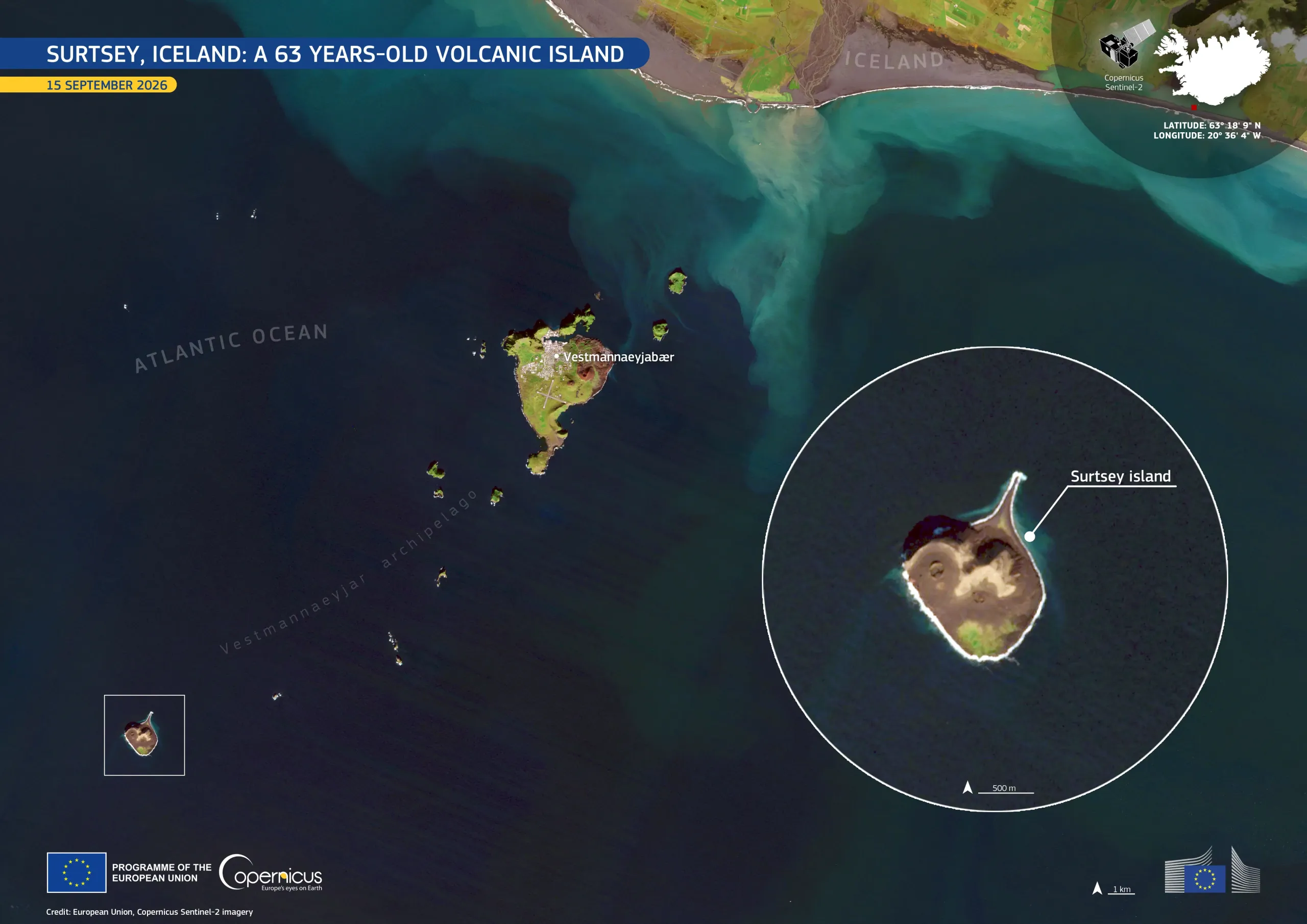
This image, acquired by one of the Copernicus Sentinel-2 satellites on 15 September 2026, shows Surtsey at the south-western edge of the Vestmannaeyjar archipelago. The enlarged view shows the island’s brown volcanic terrain, a green patch of vegetation in the south, and a narrow spit extending north.
Copernicus Sentinel-2 imagery supports the long-term monitoring of volcanic islands, helping scientists track coastal changes, observe vegetation development, and better understand how newly formed landscapes evolve.