
Space Surveillance and Tracking (SST)
Ensuring space safety and sustainability
With over a million pieces of debris orbiting Earth, Space Surveillance and Tracking is essential for protecting satellites that power our daily communications, navigation, and observation services.
Space-based services such as communication, navigation, and Earth observation have become an integral part of everyday life. This is also reflected in the increase of satellites in space: more than 50 000 satellites are expected to be launched in the next decade.
In addition, more than 1 million pieces of space debris larger than 1 cm are orbiting the Earth. This number is projected to increase.
This congestion of the orbital environment creates significant challenges for the safety of space-based assets: A collision with another spacecraft or debris could severely damage a satellite or even destroy it resulting in significant service disruptions. That is why the risk of such collisions and the potential damage from objects re-entering the Earth’s atmosphere are a growing concern.
To address these risks, an efficient system for surveying and tracking space objects and providing this information to stakeholders that depend on them to protect their assets is essential.
Space Surveillance and Tracking (SST) subcomponent
EU SST is a subcomponent of the Space Situational Awareness (SSA) component of the EU Space Programme. It safeguards space assets, especially EU Space Programme satellites such as Galileo, EGNOS, Copernicus, GOVSATCOM, and in the future IRIS², along with the space assets of EU Member States and other space operators.
EU SST uses a network of ground-based sensors capable of surveying and tracking space objects and processing capabilities that help to improve, operate, and provide data, information and services on space objects orbiting the Earth. This helps to mitigate the risk of a collision between satellites and debris, in-orbit fragmentations and uncontrolled re-entries into Earth’s atmosphere.
EU SST system
The EU SST Partnership of 15 EU Member States – Austria, Czechia, Denmark, Finland, France, Germany, Greece, Italy, Latvia, the Netherlands, Poland, Portugal, Romania, Spain and Sweden – have networked their national assets such as radars, telescopes, etc. into the EU SST system.
This sensor network of national EU SST assets is complemented by commercial assets, thereby achieving better coverage, redundancy, and data provision.”
SST services
Together with the SST Front Desk at the EU Agency for the Space Programme (EUSPA), EU SST provides three services:
- Collision Avoidance Analysis (CA) assesses the risk of collisions between satellites or between satellites and space debris and generates collision avoidance alerts
- Re-entry Analysis (RE) assesses the risk of uncontrolled re-entries of space objects into Earth’s atmosphere and generates insights based on its assessments
- Fragmentation Analysis (FG) detects and characterises in-orbit fragmentations, break-ups, or collisions and analyses available information on the objects involved
EU SST also works on two additional services: space debris mitigation to reduce the generation of new space debris; and space debris remediation to better manage existing space debris.
European SST industry
EU SST also supports the development of EU industrial SST capabilities to boost the competitiveness and innovation of the EU SST private sector, support the rapidly growing demand for and development of new SST services, and improve and consolidate the autonomy of EU SST in all orbit regimes beyond the network of existing national assets.
The EU Industry and Start-ups Forum (EISF), co-chaired by the Commission and the EU SST Partnership, defines together with EU stakeholders incl. start-ups, SMEs, midcaps and large companies (and some EU research and technology organisations) research and development priorities for the EU’s SST domain.”
EU Space Surveillance and Tracking (EU SST) factsheet
A Commission-led initiative fostering innovation and competitiveness in Europe's space surveillance sector while building autonomous capabilities across all orbital zones.
Other Space Situational Awareness subcomponents
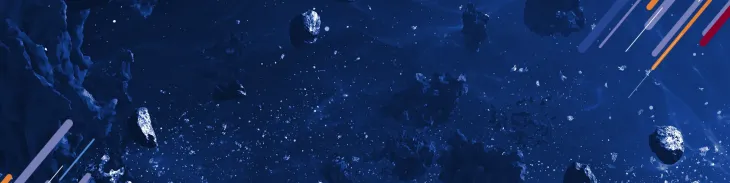
Space rocks such as comets and asteroids approach the Earth and enter the Earth’s atmosphere regularly. The EU supports activities that help to study and track those space rocks to better understand possible risks.
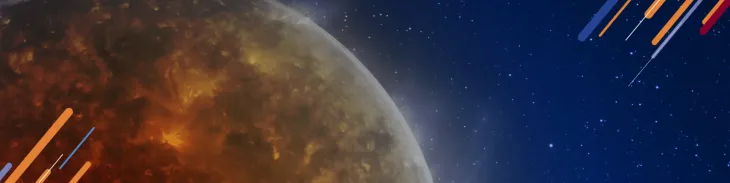
Geomagnetic storms and solar flares can harm satellite electronics in space and impact electricity grids on Earth. Understanding the effects of space weather is key to mitigate the risks associated with them.
The SST subcomponent protects satellites from collisions in space, monitors their re-entries into Earth’s atmosphere, and assesses in-orbit fragmentations