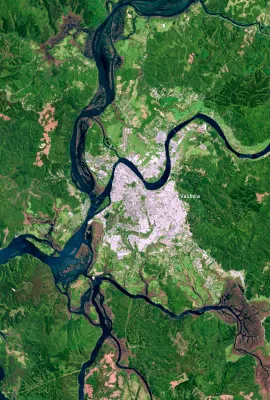
Located in southern Chile’s Los Ríos Region, the city of Valdivia has been internationally designated under the Ramsar Convention as Latin America’s first “Wetland City”. The recognition comes after…
Results (1263)
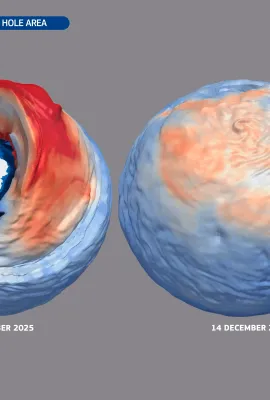
The 2025 Antarctic ozone hole closed on 1 December, marking the earliest closure since 2019. This year’s ozone hole was also relatively small for the second consecutive year, especially when compared…
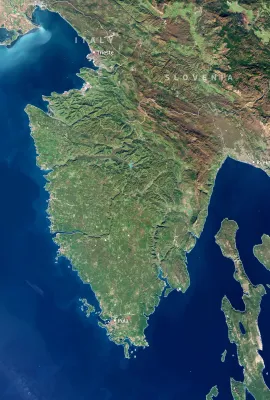
The Istrian Peninsula, the largest peninsula in the Adriatic Sea, is a region of high ecological value. It hosts a mosaic of karst hills, coastal wetlands, and productive marine habitats which…
Iceland’s glaciers are among the most prominent in Europe and play an important role in regulating freshwater resources and sea level contribution. In recent decades, they have shown sustained…
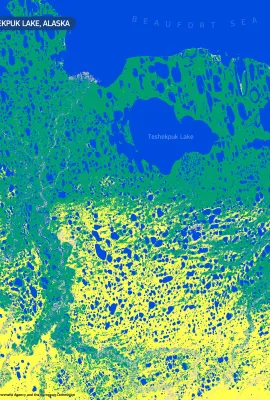
The Teshekpuk Lake Special Area, situated on Alaska’s North Slope, is one of the most ecologically important Arctic wetland systems in North America. Recognised for its high conservation value, the…
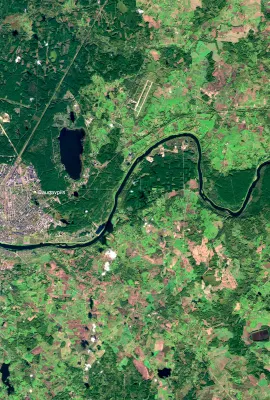
Daugavpils, Latvia’s second-largest city, lies to the south-east of the country and has long served as a key regional centre. Its development and identity are closely tied to the Daugava River, which…
2025 represented an unprecedented year for the EU Space Programme, particularly regarding the expansion of the Copernicus Sentinel family. Europe achieved a notable pace of satellite deployments,…
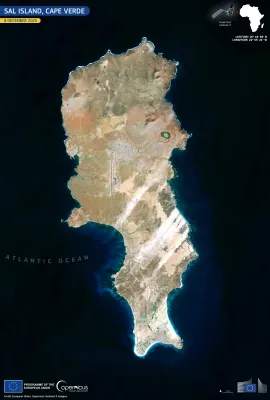
Sal Island, part of the Cape Verde archipelago in the eastern Atlantic Ocean, is characterised by a flat, arid landscape shaped by volcanic origins and persistent trade winds. The island and its…
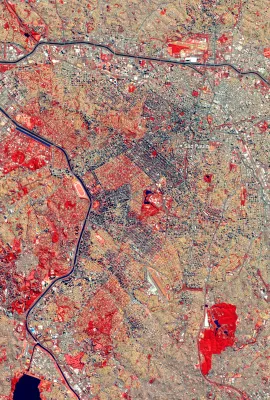
São Paulo is the largest city in Brazil and a key economic hub in Latin America. Located in the south-eastern region of the country, it serves as the capital of the state of São Paulo. The city has…
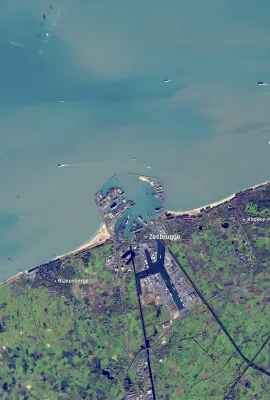
On 3 December 2025, waters along Belgium’s North Sea coast showed clear colour contrasts, revealing active sediment dynamics driven by tidal currents and shallow bathymetry. Such conditions favour…
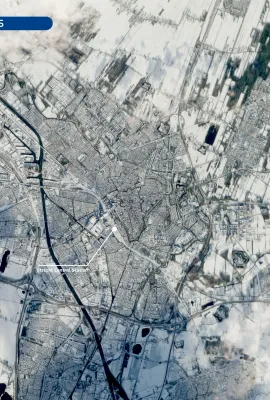
In early January 2026, heavy snowfall and icy conditions affected large parts of the Netherlands, triggering a severe weather alert in several provinces. The widespread snow cover led to major…
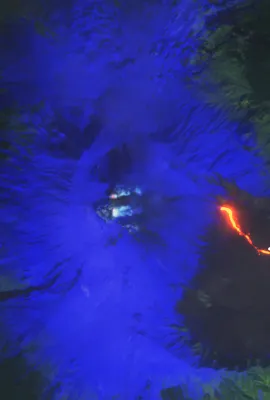
On 1 January 2026, Mount Etna entered a new eruptive phase, with lava emerging from a fissure vent located approximately 2,000- 2,100 metres above sea level in the Valle del Bove. According to…
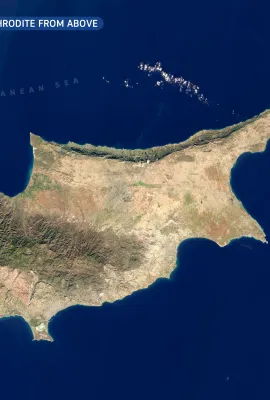
Cyprus, the third-largest island in the Mediterranean Sea, is characterised by a diverse landscape shaped by mountains, plains, and an extensive coastline. Despite its semi-arid climate, the island…
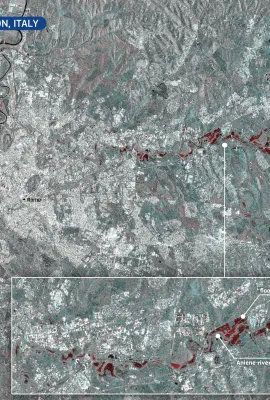
In early January 2026, severe rainfall affected the Lazio region in Italy, with river levels rising rapidly in several areas. As a result, regional and national civil protection authorities issued…
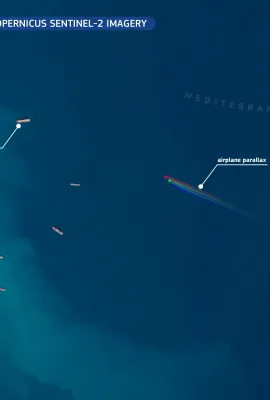
The Copernicus Sentinel-2 optical satellites carry 13 multispectral bands which allow for the detailed observation of the Earth’s surface and coastal areas. These spectral bands are acquired a…
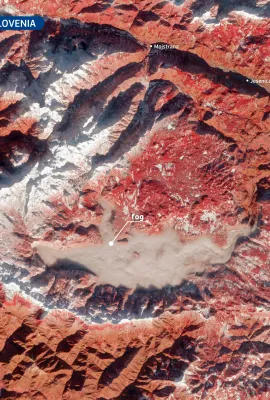
Triglav National Park is Slovenia’s only national park and a designated UNESCO Biosphere Reserve, located in the Julian Alps in the northwest of the country. Dominated by Mount Triglav, Slovenia’s…
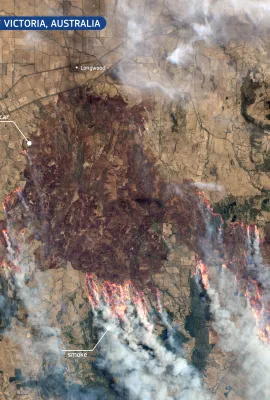
Multiple uncontrolled bushfires have affected the Australian state of Victoria in recent days, forcing communities to evacuate, leading to the closure of hundreds of schools, and leaving thousands of…
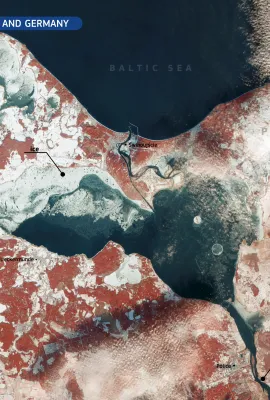
The Szczecin Lagoon, also known as the Oder Lagoon, is a large transboundary coastal wetland shared between Poland and Germany. Designated under the Ramsar Convention and belonging to the Natura 2000…
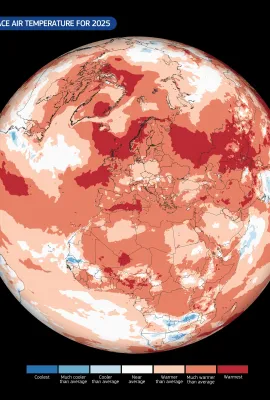
The Copernicus Climate Change Service (C3S) has released the 2025 Global Climate Highlights report, summarising the key trends in global and regional climates for the year. 2025 was the third warmest…
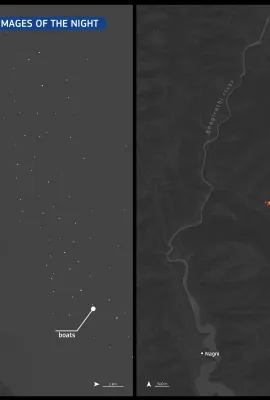
After more than a decade in orbit, the Copernicus Sentinel-2A satellite is still helping to push the boundaries of Earth Observation. Originally designed to acquire high-resolution, daylight images…
Showing 1041-1060 of 1263 results