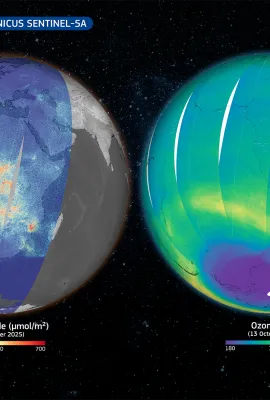
Following their successful launches in 2025, two new Copernicus satellite missions, Sentinel-1D and Sentinel-5A, have returned their first images, representing important progress in the EU’s capacity…
Results (321)
The EU Space Networks have grown from more than a decade of EU-funded activities which explored how to bring satellite data closer to users. These early efforts evolved into the Copernicus Academy…
Under the Danish Presidency of the Council of the European Union, the 2025 Space Conference in Aalborg brought together policymakers, researchers, entrepreneurs, and students to discuss Europe’s…
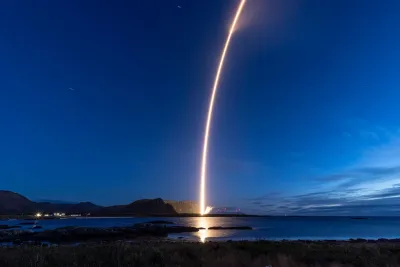
Isar Aerospace has successfully completed its second launch from its dedicated launch complex at Andøya Space in Norway, with its Spectrum rocket reaching orbit. This is the first time a privately…
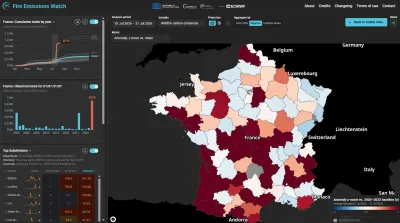
Wildfires can affect atmospheric composition and air quality far beyond the affected area. The summer of 2026 brought intense fire activity to France, Spain, and Canada, producing large quantities of…
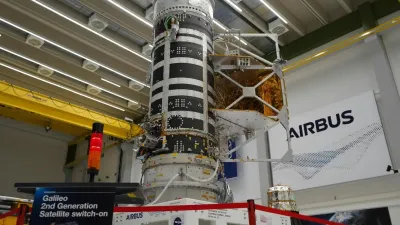
In this Observer, we examine Galileo’s timing capabilities, how they support international timing coordination, and what lies ahead for the EU’s satellite navigation system.
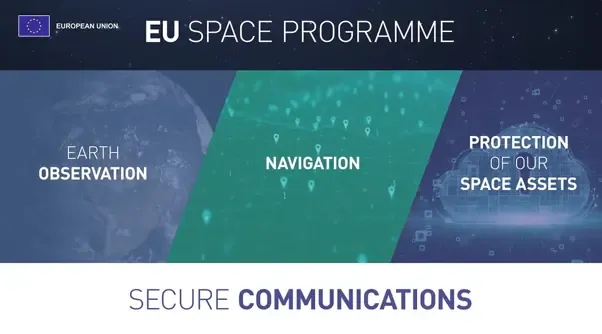
Secure communications underpin the European Union’s security, crisis response capabilities, and strategic autonomy. This is why IRIS², the European Union's Secure Connectivity Programme, was…
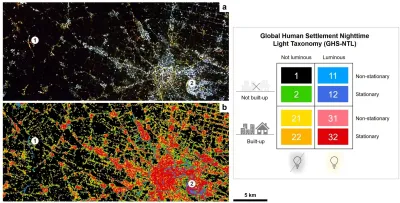
At night, seen from space, our planet redraws itself. Coastlines and terrain fade into darkness, and a web of light takes their place, ‘highlighting’ where people live and move. In this Observer, we…
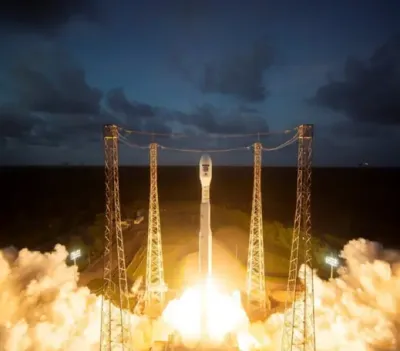
On 14 September at 22:21 Kourou time (01:21 UTC on 15 September, 03:21 CEST), the Copernicus Sentinel-3C satellite will be launched from the European Spaceport in French Guiana aboard a Vega C…
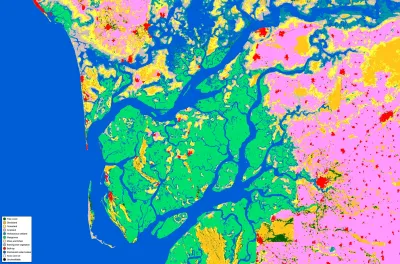
West Africa's mangrove forests are among the planet's most productive ecosystems, but determining whether specific areas are in stable conditions, degrading, or recovering remains difficult. In this…
Launched at the European Space Conference, the new EU Space website brings information about the EU’s space activities together onto a single platform. In this Observer, we explore the new EU Space…
For more than 35 years, CORINE Land Cover (CLC) has tracked how Europe's landscapes are changing. With the sixth iteration set for release in Q3 2026, this Observer traces the history of CLC,…
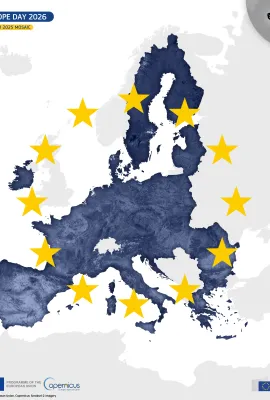
Space is increasingly central to the EU's security, resilience, and economic future. Against that backdrop, EU Space Days 2026 brought together senior EU decision-makers, industry leaders, start-ups,…
As the global race for computing power and cloud storage intensifies, the frontier for data processing may lie not on the ground, but in orbit. Orbital Data Centres (ODCs) represent a potential new…
The EU space policy and programmes support a wide range of services used across Europe every day. In this Observer, we explore how the EU space policy and programmes support people, public…
Europe faced another year of exceptional climate extremes in 2025, with almost the entire continent recording above-average annual temperatures. The European State of the Climate (ESOTC) 2025 report,…
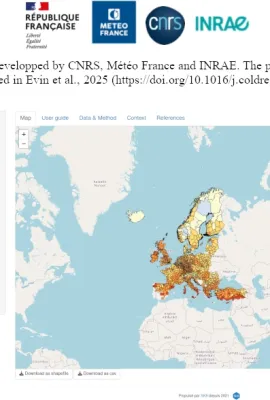
In Europe, drought is a recurring phenomenon, affecting extended areas and large populations every year. Across the world, millions of people are annually exposed to droughts that seriously affect…
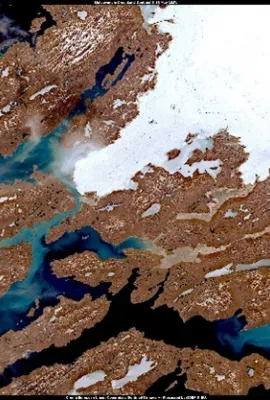
Glaciers are essential to enabling life on Earth. As frozen towering giants, they act as freshwater reservoirs providing potable water for human consumption. Meltwater that is released by the melting…
Students and startups joined the Copernicus Ocean Hackathon in Iceland to create innovative solutions using Copernicus Marine data and services to tackle the challenges. Additionally, a Copernicus…
How will snow loads change in the future? The FPCUP SNOWLOADS C3S app prototype provides data on present and future snow loads, helping users prepare for the future.
Showing 81-100 of 321 results