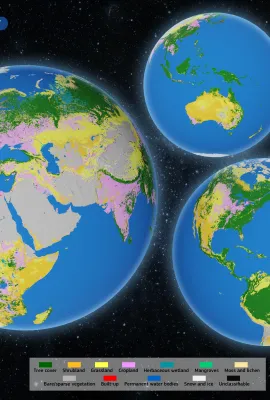
This data visualisation is based on the Global Land Cover product from the Copernicus Land Monitoring Service (CLMS), released in June 2025 as part of the new Land Cover and Forest Monitoring (LCFM)…
Results (2107)
Kati Thanda (or Lake Eyre), Australia's largest salt lake, is located in the arid interior of South Australia. This unique and fragile inland basin is typically dry during the austral spring, which…
11 October marks World Migratory Bird Day, dedicated to raising awareness for the conservation and protection of migratory birds and their unique habitats around the world. The Jade Bight in…
The Pärnu River catchment on Estonia’s western coastline is home to over 3,500 hectares of peatland, contributing to Estonia’s status as one of the most peat-rich countries in the world. Peat, which…
The Copernicus Climate Change Service (C3S) has published its latest monthly Climate Bulletin, focused on key climate trends in September 2025. The bulletin reports that September 2025 was the…
Beginning on 6 October 2025, severe flooding swept through parts of northern Vietnam, reaching the highest water levels recorded in three major rivers in the past 40 years. The floods have resulted…
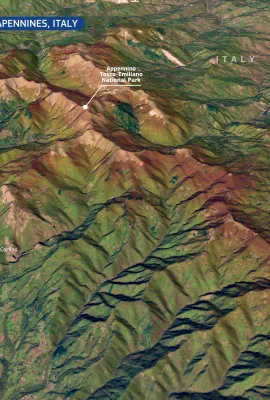
This Copernicus Sentinel-2 image, acquired on 11 October 2025, shows the hills and valleys between the Tuscany and Emilia-Romagna regions of central-northern Italy in stunning autumnal tones. The…
Nestled within the heart of the Eastern Alps, the Austrian mountain valleys are vital ecological corridors, home to diverse alpine habitats and species specially adapted to cold climates and steep…
Resources
Practical training material to use Copernicus data to advance monitoring of waterbodies under the EU directives
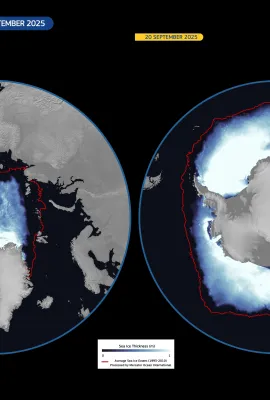
Each September marks the end of the polar summer in the Arctic, when sea ice reaches its annual minimum extent. At the same time, the Antarctic emerges from the austral winter, reaching its annual…
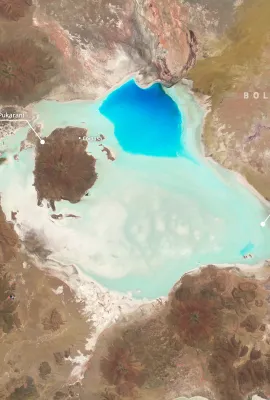
Located next to the Chilean border in the Altiplano region of Bolivia, Coipasa Salar is Bolivia’s second largest salt lake, spanning over 2,000 square kilometres. Coipasa Salar is rich in deposited…
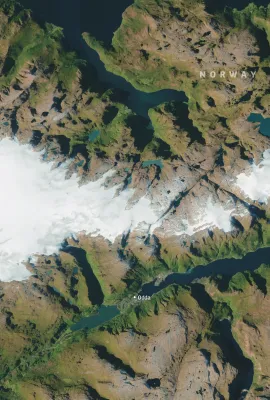
Covering 207 square kilometres and reaching thicknesses of nearly 400 metres, Folgefonna is the third-largest glacier on mainland Norway. For nearly two centuries, this striking natural landmark has…
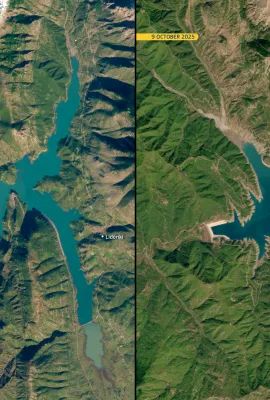
Lake Mornos is an artificial reservoir in central Greece, serving as a primary water source for Athens. According to national authorities, the lake has lost nearly half of its water volume over the…
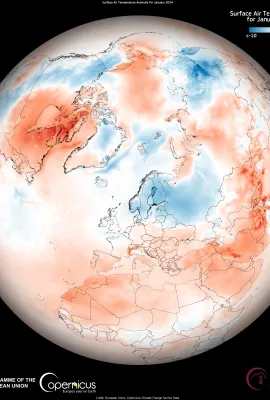
This visualisation, based on data from the Copernicus Climate Change Service (C3S), shows the global surface air temperature anomaly for January 2024. According to C3S data, January 2024 was the…
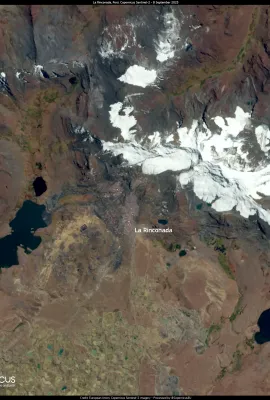
Situated at an elevation of 5,100 metres above sea level, La Rinconada stands as the permanent settlement located at the highest elevation in the world. Nested in the Puno region of Peru, this…
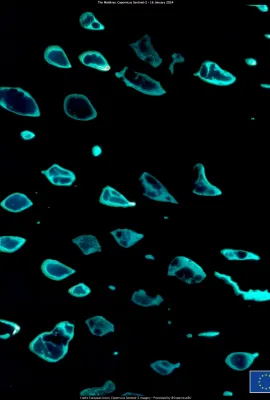
Coral bleaching is a marine phenomenon which occurs when corals expel the algae living in their tissues, causing them to turn white or pale. This expulsion is often triggered by environmental…
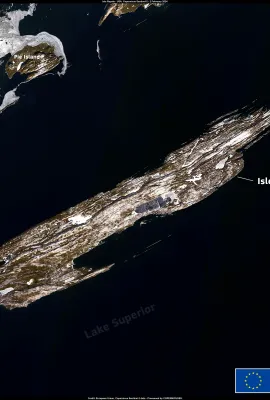
Isle Royale, covering 54,200 hectares, is located in the remote western part of Lake Superior, between Minnesota, USA and Thunder Bay, Canada. The island serves as a haven for wildlife biologists,…
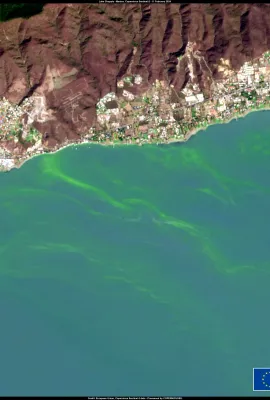
Lake Chapala, the largest freshwater lake in Mexico, is located in the state of Jalisco. It is the primary source of water supply for the Guadalajara metropolitan area and supports a rich…
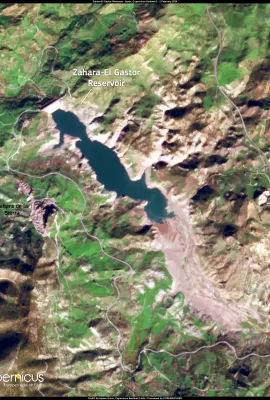
The Zahara-El Gastor reservoir in southern Spain is a vital source of water for agriculture and recreation. The critical drought affecting the province of Cádiz has left the reservoir at nearly 6% of…
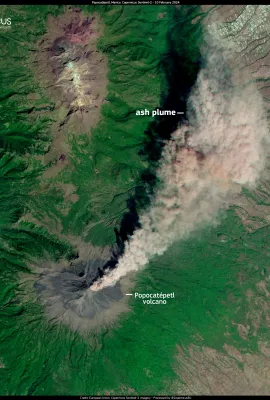
Popocatépetl is a stratovolcano in central Mexico, formed by the subduction of the Cocos Plate beneath the North American Plate. Its eruptions are predominantly explosive, driven by the build-up of…
Showing 1081-1100 of 2107 results