
OBSERVER: ESOTC 2025 — Record heat, melting ice, and a continent under pressure
Europe faced another year of exceptional climate extremes in 2025, with almost the entire continent recording above-average annual temperatures. The European State of the Climate (ESOTC) 2025 report, produced by the Copernicus Climate Change Service (C3S) and the World Meteorological Organization (WMO), highlights a continent undergoing rapid change. Europe endured its second most severe heatwave on record, with the Sub-Arctic region of Fennoscandia, encompassing Norway, Sweden, Finland, and the Kola Peninsula, facing its longest heatwave to date. This year's report also examines how climate change is affecting biodiversity across Europe, including the impacts of marine heatwaves and peatland wildfires. In this Observer, we explore some of the key findings from ESOTC 2025.
Europe warming at twice the global rate
The average temperature across Europe has risen by approximately 0.6°C per decade since the mid-1990s, more than double the global average. Eastern and southeastern Europe and parts of central Europe, including the Alps, are warming faster, at 0.5–1°C per decade over the last 30 years, than western and southwestern Europe and Fennoscandia, the peninsula encompassing Norway, Sweden, and Finland, where the rate is generally 0.2–0.5°C per decade.
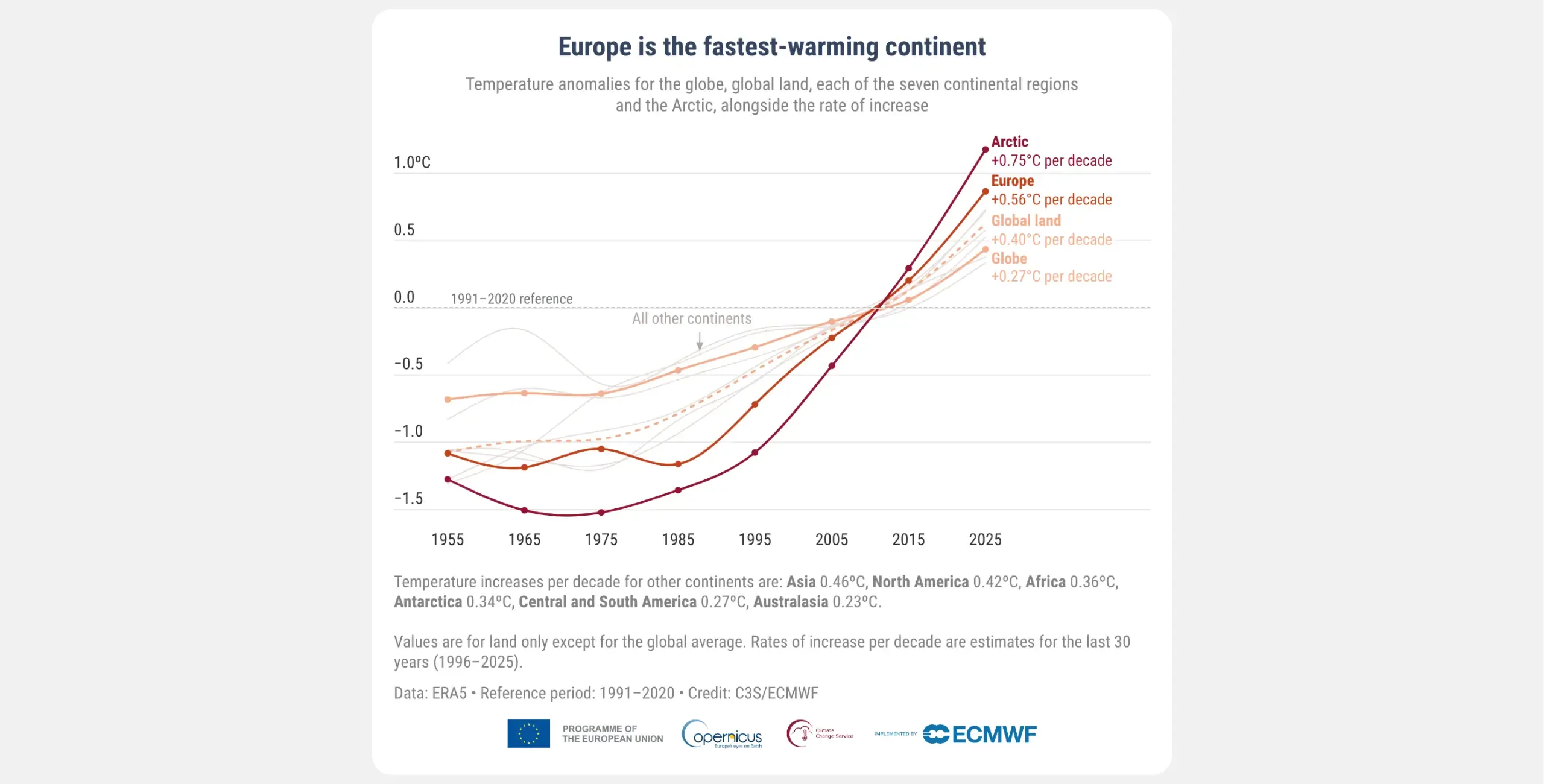
According to the European State of the Climate (ESOTC) 2025 report, the number of heat stress days in Europe is increasing. In 2025, Europe recorded extreme heatwaves from the Mediterranean to the Arctic Circle, including its second most severe heatwave on record in July, which lasted 25 days (between 7 and 31 July). This followed two significant heatwaves across western and southern Europe in June, during which average temperatures between the start of the first heatwave and the end of the second heatwave (between 17 June and 2 July) were the highest on record for the time of year across much of western Europe.
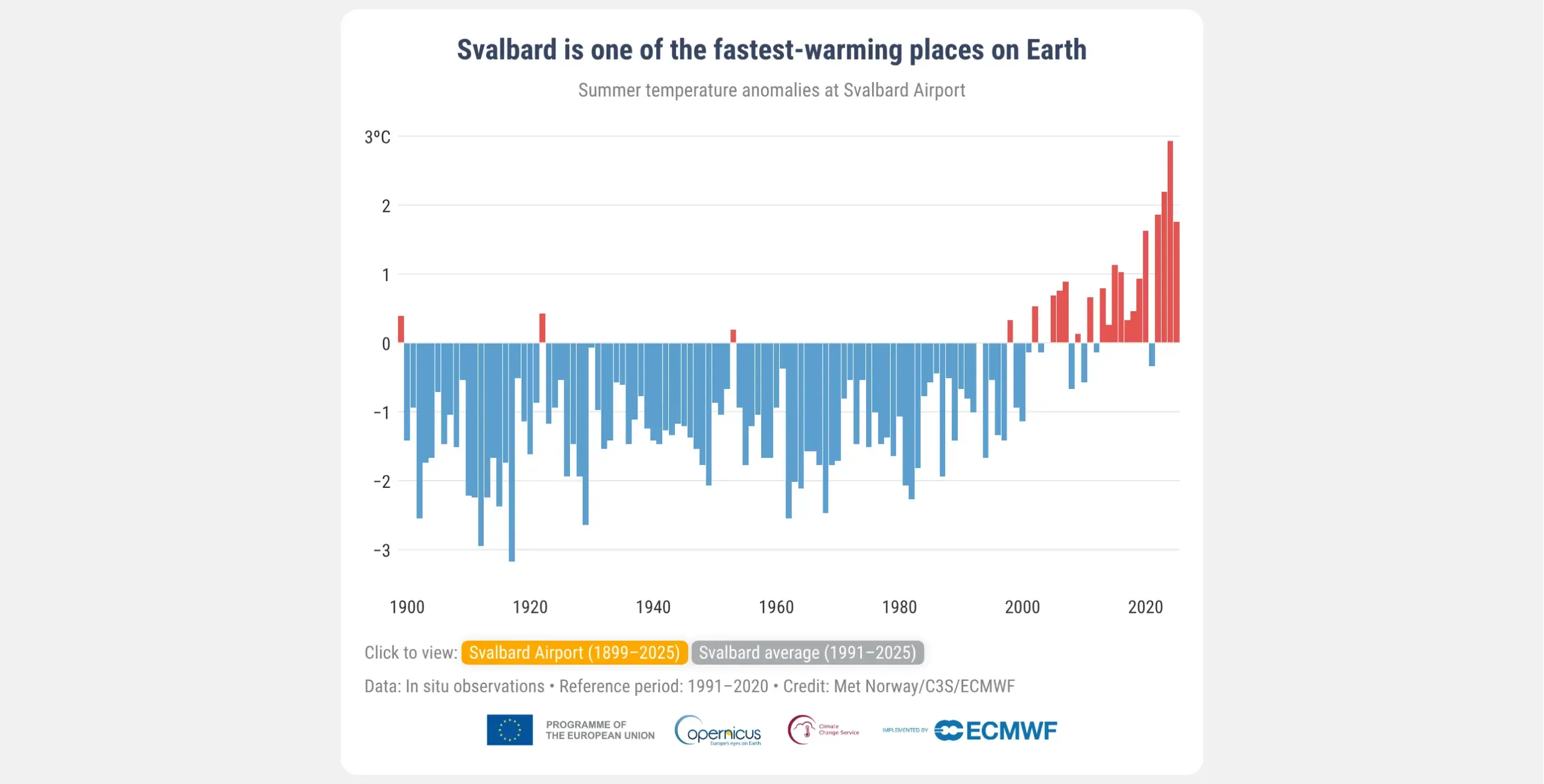
While Europe is the fastest-warming continent, the Arctic is the fastest-warming region on Earth, with temperatures increasing by around 0.75°C per decade. The archipelago of Svalbard, in the European Arctic, is one of the fastest-warming places on our planet, warming at a rate of 1.5–2°C per decade over the past 30 years. Consecutive summers on Svalbard from 2022 to 2024 saw new record high temperatures, and 2025 saw the fourth warmest summer on record, just slightly cooler than 2022.
Globally, 2025 was the third warmest year on record, with each of the past 11 years ranking among the 11 warmest ever recorded and the past three years standing as the three warmest.
“The ESOTC 2025 report is unambiguous: Europe is warming at more than twice the global average, with some regions heating even faster. Heatwaves from the Mediterranean to the Arctic are no longer isolated events — they are part of a broader, accelerating trend already hitting health, ecosystems and economies across the continent,”
— Carlo Buontempo
Director of the Copernicus Climate Change Service
A warming ocean: heatwaves surge across European seas
Europe’s oceans and seas are also undergoing rapid change. In 2025, the average sea surface temperature (SST) across the European ocean region reached a record high for the fourth consecutive year, at 10.94°C, which was 0.65°C above average and 0.07°C above the previous record set in 2024. Annual SSTs were much above average across 65% of the region, including 98% of the Mediterranean Sea. The main exceptions were in the central and western North Atlantic, where annual SSTs were near or below average.
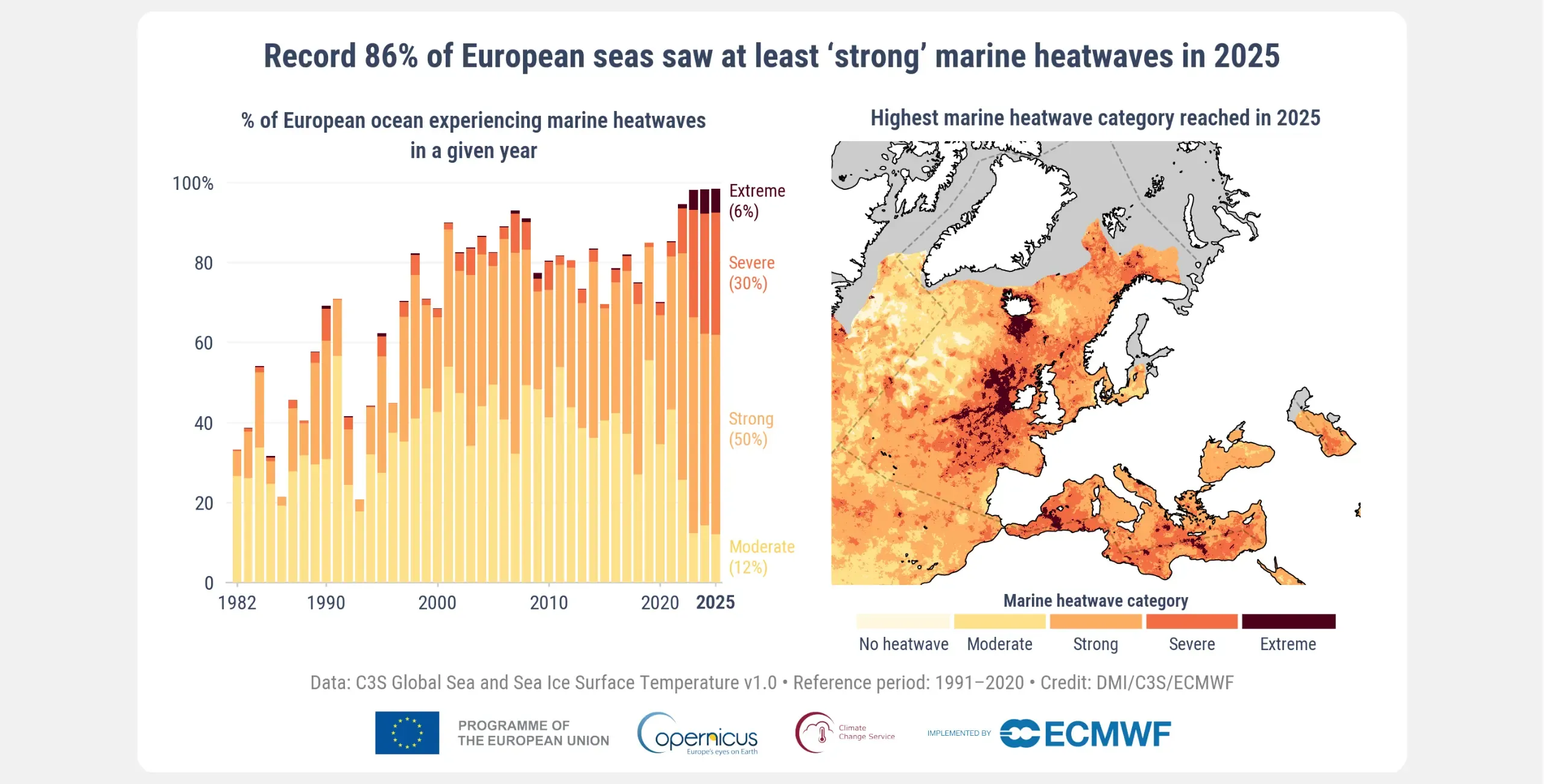
In 2025, a record 86% of the European ocean region (excluding ice-covered areas) had at least one day with ‘strong’ marine heatwave conditions, with 36% recording ‘severe’ or ‘extreme’ conditions, also a record high. In the Mediterranean Sea alone, marine heatwave coverage of any intensity has been 98% or higher since 2014, reaching 100% each year since 2022.
Cold environments in a warming climate
In 2025, sea ice conditions across the European Arctic contrasted, particularly at the beginning and end of the year, with average or above-average ice cover in the Greenland Sea and much below-average ice cover in the Barents Sea.
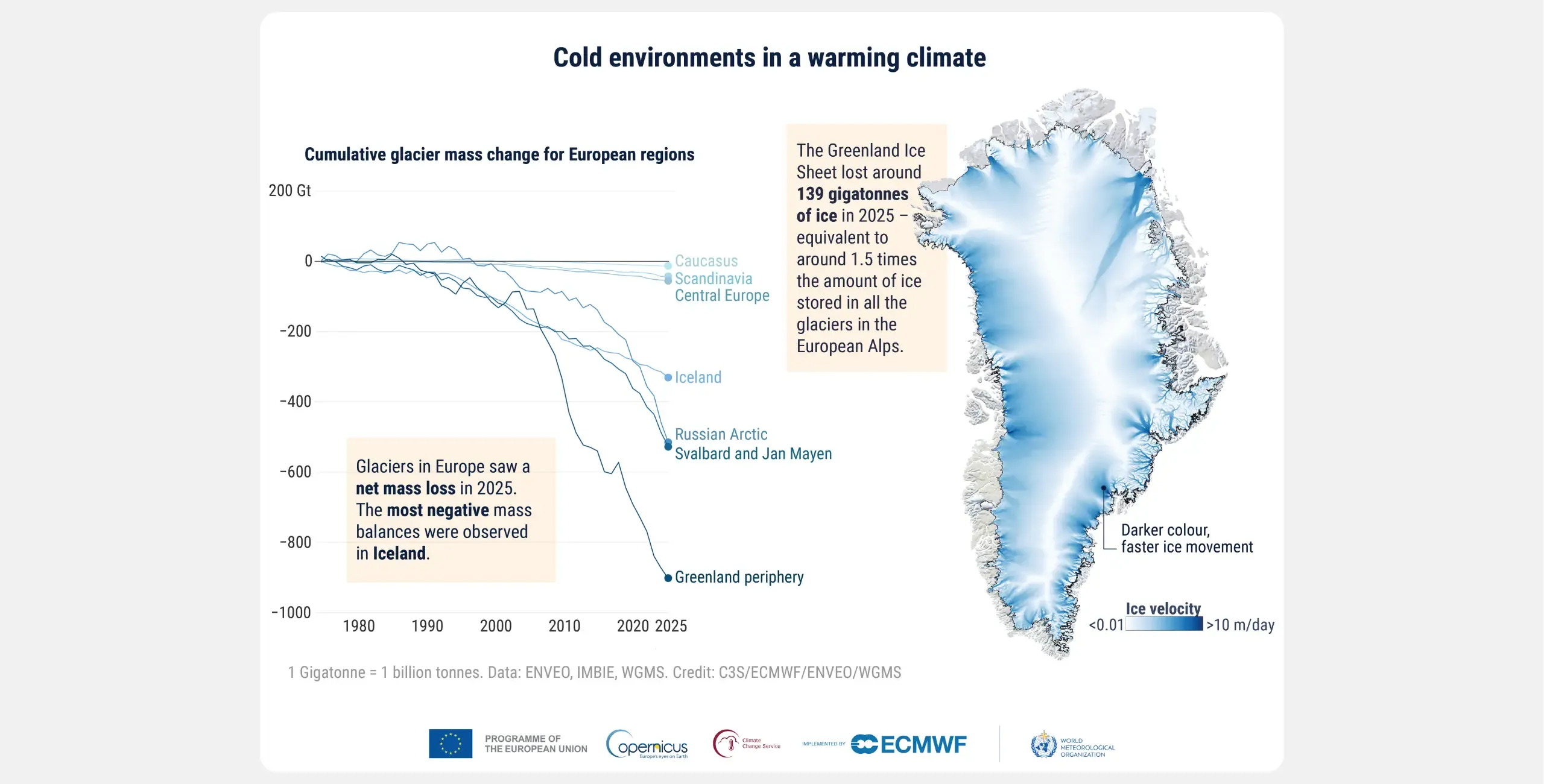
The Greenland Ice Sheet, covering roughly 80% of the island, lost around 139 Gt (139 billion tonnes) of ice in the 2025 hydrological year, marking the 29th consecutive year of net mass loss. This represents 1.5 times the amount of ice stored in all the glaciers in Europe, equivalent to around 0.4 mm of global mean sea-level rise.
2025 was the fourth consecutive year in which all 19 glacier regions worldwide recorded a net mass loss, with Iceland recording its second-largest glacier mass loss since 1976, at 1.55 metres of water equivalent (m w.e.), a measure of ice loss expressed as an equivalent depth of water. Globally, glaciers lost around 410 Gt of ice, equivalent to 1.1 mm of sea-level rise, bringing the cumulative mass loss since 1976 to approximately 9,580 Gt, or about 26.4 mm of sea-level rise.
Climate and biodiversity: impacts and policy responses
Healthy, functioning ecosystems are essential to life on Earth, and biodiversity is central to their resilience. ESOTC 2025 includes a special section on ‘Climate policy and action: biodiversity’, examining how a range of extreme events throughout 2025 placed Europe’s marine and terrestrial ecosystems under pressure. Across the continent, freshwater ecosystems faced greater stress from altered water availability and quality due to drought and floods, while forests and grasslands faced increased fire risk and water stress. Meanwhile, aquatic ecosystems were affected by warming waters, marine heatwaves, and acidification, all of which disrupted key ecological processes.
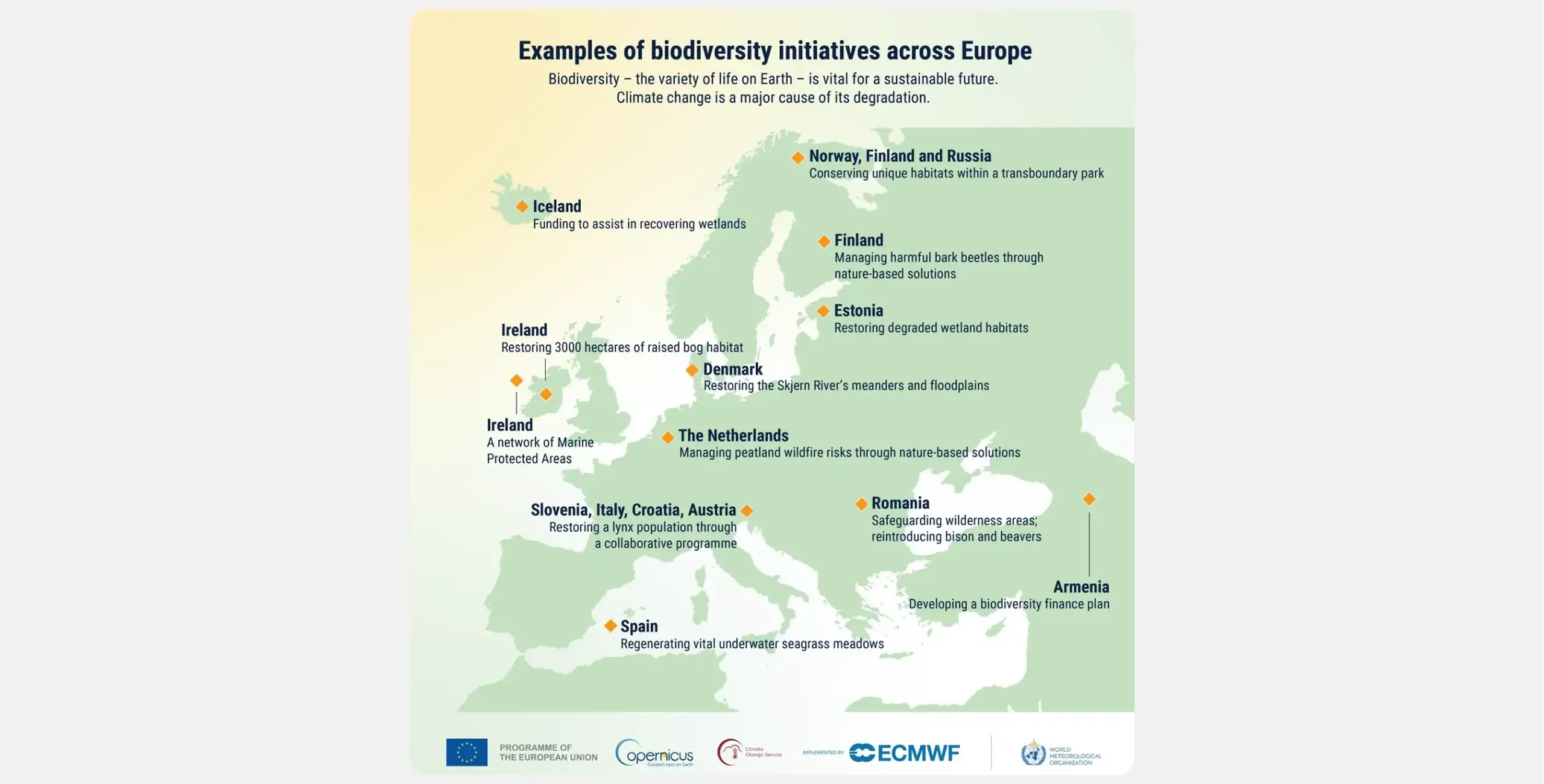
The report also looks at the impacts of climate change on two ecosystems: Posidonia oceanica (a species of seagrass native to the Mediterranean Sea) meadows and peatlands in the Netherlands, and the policy responses aimed at preventing further degradation and restoring these ecosystems.
Precipitation in Europe: a continent of contrasts
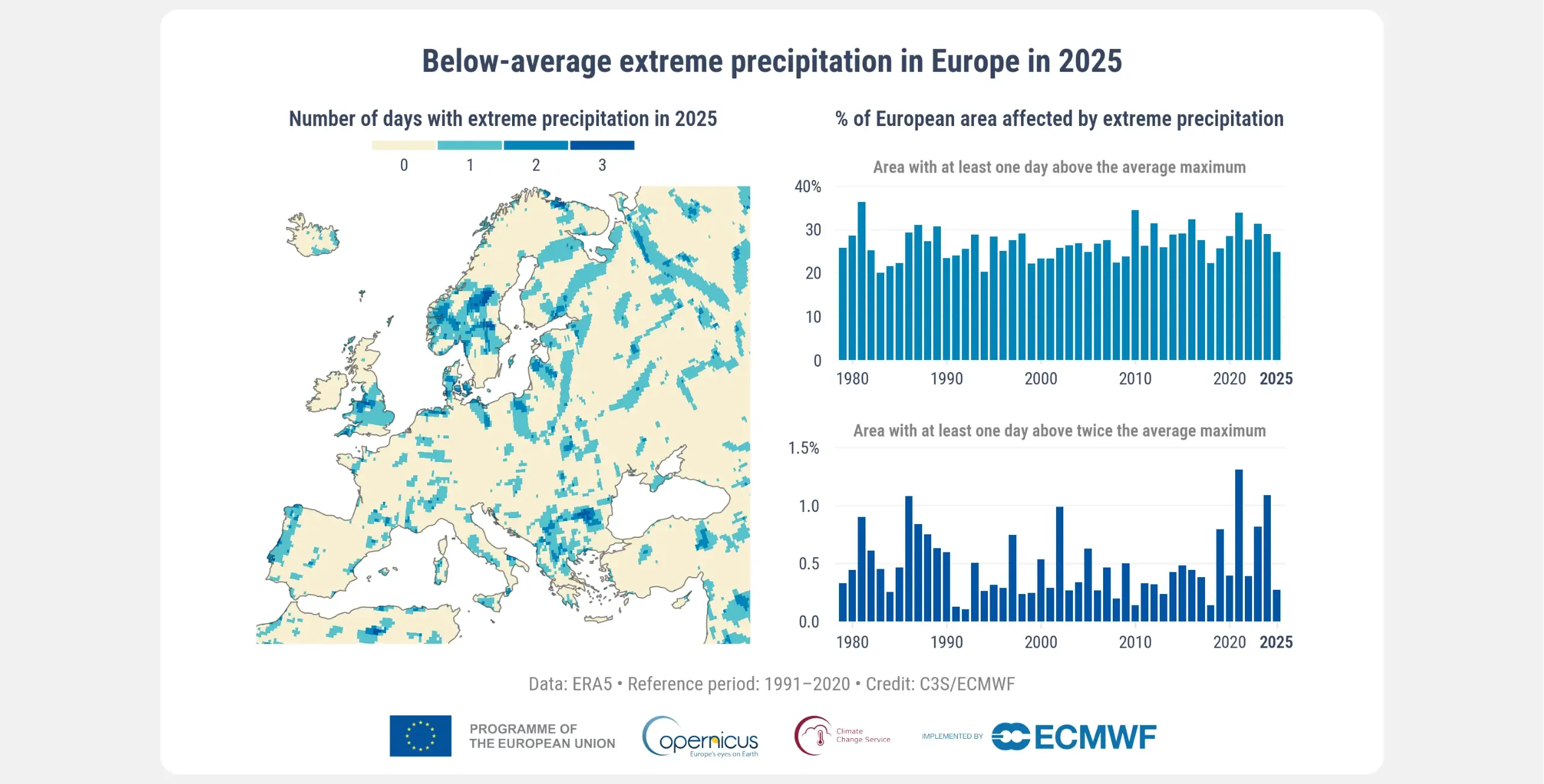
In 2025, drier-than-average conditions prevailed across a large area from northwestern to eastern Europe. Precipitation totals were 20 to 40% lower than average along the eastern coasts of Scotland and England, in Belgium, the Netherlands, Germany, Hungary, Romania, Ukraine, and Türkiye, as well as parts of southern Sweden. In northwestern Europe, annual precipitation was 8% below average, placing 2025 among the 10 driest years since 1979.
In contrast, wetter-than-average conditions prevailed in much of southwestern and northeastern Europe, particularly in Portugal and southwestern Spain, northern Norway, the Kola Peninsula in Russia, and across the Baltic countries. In October, Mediterranean cyclone Barbara brought heavy rainfall, causing severe flooding in Romania and Bulgaria, and later three winter storms (Éowyn, Herminia, and Ivo) brought heavy rainfall to northwestern France, also causing severe flooding. Despite these events, extreme precipitation and flooding were less widespread across Europe in 2025 than in recent years.
Renewables gaining ground
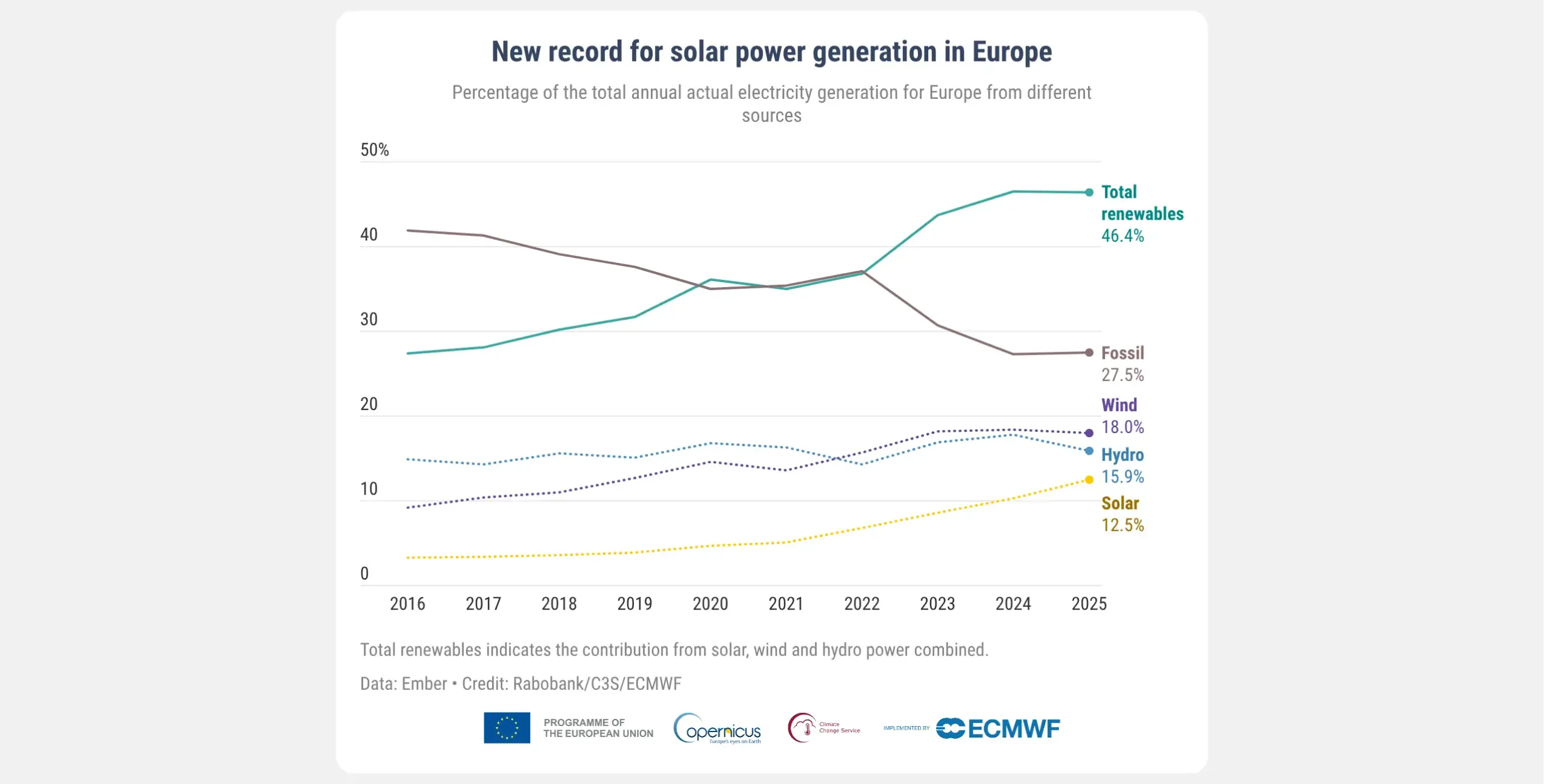
In 2025, almost half (46.4%) of Europe’s electricity generation came from renewables, nearly matching the record 46.5% set in 2024, when wind and solar sources exceeded fossil fuels in share of electricity generation for the first time. Wind and solar together supplied 30.5% of Europe’s electricity, compared with 27.5% from fossil fuels.
Solar photovoltaic (PV) power generation potential, which indicates how favourable conditions were for solar power production, was mixed in 2025, with above-average potential across much of northwestern, central, and eastern Europe, and below-average potential in much of southern Europe and parts of northern Europe. Notably, solar power reached a record-high contribution of 12.5% of electricity generation, up from 10.3% in 2024, driven by continued growth in solar power generation capacity across Europe. Meanwhile, despite below-average wind conditions, wind power contributed 18% of Europe’s total electricity generation, only slightly below its share in 2024 (18.4%) and 2023 (18.2%). This is because the consequences of weaker winds were offset by an increase in installed onshore wind capacity in Europe.
Turning climate data into action
Every year, the ESOTC report places current climate data within the context of long-term trends, supporting policymakers across Europe in making informed and timely decisions on how best to address the consequences of climate change. This year’s findings reinforce a message which has grown clearer with each passing year: the planet continues to warm, and Europe is warming even faster than the global average. The long-term climate trend is unequivocal. What remains uncertain is how quickly and effectively collective action can respond to limit further disruption and safeguard the planet’s future.
For further insights into the data underpinning the ESOTC 2025 report, explore the graphics gallery and interactive key events map. For a comprehensive review of the state of the climate in Europe, read the full report online or get a detailed snapshot in the ESOTC 2025 summary.