
OBSERVER: Europe showcases leadership in space at the International Space Summit
At the International Space Summit in Paris, the European Union showcased how its space policy and programmes are strengthening Europe’s position as a leading space power. From secure connectivity through IRIS², Earth Observation and satellite navigation through Copernicus and Galileo, to autonomous access to space and space safety, Europe is building the capabilities it needs to support its economy, protect its citizens, and reinforce its security. The Summit also showed how political leadership, Member State commitment, and European industrial capabilities are coming together to turn ambition into action. In this Observer, we look at the European Commission’s participation at the Summit and what it means for Europe’s space future.
The International Space Summit, held at the Grand Palais in Paris on 9 and 10 September 2026, provided an important platform to show the growing importance of space for Europe. Space-based capabilities increasingly underpin the European economy, support critical infrastructure and public services, and contribute to security and defence.
President of the European Commission Ursula von der Leyen, Executive Vice-President Henna Virkkunen, and Commissioner for Defence and Space Andrius Kubilius led the European Commission’s delegation at the Summit.
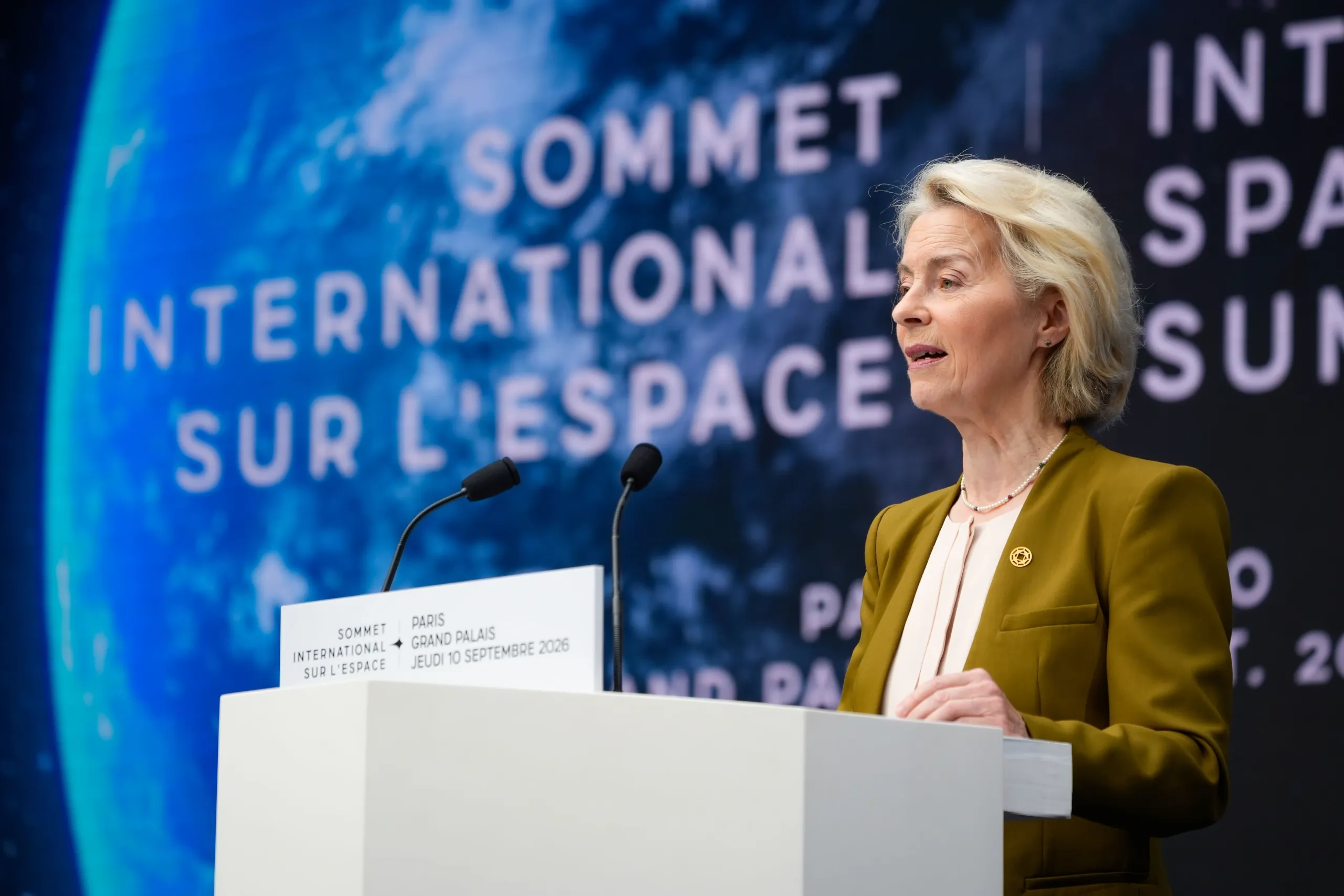
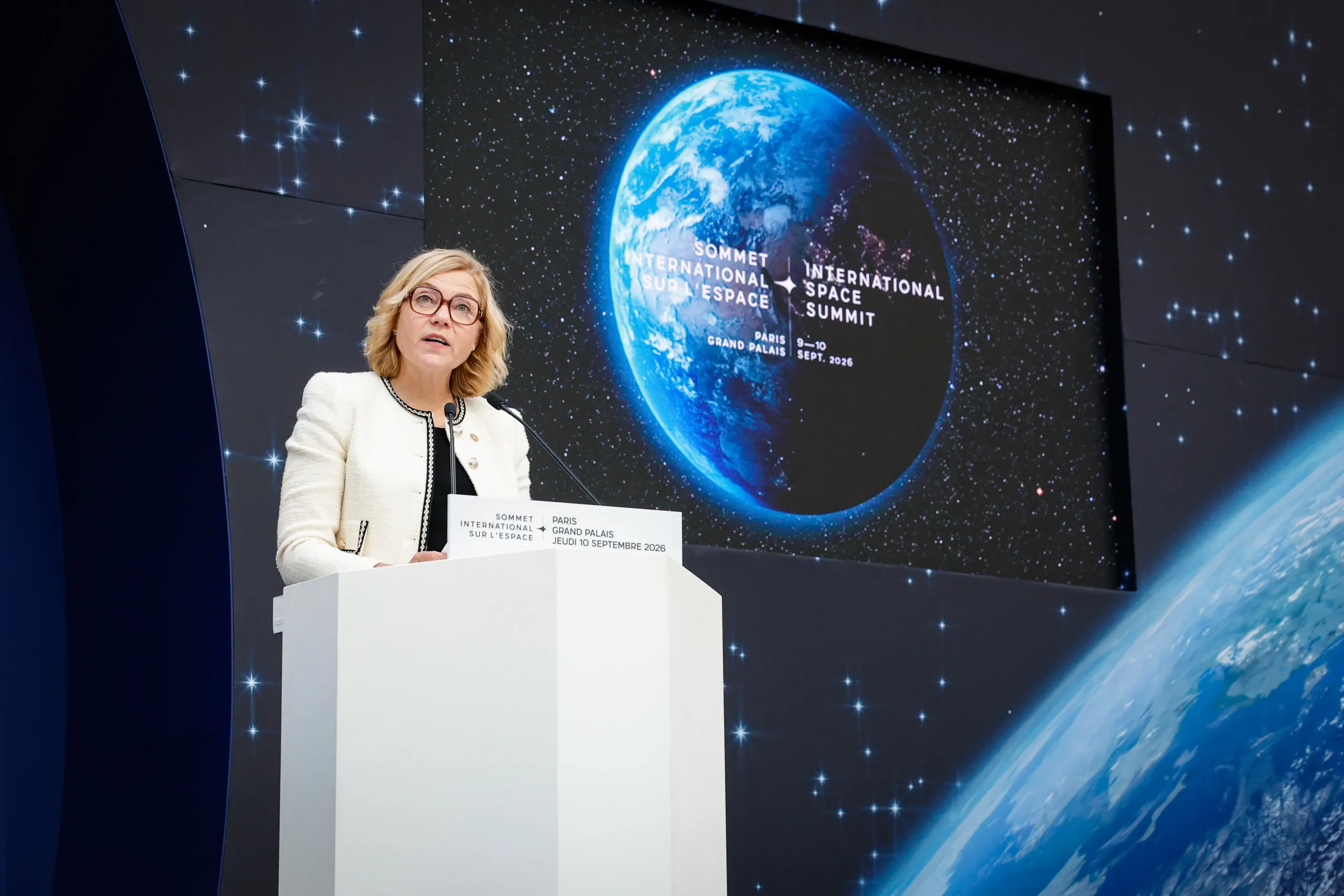
During the event, Executive Vice-President Henna Virkkunen focused on secure space-based connectivity. She emphasised that IRIS² will provide sovereign and secure connectivity for governmental users, including defence, security and emergency services, ensuring reliable communications when terrestrial networks are disrupted or unavailable. It will also extend resilient connectivity across Europe and beyond, supporting critical infrastructure and services. By reducing dependence on non-European systems, secure satellite connectivity strengthens Europe’s ability to act autonomously in times of crisis. IRIS² is therefore an important element of the EU’s strategic infrastructure for a more connected, resilient and secure Europe.
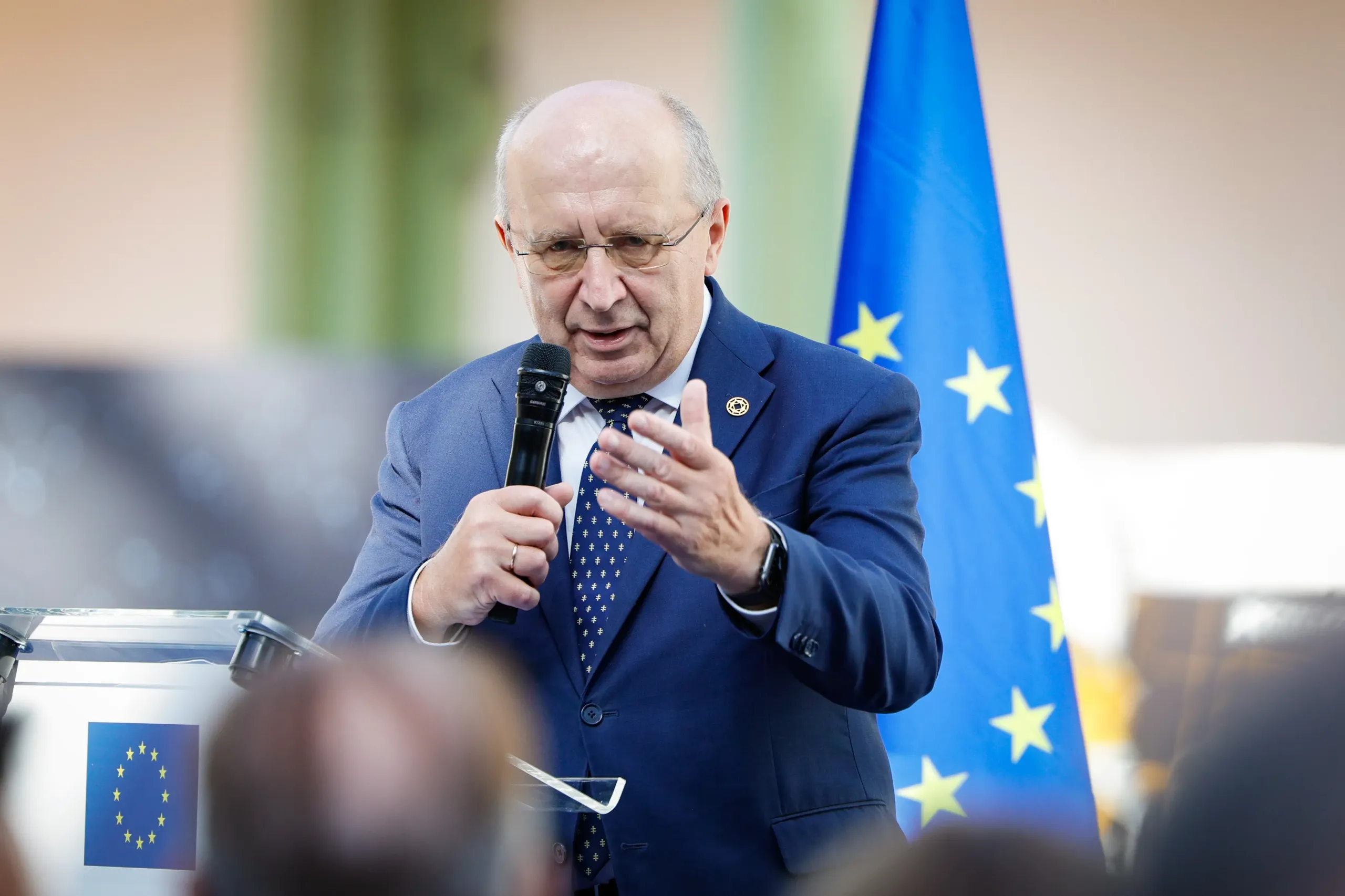
He underlined the importance of resilient space infrastructure, autonomous access to space and the protection of key space assets, including with the upcoming European Space Shield. He also highlighted the need to strengthen Europe’s space economy with initiatives such as CASSINI, including support for established companies, start-ups, and emerging technologies.
From political ambition to concrete capabilities
The European Commission is advancing European space policy towards the next Multiannual Financial Framework, which will cover the 2028–2034 period. Building on the Commission Vision for Europe’s Space Economy and the proposed EU Space Act Regulation, it has proposed a defence and space window under the European Competitiveness Fund and Horizon Europe 2028 - 2034. The European Union and its Member States are taking steps across secure connectivity, Earth Observation (EO), satellite navigation, access to space, sovereign space technology, and research and innovation to strengthen Europe's ability to develop, deploy, and operate key space infrastructure which serves Europe’s economy and security, and citizens’ daily lives.
These efforts also show the value of a Team Europe approach. The EU, Member States, ESA, European industry, and the wider research and innovation ecosystem each bring different capabilities and responsibilities. By combining these strengths, Europe can mobilise resources at a scale which individual actors could not achieve alone.
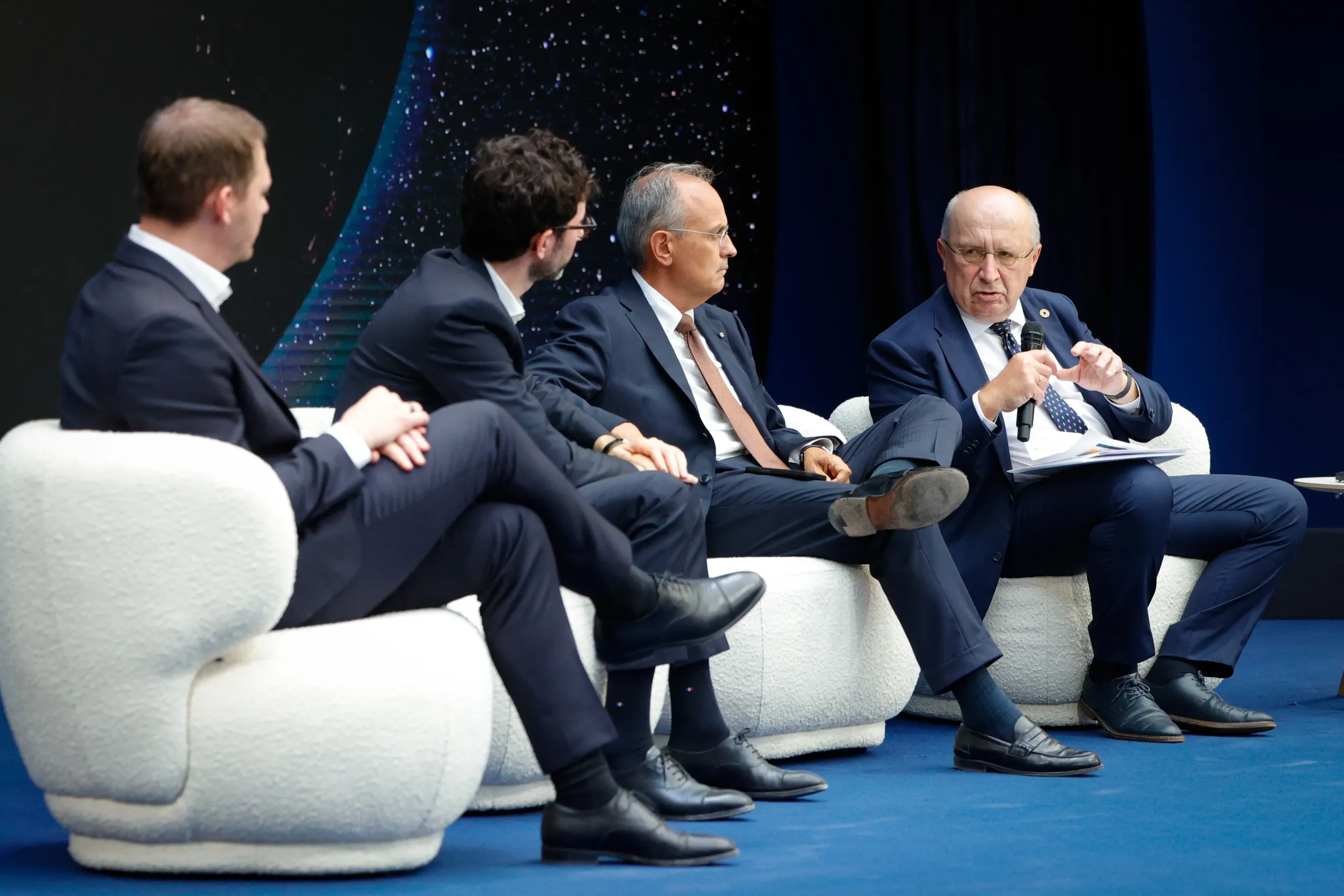
This approach was also reflected in a dedicated European Commission event bringing together Commissioner for Defence and Space Andrius Kubilius, French Minister of Higher Education, Research and Space Philippe Baptiste, ESA Director-General Josef Aschbacher, and many European Member State representatives and stakeholders around a set of shared priorities. Four topics were covered:
1. IRIS²: a new European story on secure connectivity
At the Summit, the European Commission presented IRIS² as an example of Europe’s efforts to strengthen its secure and sovereign connectivity capabilities.
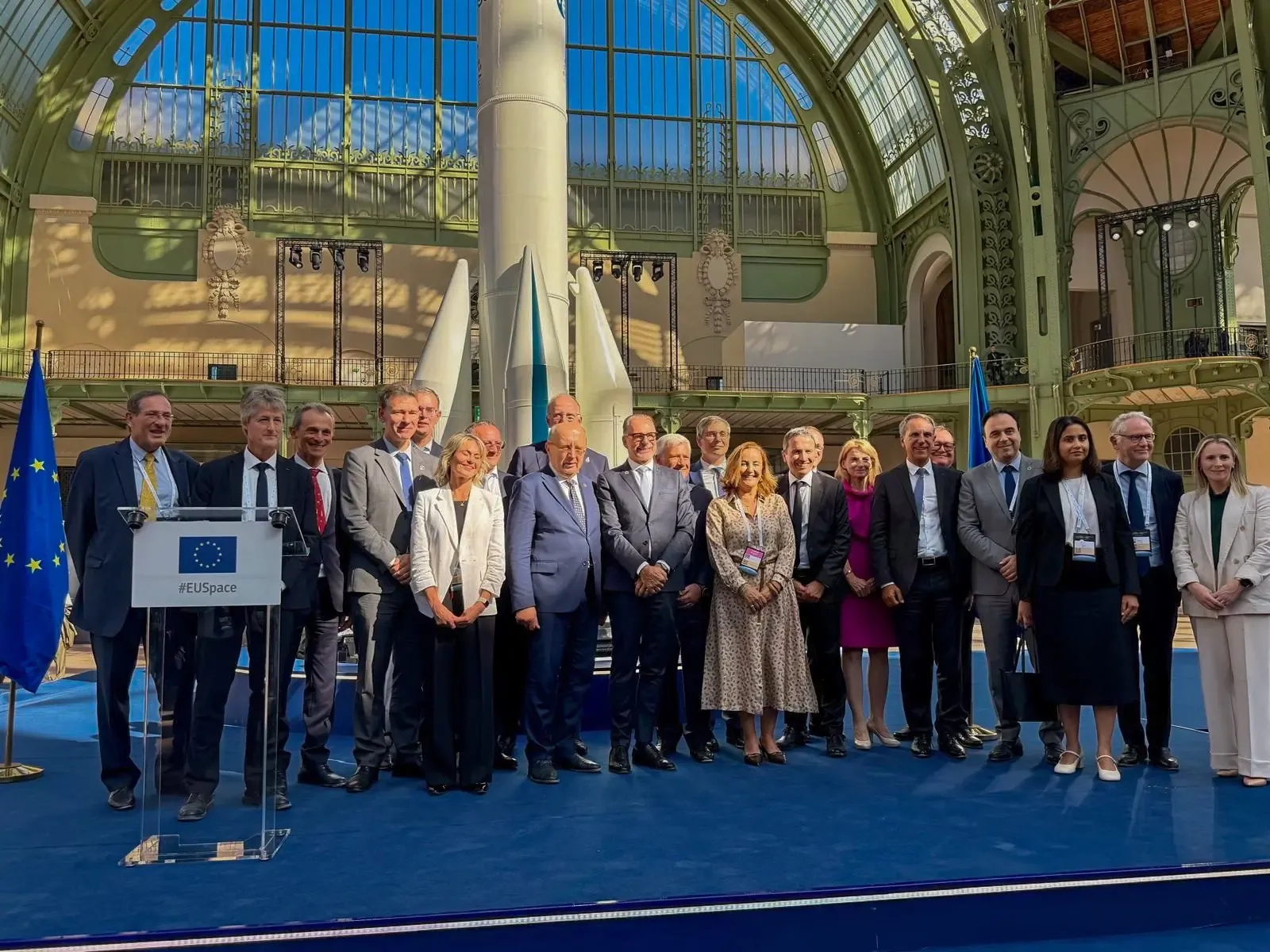
Following the implementation agreement concluded in August 2026, the reinforced IRIS² programme is steadily moving towards full-scale deployment. The constellation will comprise 348 satellites, including 330 satellites in higher Low Earth Orbit and 18 in Medium Earth Orbit, with the first launches brought forward to 2029.
This reinforced architecture will increase secure governmental capacity and introduce additional capabilities for defence, security, and emergency services. It will provide European authorities with resilient and sovereign connectivity for important missions and during crises, while reducing dependence on non-European systems for sensitive communications.
Nine Member States (France, Italy, Luxembourg, Germany, Greece, Poland, Spain, Belgium, and Hungary) added national support.
IRIS² illustrates how the EU is developing secure connectivity capabilities through cooperation between European institutions, Member States, and industry. These capabilities are intended to strengthen Europe’s security, resilience and strategic autonomy.
2. Long-term vision for European space transportation
At the Summit, President von der Leyen and Commissioner Kubilius also endorsed a Long-term Vision for European Space Transportation, setting a shared direction for Europe’s transportation to, in, and from space., this Vision foresees that, by 2045, Europe will have autonomous, reliable, and cost-effective access to space, supported by robust launch capabilities, predictable institutional demand, and a competitive and resilient industrial ecosystem.
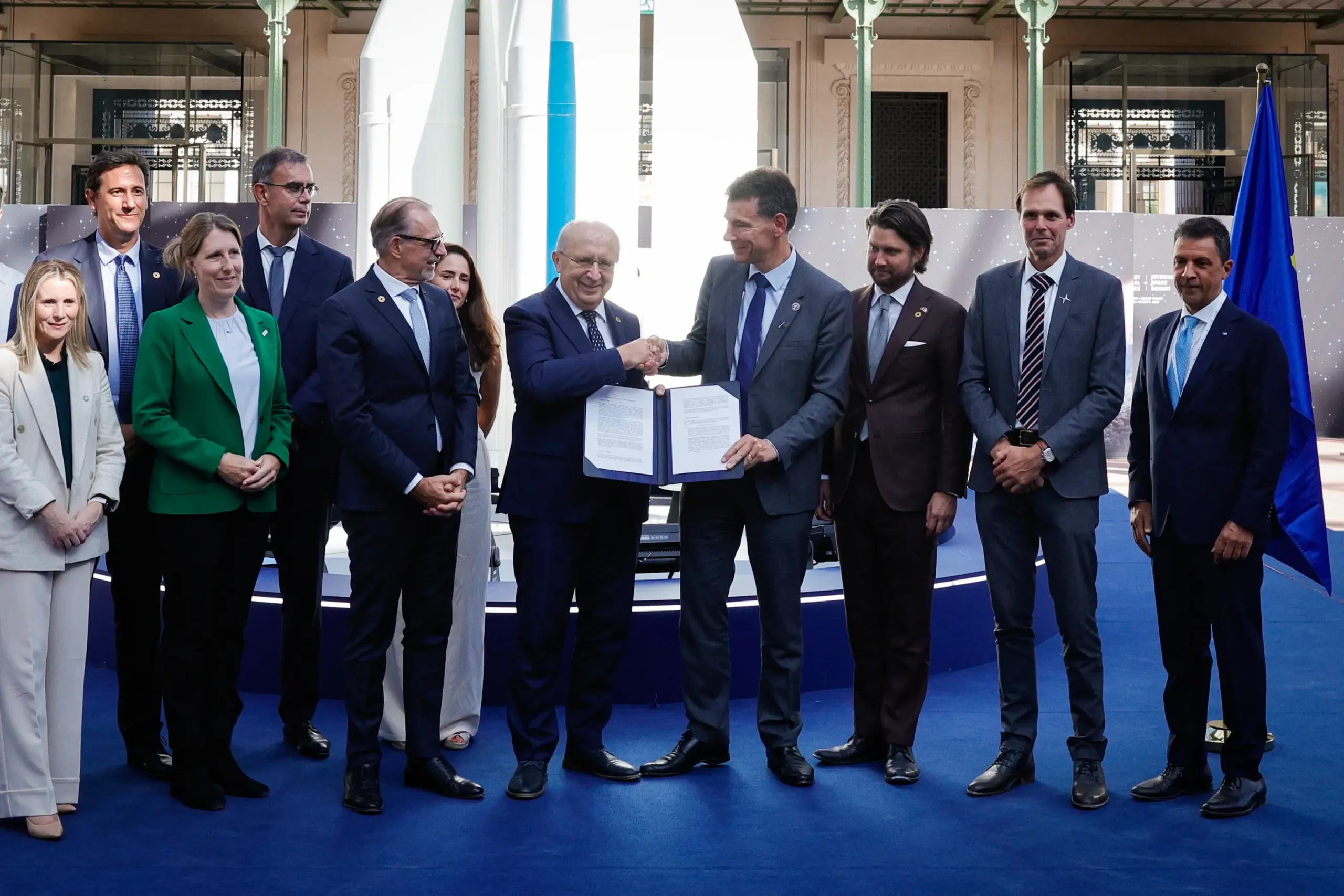
The Vision recognises the pressures facing Europe’s space transportation sector. While Ariane 6 and Vega-C have restored Europe’s autonomous access to space, intensifying global competition, growing demand, supply-chain vulnerabilities, and external dependencies require Europe to strengthen its capabilities further.
The gathering showed a shared political commitment by the European Commission, ESA, and Member States to work together, within their respective areas of responsibility, to strengthen Europe’s access to space. The Vision calls for European preference, fair competition, consolidated public-sector demand, and greater private investment, while supporting innovative transportation solutions for future missions and the growing space economy.
Autonomous access to space is a cornerstone of Europe’s strategic autonomy and resilience. The Vision provides a framework for implementing this objective over the long term. It seeks to ensure that Europe can launch and transport the spacecraft and technologies it needs while strengthening its industrial competitiveness and position as a major spacefaring actor.
3. Copernicus and Earth Observation
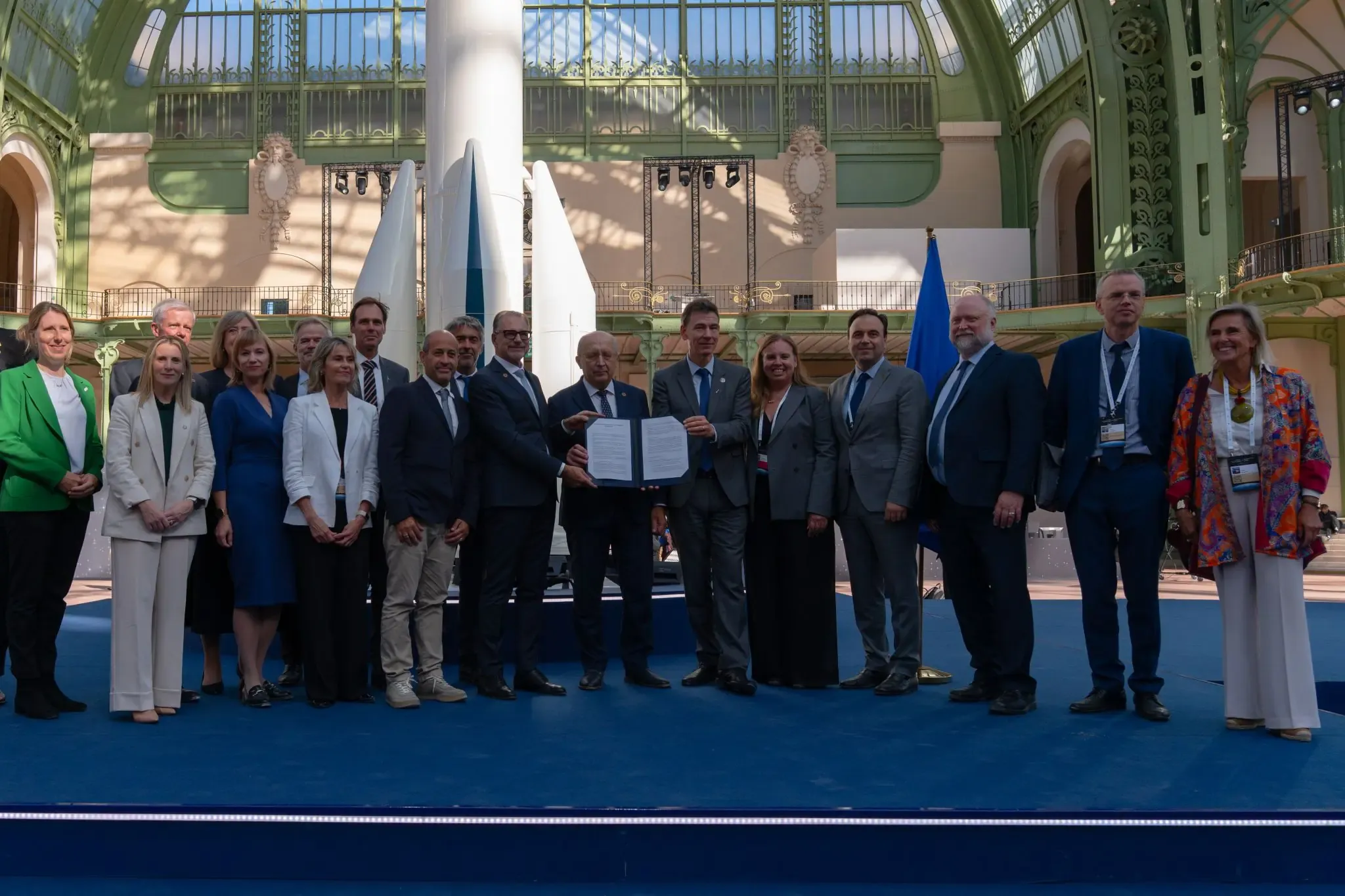
At the Summit, representatives of EU Member States, Copernicus participating States, space agencies, scientific institutions, international organisations, and partners expressed their support for Copernicus, the Earth Observation component of the EU Space Programme. Through a joint declaration, they reaffirmed the relevance of Copernicus as a global public good and a key element of Europe’s EO capabilities.
Galileo and Copernicus are not just for Europe. They are European investments that have become global public goods.
— Ursula von der Leyen
President of the European Commission
The declaration recognises the role of EO in understanding and protecting our planet, managing natural resources, supporting disaster preparedness and response, and strengthening resilience to global challenges. Copernicus data and services have become essential for policymaking, scientific research, innovation, civil protection, and sustainable economic development.
With its free, full, and open access policy, Copernicus has generated benefits well beyond Europe. It supports users worldwide and contributes to international efforts to better understand, monitor and tackle climate change, to protect biodiversity, strengthen disaster risk reduction, and foster sustainable development. Its Sentinel satellites and operational services provide trusted, regular, and long-term data which support climate adaptation and mitigation, as well as environmental decision-making.
The declaration calls for continued investment in the next generation and expansion missions of Copernicus, ensuring the long-term continuity, reliability, and scientific value of its observations. It also calls for stronger international cooperation, wider data and knowledge sharing, and continued openness to trusted partner countries.
It also reaffirms the role of Copernicus as a strategic European capability with global reach and highlights the benefits of European investment in space for citizens, economies, and societies worldwide.
4. EU In-Orbit Operations and Services
The In-Space Operations and Services (ISOS) Pilot Mission aims to build European capabilities for in-space operations and services, such as satellite inspection and repair, in-space logistics, orbital manufacturing, and debris removal.
It underlines the need for Europe to build the capacity to operate and provide services in orbit, safeguarding its freedom of action, reinforcing resilience, and improving security, while also unlocking new commercial opportunities in the growing in-space economy.
The European Commission has initiated the first steps towards implementing the Pilot Mission, in close cooperation with Member States, ESA, and European Economic Area partners. At the ILA Berlin Air Show in 2026, five additional countries joined the ISOS Joint Declaration, bringing the total number of signatories to ten. The European Commission and ESA also signed a Joint Declaration on cooperation on in-space operations and services, committing to work together towards deploying the Pilot Mission by 2030.
The partnership lays the groundwork for a future European in-space service infrastructure and shows that, by acting together, Europe can strengthen its strategic capabilities, support its space industry and help shape the emerging in-space economy.
EU Space as an enabler of Europe's competitiveness and security
Space has become a foundation of Europe’s competitiveness, resilience, and strategic autonomy. Galileo, Copernicus, and IRIS² already provide crucial services across the economy and security domains. Europe must strengthen its capacity to design, build, launch, and operate its own systems, while reducing fragmentation, creating scale, and enabling European companies to compete globally. The European Competitiveness Fund (ECF) will support this ambition by strengthening Europe’s space flagships, expanding dual-use services, attracting private investment, and reducing dependencies.
The EU Space Programme is already a key pillar of European security, providing secure connectivity, encrypted positioning, Earth Observation, and space surveillance services. The proposed ECF will further strengthen these capabilities, while the Space European Defence Project of Common Interest (EDPCI) will enable Member States to jointly develop defence-specific capabilities. Together, these capabilities will contribute to the European Space Shield, bringing EU, national, and commercial assets into a coherent framework to strengthen European preparedness, resilience, and strategic autonomy.