
OBSERVER: How Earth Observation links healthy ecosystems to healthy people
Environmental change affects human health. Deforestation, extreme weather, air pollution, and the loss of pollinators can affect health in different ways, influencing exposure to infectious diseases, the nutritional value of food, and affecting mental well-being. Studying these connections requires consistent information on how ecosystems change across large areas and over long periods of time, and Earth Observation can provide this environmental information. In this Observer, we look at how data from the Copernicus Land Monitoring Service support research into the connection between environmental change and human health, and why long-term observations matter for this research.
‘The global Earth crisis is now driving an urgent global health crisis,’ says Professor Samuel Myers, Director of the Johns Hopkins Institute for Planetary Health and of the Planetary Health Alliance. Human activities have become the dominant force shaping the biophysical conditions of the planet, and the resulting changes in natural systems are now a major driver of the global burden of disease and health issues.
Deforestation, for example, affects exposure to malaria and schistosomiasis (a parasitic disease transmitted through freshwater snails) in East Africa, and dams and irrigation systems have a similar effect. Changes in the biological composition of ecosystems affect exposure to infectious diseases, including tick-borne Lyme disease and rodent-borne hantavirus.
Nutrition is another dimension of health strongly affected by environmental change. Myers' research has shown that rising concentrations of carbon dioxide in the atmosphere are making food less nutritious, with staple food crops such as rice, wheat, and maize losing significant amounts of certain nutrients: iron, zinc, and protein in rice and wheat, and iron in maize.
His research has also found that the loss of pollinating insects is linked to an estimated 427,000 excess deaths every year worldwide, because there are not enough pollinators to optimise the yields of foods such as fruits, nuts, seeds, and vegetables, which help reduce the risk of heart disease, stroke, certain cancers, and diabetes.
Extreme events such as wildfires, tropical cyclones, and droughts also have significant mental health impacts on affected populations. Further, air pollution contributes to non-communicable diseases, including heart and lung disease, certain cancers, and stroke.
Every dimension of health is actually being affected by these changes in environmental conditions.
— Professor Samuel Myers
Director of the Johns Hopkins Institute for Planetary Health and the Planetary Health Alliance
Restoring natural systems to protect human health
‘If the diagnosis is that disrupted and destabilised natural systems are driving ever larger global burdens of disease, then the treatment really has to be finding ways to protect and regenerate those natural life support systems which we all depend on,’ Myers explains, adding that nature-based solutions are one part of this treatment. Examples include protecting coastal systems to strengthen coastal resilience and adopting agro-ecological approaches to food production.
Nature-based solutions are not the only approach. Energy, food, manufacturing, infrastructure, and waste management systems are designed to meet human needs but are also beginning to destabilise natural life-support systems. Myers argues that these systems need to be redesigned to reduce their ecological footprint while contributing to the restoration and protection of the natural systems on which we all depend.
Determining whether restoration efforts are effective requires monitoring ecosystem conditions and changes over time. However, the indicators used to assess recovery must reflect the characteristics of each ecosystem. A desert ecosystem in the American Southwest is very different from a tropical system in the Brazilian Amazon or a boreal forest in Siberia. Biological composition, keystone species (species on which many others in an ecosystem depend), microbial diversity, ecosystem structure, and the functions the ecosystem provides may all need to be considered when assessing recovery.
Beyond greenness: understanding the relationship between vegetation and human health
Vegetation is one of the most widely observed characteristics of terrestrial ecosystems. Satellite-derived vegetation indices, such as the Normalised Difference Vegetation Index (NDVI), which estimates the health of vegetation based on how plants reflect light at certain wavelengths, make it possible to monitor vegetation activity and changes in greenness across large geographical areas.
However, the presence of vegetation does not necessarily indicate that an ecosystem is healthy or functioning effectively.
‘There's nothing in greenness that quantifies diversity’ Myers notes. He gives the example of the southern United States, where native forests are sometimes cut down for timber and replanted with monocultures of fast-growing southern pine. From the standpoint of carbon sequestration, that may be fine because fast-growing trees absorb carbon dioxide from the atmosphere. From the standpoint of ecosystem function, however, it is much less effective because there is very little diversity in the system. Fewer organisms and species can live there, and the system is also much more vulnerable to disturbances such as pests.
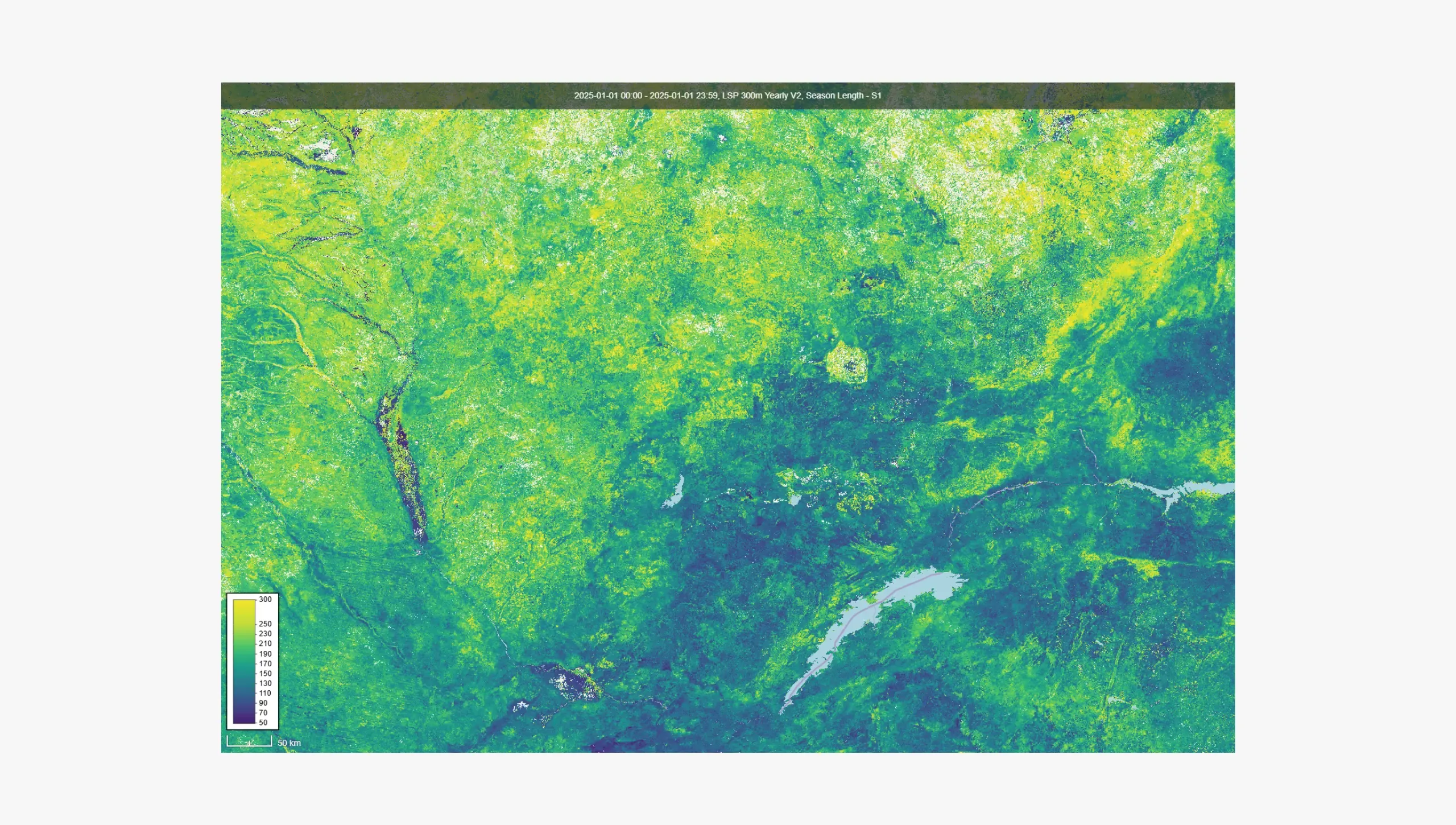
Myers points out that even the mental health benefits of green spaces depend in part on diversity. People do not respond in the same way to a landscape dominated by a monoculture, in which everything looks the same, as they do to one richer in diversity. ‘The greenness index can be a good proxy for exposure to nature, but it doesn't capture the details of what kind of biological diversity is in that system,’ he says.
Nevertheless, vegetation indices remain valuable environmental indicators, particularly when combined with other information to investigate how environmental conditions influence human health.
Epidemiological research already uses vegetation observations from the Copernicus Land Monitoring Service (CLMS). Studies in England and Italy have combined Copernicus Global Land NDVI, with data on air pollution, noise, and artificial light at night to investigate children’s cognitive performance and early-onset dementia.
A 2020 study in Greater London combined more than 185,000 death records with CLMS vegetation and land-use data and with climatic and socio-economic information. Among all the local factors examined, vegetation cover had the strongest modifying effect on the relationship between temperature and heat-related mortality risk.
Observing environmental change to understand disease risk
Gathering ground-based data across the entire planet is often not feasible. ‘These remote sensing platforms to track biophysical conditions are absolutely critical to the field of planetary health, but also to the ever more important effort to support human health by stabilising natural systems,’ Myers says.
Remotely-sensed proxies for soil moisture, photosynthesis, temperature, and aerosol optical depth (a measure of how much airborne particles block sunlight, used as a proxy for exposure to air pollution) make it possible to estimate biophysical changes across the entire planet. Researchers are already investigating the relationship between aerosol optical depth, air pollution exposure, and cardiopulmonary disease.
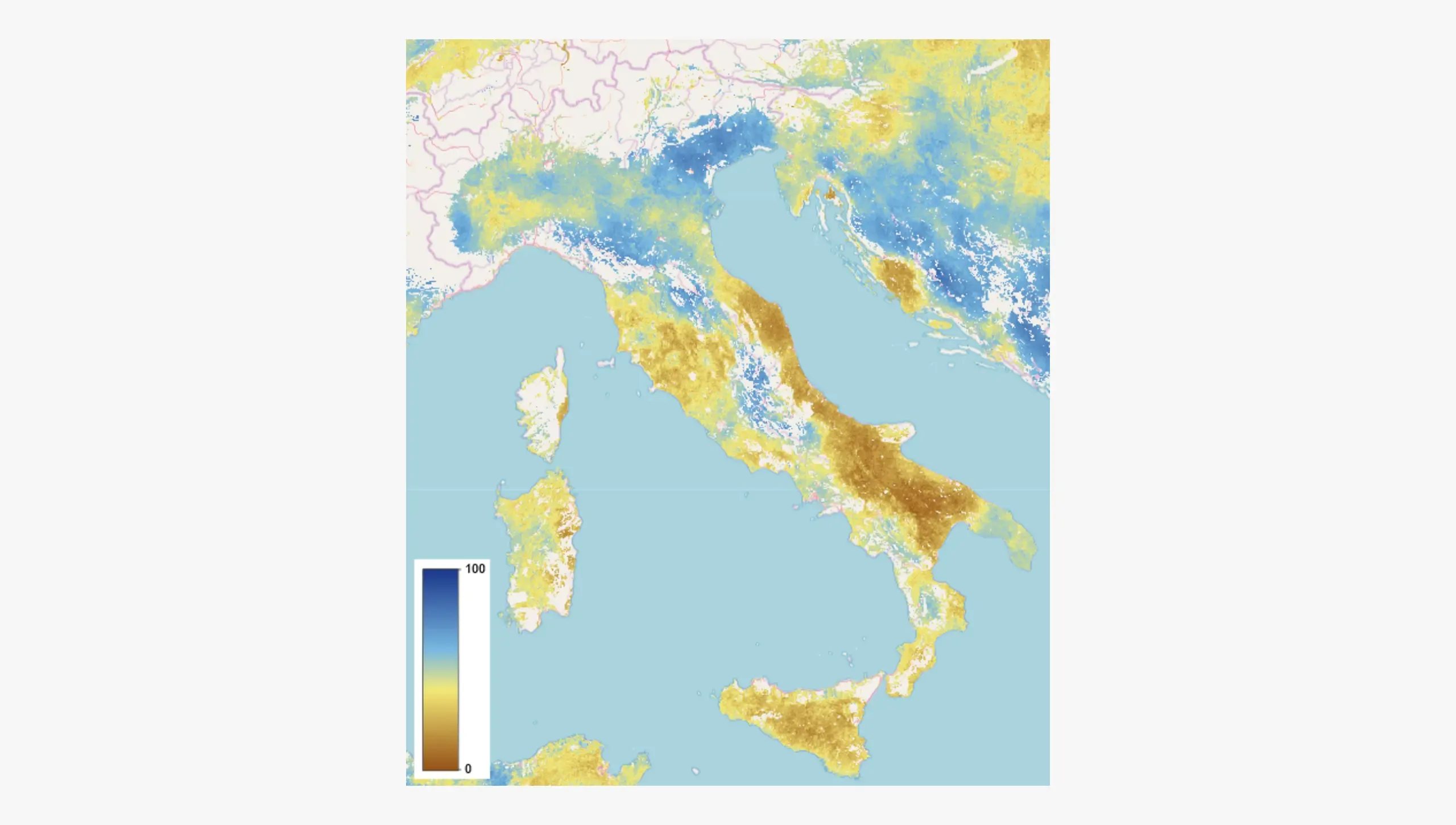
Myers suggests that soil moisture data may also prove useful for understanding exposure to vector-borne diseases. A 2024 study published in Medical and Veterinary Entomology provides a concrete example. Researchers modelled the ecological niche and potential distribution in Italy of Culicoides imicola, a species of biting midge and a major vector of livestock viral diseases in Europe, using environmental predictors including the CLMS Soil Water Index (SWI) at 1 km resolution. Because the larvae develop in moist substrates, soil moisture observations can help characterise vector habitat suitability and assess how climate-driven environmental changes may influence animal disease risk.
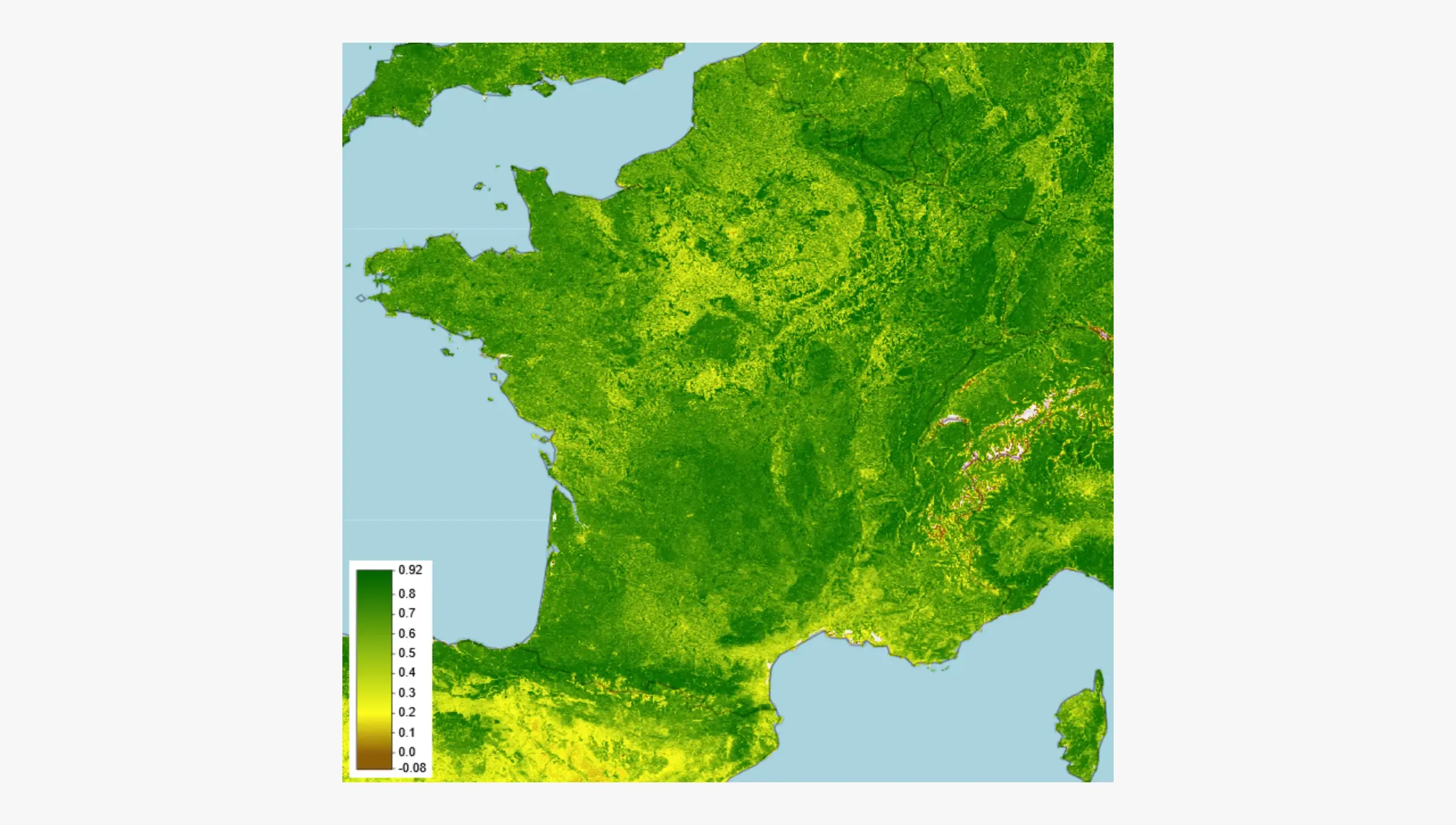
Vegetation observations can play a similar role in understanding infectious diseases. A 2023 study on Crimean-Congo haemorrhagic fever (a tick-borne viral disease) combined epidemic intelligence with environmental predictors including Copernicus Global Land PROBA-V NDVI to map disease risk across 52 countries and territories in the World Health Organization (WHO) European Region. A 2023 study on Lyme borreliosis (Lyme disease) in France used NDVI as a proxy for tick habitat suitability, finding that areas with NDVI values of 0.6 or higher showed 37% higher odds of Lyme borreliosis presence than areas with values below 0.6.
More recently, a 2026 study of dengue transmission in Italy investigated 296 locally acquired cases of dengue virus serotype 2 (DENV-2) from the 2024 outbreaks, incorporating CLMS NDVI at 300 m resolution alongside temperature, population density, and vector-control interventions to characterise environmental conditions around likely exposure locations.
For Myers, these data are needed both to establish the relationship between environmental conditions and human health and to manage efforts to protect natural systems.
Monitoring change over time
Satellite-based observations can provide information on crop conditions and yields, particularly in regions where reliable ground-based agricultural data are limited. Such information is already used within international crop-monitoring and early-warning systems, including the Group on Earth Observations Global Agricultural Monitoring initiative (GEOGLAM) and the Anomaly Hotspots of Agricultural Production (ASAP) platform of the European Commission, to help identify emerging food-security hotspots and decide where and when food assistance may be needed.
As Myers explains, the data obtained from space can become finer grained and more reliable, helping researchers understand and ultimately predict which populations may be vulnerable to environmental change.
Myers also stresses the value of long-term records, given the relatively limited number of ecological sites with consistent long-term observations. Historical records make it possible to establish environmental baselines, understand how natural systems change over time, and train and validate models designed to anticipate future change. Earth Observation (EO) can help meet this need by providing consistent, repeated measurements over large areas in which long-term field measurements are sparse or unavailable. As CLMS time series continue to grow, their value for establishing environmental baselines, validating models, and investigating relationships between ecosystem change and human health is likely to increase.
Bringing Earth sciences and health sciences together
Looking ahead, Myers believes that the Earth sciences and health sciences communities need to come together and integrate their efforts. He points to work with Johan Rockström, Director of the Potsdam Institute for Climate Impact Research, including a 2025 commentary in The Lancet calling for the Earth sciences communities to work with the health sciences and planetary health community.
Earth scientists need to understand the health implications of the biophysical changes they monitor, while health scientists need to recognise the importance of EO and research into the state of natural systems. ‘It's time to really integrate these communities and these fields, whether planetary boundaries, planetary health, to a single integrated understanding,’ Myers says.
The growing use of CLMS products in environmental-health research provides practical examples of this integration. For Myers, the broader objective is to integrate environmental and global health perspectives rather than addressing them separately. ‘When you're talking about healthy ecosystems and healthy human populations, it's really two sides of the same coin,’ Myers concludes.