
Successful Launch of EU Copernicus Sentinel-3C to Monitor Our Changing Planet
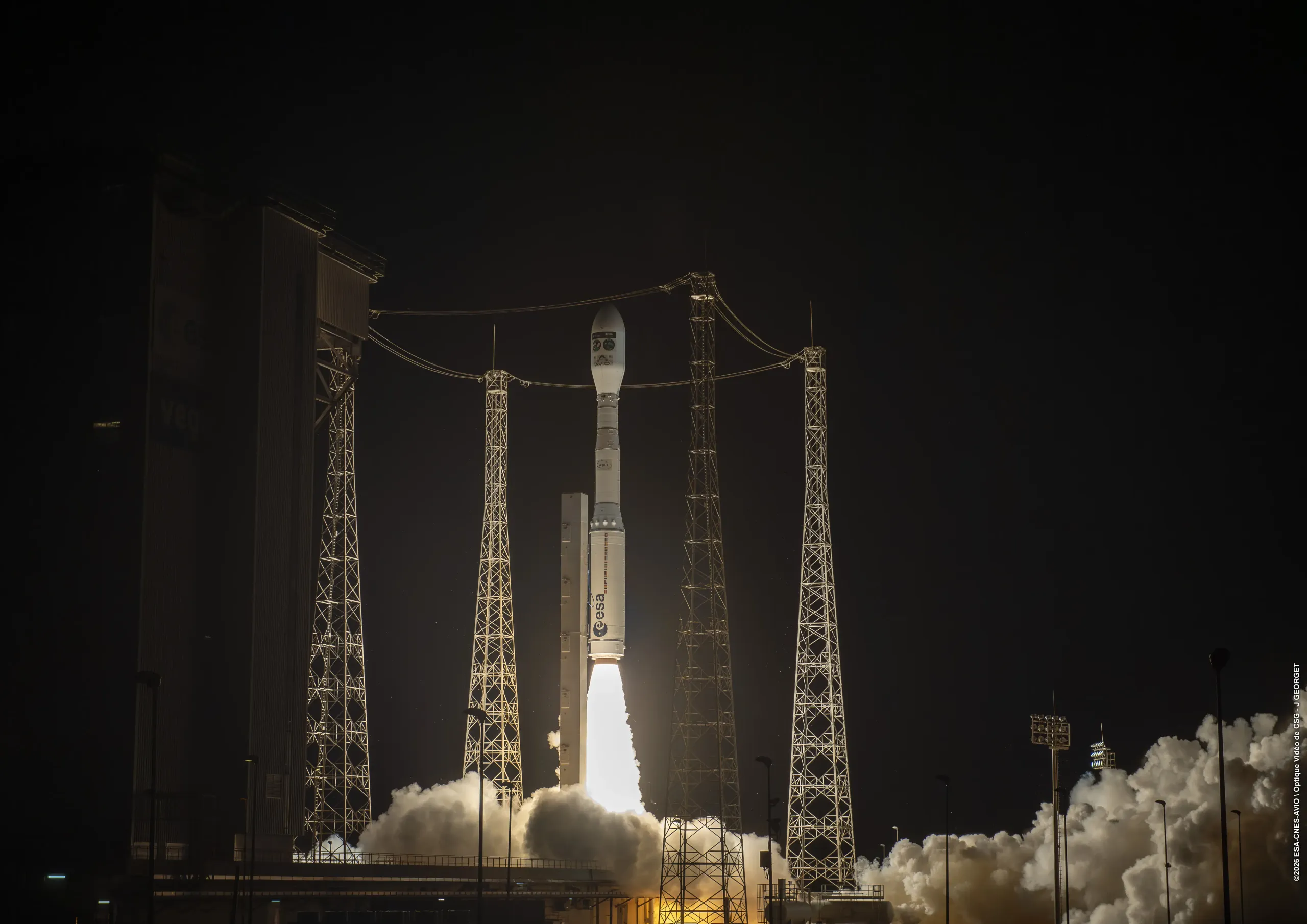
A new Copernicus satellite is now in orbit getting ready to strengthen Europe’s ability to monitor the health of our oceans, land and climate.
On 15 September 2026 at 03:21 CET , the European Union successfully launched Copernicus Sentinel-3C from Europe’s Spaceport in Kourou, French Guiana, aboard a Vega C launcher. The satellite established its first contact with Earth at 04:33 CET confirming that is in good health.
Sentinel-3C will provide data that help us better understand what is happening on Earth, from changes in the oceans and polar regions to wildfires, droughts and extreme heat.
Owned and managed by the European Commission as part of Copernicus, the EU’s Earth observation programme, the satellite will provide data that are freely available to public and private users around the world. The mission has been delivered in close cooperation with the European Space Agency, EUMETSAT and Avio.
Watching our planet from 800km above us!
Sentinel 3C will monitor a wide range of environmental conditions. Its observations will help track:
- sea surface temperature, sea level and ocean currents
- coastal water quality and harmful algal blooms
- wildfires, droughts and vegetation health
- land surface temperature and heatwaves
- polar ice and changes in the climate
The information collected by the satellite has many practical uses. It can support weather forecasting, agriculture, water management, marine safety and climate monitoring. It can also help public authorities respond to natural disasters and assess their impact.
Ensuring continuity of the Sentinel 3 mission
Sentinel 3C will also strengthen the continuity of the Copernicus Sentinel-3 mission. Once operational, it will work alongside the other Sentinel 3 satellites to ensure that users can continue to access the Earth observation data they need.
The satellite will now undergo several months of commissioning and calibration. Its instruments and systems will be tested before it becomes fully operational.
Once this process is complete, Sentinel 3C will start delivering high quality observations to users around the world, helping scientists, authorities and businesses better understand and respond to a changing planet.
More about the Sentinel-3 Mission