
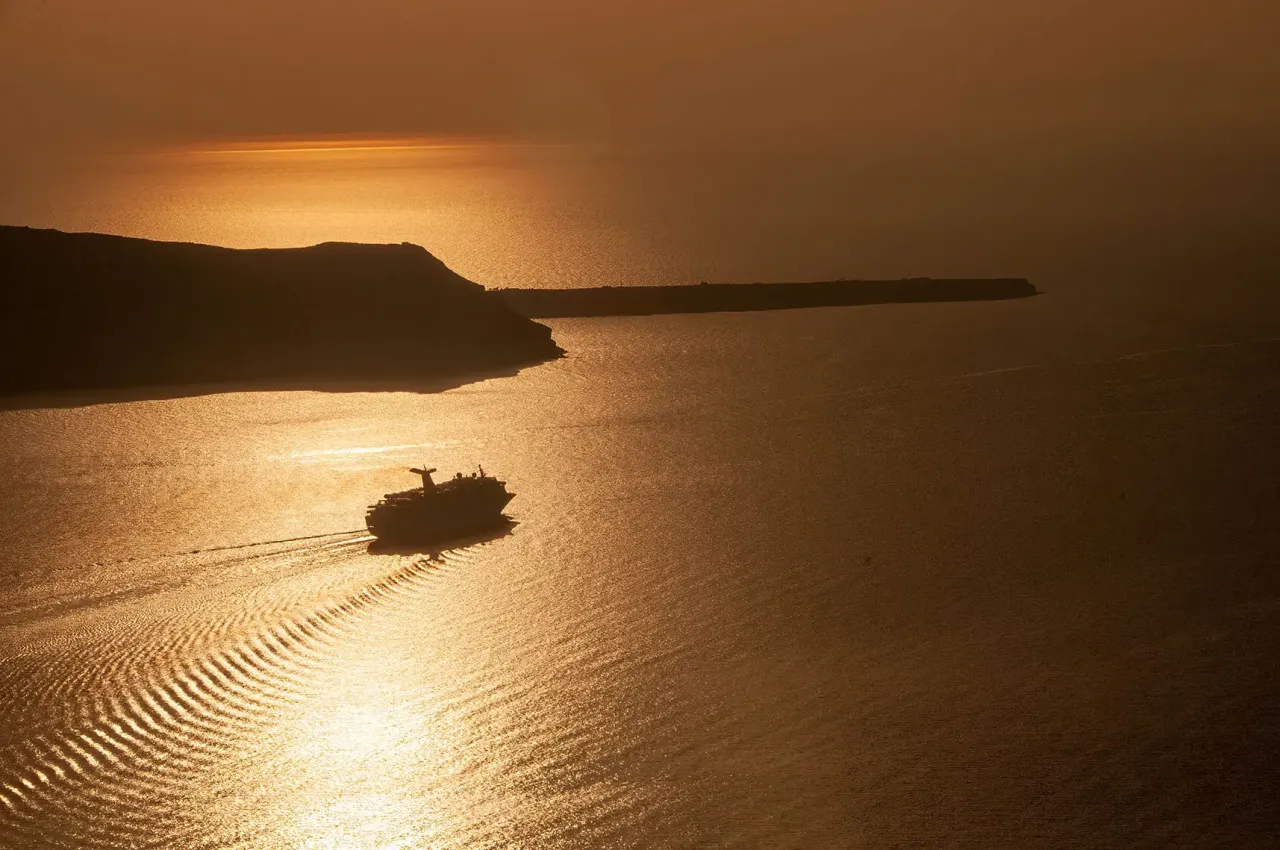
Helping the German Waterways Police investigate a suspicious cruise ship
The Copernicus Security Service (CSS), among other things, covers also maritime safety, sustainability, and surveillance, under its Copernicus Maritime Surveillance (CMEMS) component. Operated by the European Maritime Safety Agency (EMSA), CMEMS supports national law enforcement at sea to combat cross-border crime. Their work in March 2022 with the German Waterways Police (DEWP) is a prime example of this collaboration.
Key figures
Earth Observation images delivered to EU Member States and institutions by EMSA in 2024
Copernicus Maritime Surveillance products delivered to the EU and its Member States in 2024
Copernicus images identifying oil polluters and pollution at sea delivered in 2024
The challenge
In March 2022, a month after its sale to a new owner, a cruise ship left an EU port and stopped transmitting its automatic identification system (AIS) signal. The DEWP started to investigate what could be a potential violation of EU waste shipment and ship recycling regulations. When the ship approached a shipbreaking beach in Pakistan, it once again stopped transmitting its AIS data. To keep track of the suspicious cruise ship, the DEWP needed special assistance.
The solution
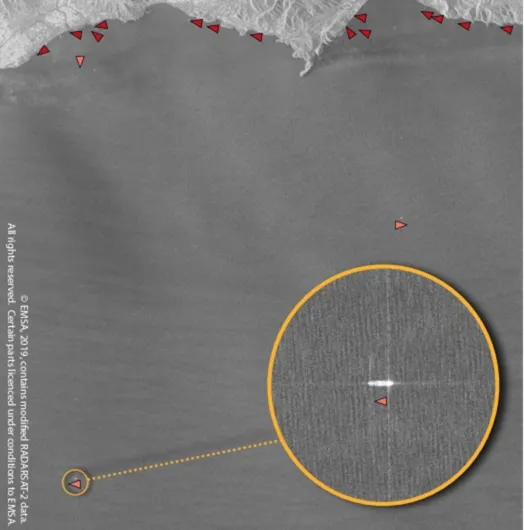
The DEWP requested Copernicus Maritime Surveillance imagery products to EMSA for the area around the Pakistani town of Gadani, where the cruise ship was headed. Copernicus data helped authorities detect and locate the vessel, which had been given new identifying data.
Results and impacts
Despite the fact that the ship had its ownership and ship data changed twice, Copernicus Maritime Surveillance products and EMSA vessel traffic data provided the DEWP with the information needed to conduct a criminal investigation. This scenario is just one example of how Copernicus Maritime Surveillance imagery helps law enforcement every day.
