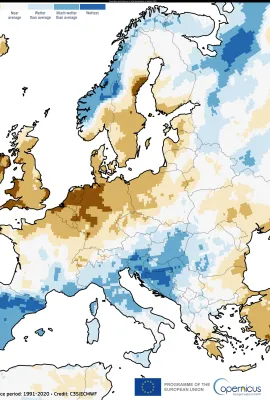
The Copernicus Climate Change Service (C3S) has published its latest climate bulletin for March 2025. This data visualisation, based on C3S data, shows the total precipitation anomaly in Europe for the month. It highlights that most of southwestern Europe was affected by above average levels of precipitation, particularly over the Iberian...
Results (558)
According to researchers from the National Autonomous University of Mexico, Mexico’s remaining glaciers face extinction within five years due to climate change and volcanic activity. The decline of these glaciers has significant environmental and economic consequences, including those which impact local biodiversity and the availability of...
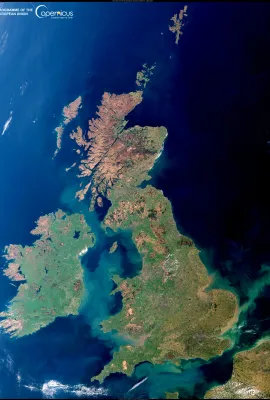
This Copernicus Sentinel-3 image from 2 April 2025 provides a rare, cloud-free view of the UK and Ireland. From the green lowlands of Ireland and England to the hills of Wales and the rugged Highlands of Scotland, the amazing landscape is clearly visible from space, along with sediment patterns in the surrounding coastal waters. Copernicus data...
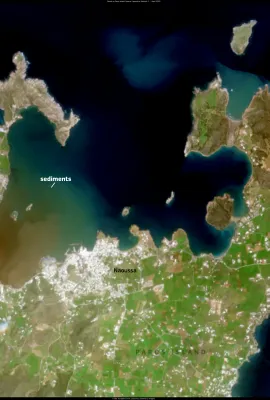
In late March 2025, the Greek island of Paros was affected by a powerful storm which caused intense flooding, particularly in the towns of Parikia and Naousa. Torrential rain and hailstorms inundated streets, carrying vehicles and debris through urban areas. Although the damage was significant, emergency services successfully rescued 13...
In late March 2025, the Australian state of Queensland was affected by severe flooding, with some regions receiving over a year's worth of rainfall in mere days. Areas in western Queensland recorded the worst level of flooding in 50 years, leading to significant infrastructural damage and the evacuation of residents. In this Copernicus...
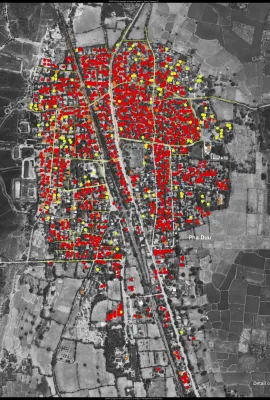
On 28 March 2025, a 7.7 magnitude earthquake struck Myanmar, with the epicentre near Mandalay, the country's second largest city. More than 1,700 people died and 3,400 were injured. The earthquake caused extensive damage to infrastructure, including the collapse of the historic Ava Bridge. The Copernicus Emergency Management Service (CEMS)...
Since 23 March 2025, South Korea has faced its most destructive wildfire in recent history. The fire began in Uiseong County and quickly spread across North Gyeongsang Province, burning over 33,000 hectares, causing at least 27 casualties, and forcing thousands to evacuate. The fire has affected the 1,300-year-old Gounsa Temple along with more...
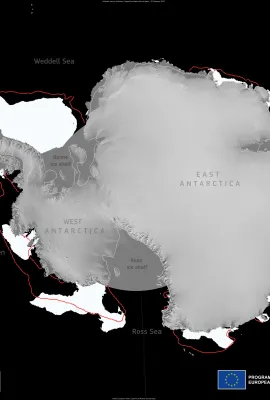
Since 2017, Antarctic sea ice minimums have consistently set record lows, highlighting a concerning trend in climate change. This ongoing decline impacts global ocean currents, weather patterns, and ecosystems. On 25 February 2025, Antarctic sea ice reached its minimum extent for the year at 1.87 million km², marking the seventh lowest minimum...
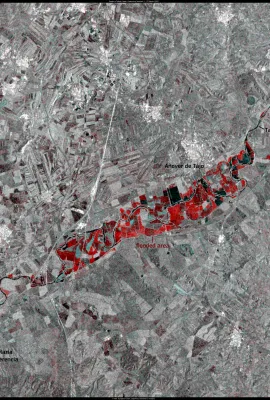
Storm Martinho has caused severe flooding across Spain, prompting evacuations and emergency measures to be implemented in central and northern regions. In Mejorada del Campo, 48 people were evacuated due to rising waters from the Jarama and Henares rivers. Authorities in the city of Ávila declared a state of emergency after the Adaja and Chico...
21 March 2025 is the first-ever World Day for Glaciers, dedicated to raising awareness about the crucial role glaciers play in sustaining life on Earth. Glaciers act as essential reservoirs of freshwater, providing water to millions of people, and support biodiversity around the world. However, rising global temperatures are causing glaciers to...
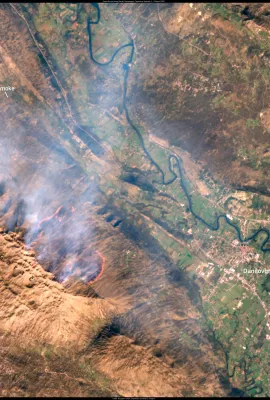
On 8 March 2025, a large wildfire broke out on Mount Garač in the Municipality of Danilovgrad, Montenegro. The fire spread rapidly due to dry vegetation and strong winds, prompting an immediate response from emergency services. The Protection and Rescue Directorate deployed aerial firefighting units to contain the flames and prevent the fire...
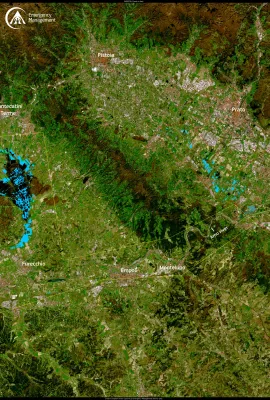
On 14 March 2025, heavy rainfall in northern and central Italy led to severe flooding and landslides in the regions of Emilia-Romagna and Tuscany. Some residents in affected areas have been evacuated, with others rescued by emergency crews. The flooding has affected road travel and led to school closures. On the same day, Italian authorities...
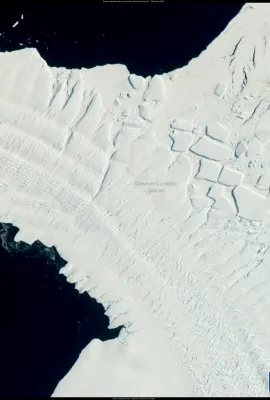
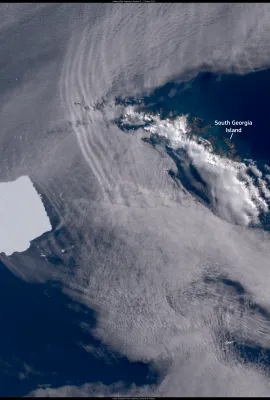
This Copernicus Sentinel-3 image, acquired on 17 March 2025, shows the world’s biggest iceberg, known as A23a. Once measuring 3,900 km2, the iceberg is now roughly 3,300 km2, shrinking as it passes through the Antarctic Ocean. The iceberg started moving again in 2024 after being stuck on the floor of the Weddell Sea for over 30 years. After...
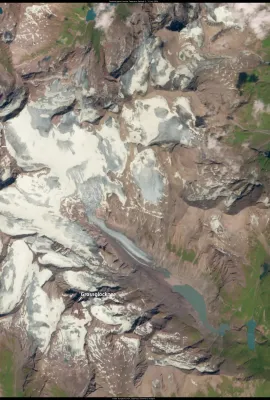
Located on the northern side of the Grossglockner, the highest peak in Austria, the Pasterze Glacier is the longest glacier in the country and in the Eastern Alps. Situated in the Hohe Tauern mountain range and spanning around 15 km2 in area, the glacier is a stunning natural wonder, attracting hikers, climbers, and tourists to experience its...
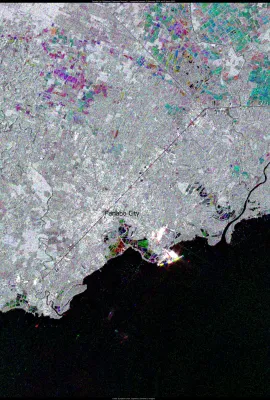
As one of the world’s most vulnerable countries to disasters and the consequences of climate change, the Philippines is facing increasing environmental pressure. One challenge facing the country includes ground subsidence, which poses a particular threat to metropolitan areas in the Philippines by increasing risks of flooding, infrastructural...
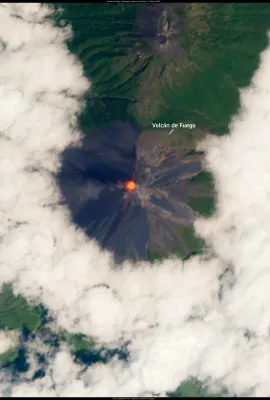
On 9 March 2025, the Fuego Volcano in Guatemala began erupting, prompting the evacuation of over 300 people in the vicinity. The National Coordinator for Disaster Reduction of Guatemala (CONRED) issued an orange alert, recommending that communities near the volcano prepare accordingly. Guatemalan authorities reported that the eruptive phase had...
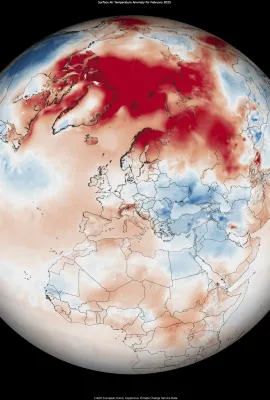
The Copernicus Climate Change Service (C3S) has published its latest monthly Climate Bulletin, focused on key climate trends in February 2025. The bulletin reports that February 2025 was the third warmest February on record globally, with an average surface air temperature of 13.36°C, 0.63°C above the 1991-2020 average for the month....
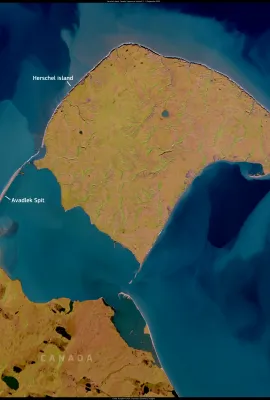
This image, acquired by one of Copernicus Sentinel-2 satellites on 2 September 2024, shows the Arctic coastline of Canada’s Yukon territory, where land meets the dynamic waters of the Beaufort Sea. In the image, Herschel Island (Qikiqtaruk), Avadlek Spit, and the Firth River delta are visible, all of which are affected by coastal and riverine...
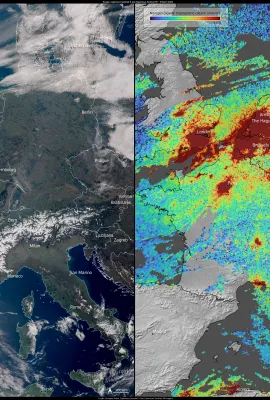
At the beginning of March 2025, a high-pressure system over Europe created stable atmospheric conditions, influencing air quality across the continent. The image on the right shows data acquired by the Copernicus Sentinel-5P satellite on 3 March 2025, highlighting nitrogen dioxide (NO₂) concentrations. Higher levels are observed over parts of...
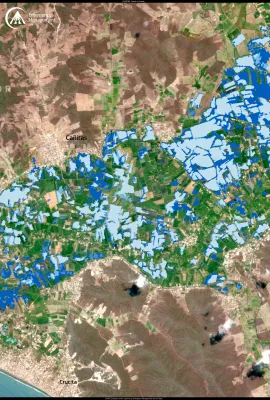
Since January 2025, heavy rainfall has affected 23 out of 24 provinces in Ecuador, leading to flooding, landslides, and destruction of infrastructure. With nearly 20,000 people impacted, the country’s government has declared a state of emergency in eight coastal provinces. On 26 February 2025, the Copernicus Emergency Management Service (CEMS)...
Showing 121-140 of 558 results