
OBSERVER: Horizon Europe's 2026 EU Space Research Call invests €90.97 million in autonomy and critical space technologies
Through the Horizon Europe Work Programme for 2026-2027, the European Commission is continuing to support EU Space research and innovation, with funding linked to competitiveness and Europe’s ability to tackle dependencies in critical space technologies. As part of Horizon Europe Cluster 4: Digital, Industry and Space, the HORIZON-CL4-2026-03 (SPACE) Call will provide an indicative €90.97 million across eight thematic areas, spanning access to space, Earth Observation technologies and satellite telecommunications, space science, and critical space technologies. In this Observer we look at the Call topics, the technologies and capabilities they are designed to support, and how they mirror the EU's current priorities in space.
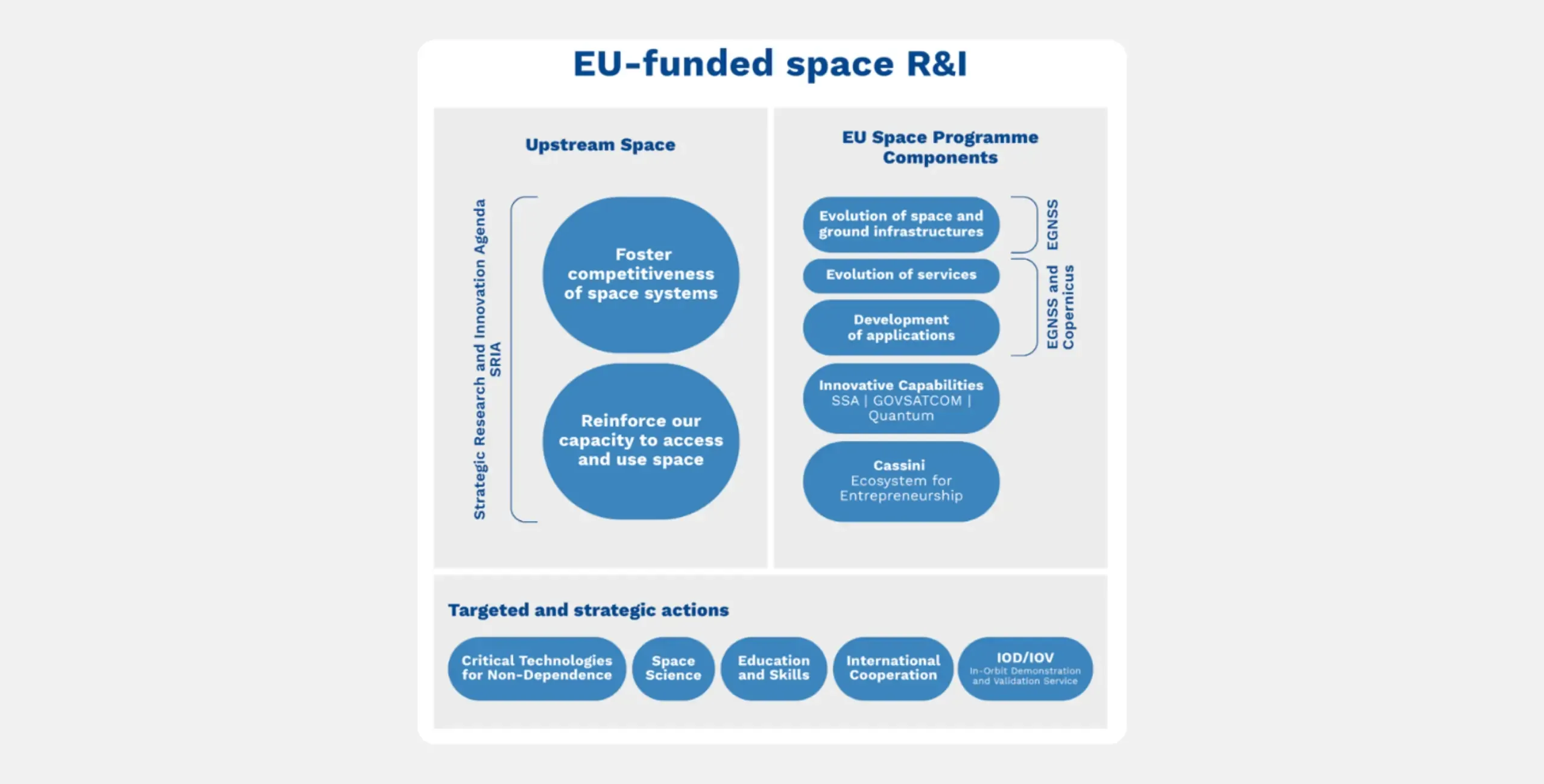
The 2026 EU Space Research Call is part of Horizon Europe, the EU's research and innovation funding programme, under Cluster 4: Digital, Industry and Space. It falls under its Destination 5, which is related to open strategic autonomy in developing, deploying, and using global space-based infrastructure, services, applications, and data. Projects funded under this Destination will support the future evolution of the components of the EU Space Programme, strengthen the competitiveness of the European space sector, reinforce independent EU access to space, and boost the Union’s autonomy of supply for critical technologies. The Call opened on 10 March 2026, with submission deadline on 3 September 2026.
The Call continues a cycle of EU space research funding under Horizon Europe. In 2025, the HORIZON-CL4-2025-02 Call supported topics across much of the space value chain, including access to space, in-space operations and services, Earth Observation, satellite communications and critical space technologies. It resulted in 93 proposals and led to 26 projects being selected for funding for a total EU contribution of €135.6 million. The 2026 Call makes €90.97 million available across eight topics grouped under four thematic headings, focusing on the technologies, infrastructure and supply chains which will help Europe develop, deploy, and use space-based services with greater autonomy.
What the Call will fund
The largest share falls under the thematic heading Using Space on Earth – Telecommunication and Earth Observation, which is allocated €38 million across two topics. The first, with a funding of €26 million and expected to support up to four projects, will fund the preparation of demonstration missions for Earth Observation and satellite telecommunications, helping to propel new commercial solutions towards operational use. The second, with €12 million earmarked across up to three projects, will fund the digital enablers and building blocks behind those solutions, such as tools for data processing and automation, interoperability, digital ground infrastructure, and operational efficiency.
Under the Accessing Space heading, a single topic is allocated €22.59 million to support the use of EU-based spaceports, with the aim of reinforcing Europe's independent capacity to access space through EU launch-service infrastructure. The Space sciences and exploration heading will provide €3.92 million for the scientific analysis and exploitation of space data.
The Call supports projects at different levels of maturity, combining Research and Innovation Actions with Innovation Actions which are closer to demonstration and market deployment. Opportunities are open to a wide range of applicants, including research institutions, small and medium-sized enterprises (SMEs), and industry.
Serving Europe’s strategic goals in space
The Call reflects the priorities which underpin the development of the EU’s activities in space. Among them is open strategic autonomy: the ability of the European Union to develop, deploy, and use space-based infrastructure, services, applications, and data on its own terms. This aim runs through Destination 5 and connects to the Competitiveness Compass, the roadmap presented by the European Commission in January 2025, which sets the reduction of external dependencies as one of its central goals.
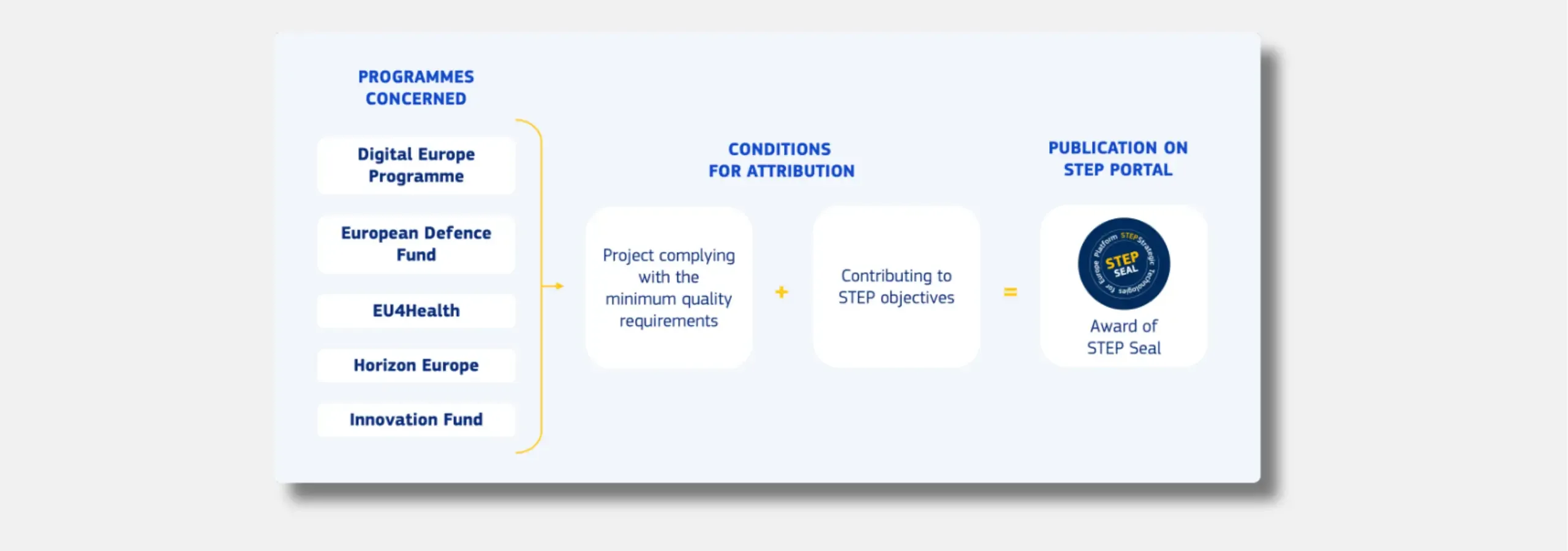
One topic within the Call, on preparing demonstration missions for Earth Observation and satellite telecommunication, is also eligible for theSTEP Seal, a quality label awarded by the European Commission under the Strategic Technologies for Europe Platform (STEP). Projects receive the Seal when they score highly in evaluation and either bring cutting-edge innovation to the single market or help reduce the EU's strategic dependencies. The label improves a project's access to further public and private funding as labelled projects are showcased through the STEP Seal dashboard.
Reducing reliance on non-European suppliers
The remaining four topics fall under the heading Boosting Space through EU non-dependence for critical space technologies. Together they will receive €26.46 million in, funding and address the electrical, electronic, and electromechanical (EEE) components, equipment, and facilities on which European space systems rely.
The largest of the four, worth €12.74 million, will fund the development of a radiation-hardened field-programmable gate array (FPGA). An FPGA is a reprogrammable microchip used in electronic systems to handle tasks such as data processing and control. For space missions, these chips need to remain operational under the higher levels of radiation to which satellites are exposed in space. A second topic, to €6.86 million are allocated, will support work on gallium nitride (GaN) technology for high-frequency applications and on the capacity to produce semi-insulating silicon carbide (SiC) substrates. These materials are used in advanced space electronics, including components which allow spacecraft to send, receive and process signals. A third, with €3.92 million in funding, will support the market deployment of a facility for testing components at high and very high radiation energies. The fourth, with a budget of €2.94 million, will fund work on a space refuelling interface, an early step towards the servicing of satellites in orbit.
Space systems depend on specialised parts produced by a limited number of suppliers worldwide, and a shortage or an export restriction could delay an entire mission. Half of the Call's eight topics pursue a strategic goal to strengthen the EU's autonomy of supply for critical space technologies and reduce its reliance on suppliers outside Europe.
Preparing the next generation of EU space capability
Proposals for the 2026 Call may be submitted until 3 September 2026 at 17:00 Brussels time, through the EU Funding & Tenders Portal. Full details of the eight topics are set out in the Horizon Europe work programme 2026–2027 for Cluster 4: Digital, Industry and Space.
Beyond their immediate results, the projects funded under the topics of the 2026 Call will contribute to the evolution of the components of the EU Space Programme and support the wider aim of keeping the European space sector competitive and resilient. Preparing the next generation of EU space capability is not only a technical challenge. It also depends on the people, skills and inclusive talent pipeline needed to develop, operate and use these systems over the long term. This includes early engagement with young people, efforts to widen participation across the sector, and targeted support for upskilling and reskilling the space industry workforce. In this context, the European Commission has also opened a call for tenders on strategic upskilling and/or reskilling for the space industry workforce. The deadline for submission is Monday, 3 August 2026, at 16:00 Brussels time.
EU Space Research Call 2026 is one round in a continuing cycle. The next space Call, HORIZON-CL4-2027-03, is scheduled to open in March 2027 with an indicative budget of €66.16 million.