OBSERVER: How DIVERIS is turning inclusion into a strategic asset for EU space and defence
Europe's space and defence sectors are still drawing on only part of the talent available to them. Women account for around 23% of the workforce in these fields and roughly 11% of top executive roles. On 7 May 2026, DIVERIS, the European Commission's network for diversity and inclusion in space and defence, held its Annual Meeting in Brussels, bringing network members and stakeholders together to treat under-representation not only as a question of fairness, but as one of resilience and competitiveness. In this Observer, we share highlights from the Annual Meeting and look at how the network is working to turn inclusion from a policy commitment into practical change.
Smart economics, not charity
Europe's space and defence sectors are growing, and they are doing so under a widening skills shortage. Meeting future workforce needs means recruiting and retaining skilled people from a wider pool than either sector has traditionally drawn on. Diversity and inclusion (D&I) are now described by senior figures as a question of capability. Lorena Boix Alonso, Deputy Director-General of the European Commission's Directorate-General for Defence Industry and Space (DG DEFIS), put it directly at the DIVERIS Annual Meeting 2026: "Diversity is not charity. It is smart economics."
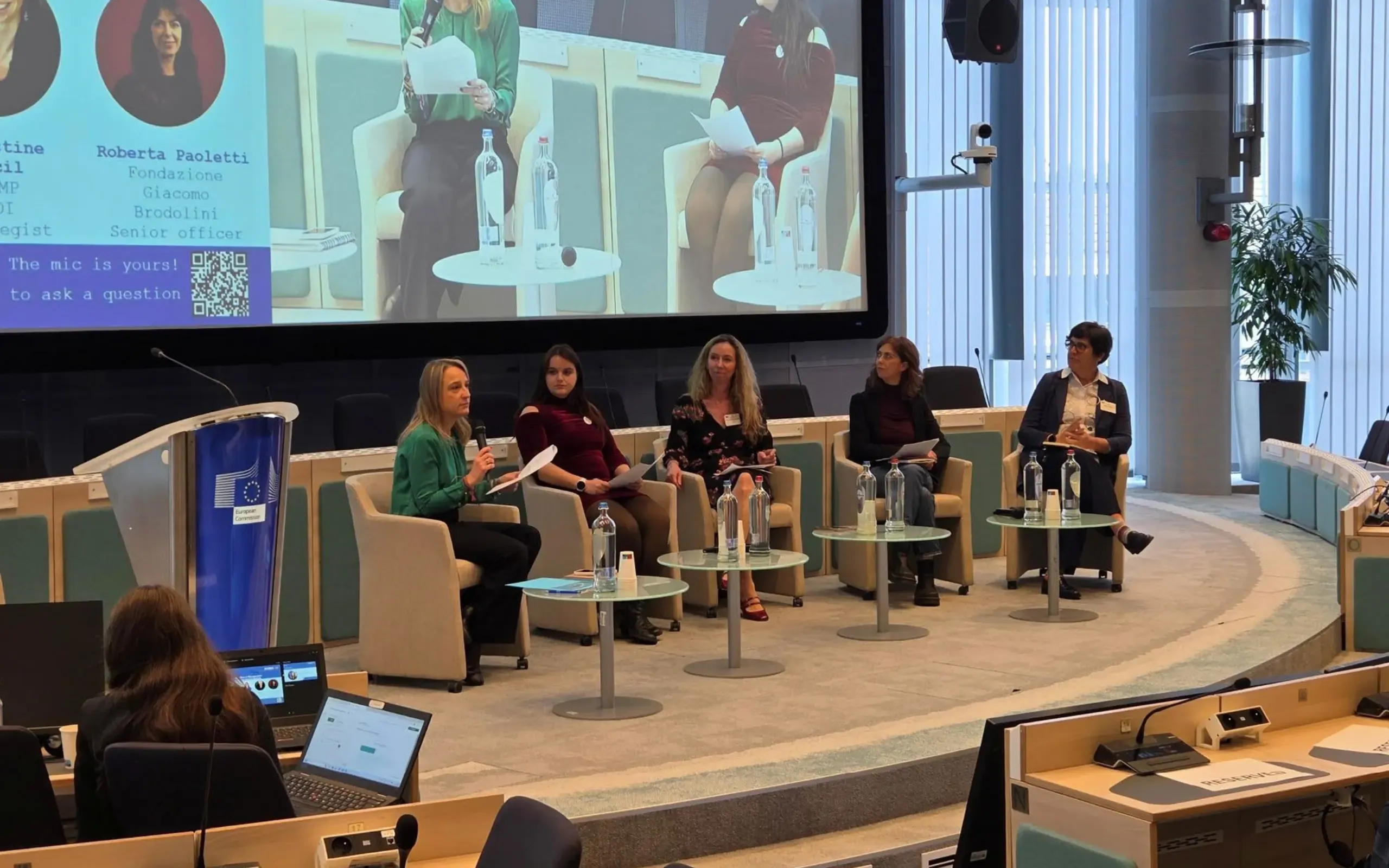
The meeting, held in Brussels and organised by the European Commission with the support of Women in Aerospace Europe (WIA-Europe), brought together European institutions, agencies, organisations from the defence and space sectors, industry, academia, investors, and civil society. It was organised as part of the work of DIVERIS, the EU Space and Defence Industry Diversity & Inclusion Network, which the European Commission created to move inclusion from fragmented efforts towards structured, measurable action. The Annual Meeting sought to examine how the sectors can move from commitments to demonstrable impact.
A leaking talent pipeline
Under-representation in the space and defence sectors is not a matter of individual choices, participants argued, but of structural barriers across the career cycle. The talent pipeline can begin to leak before university, when awareness of space and defence careers remains low among under-represented groups. It continues at recruitment, when narrow or conventional criteria screen out capable candidates, and again in mid-career, when those who join do not stay.
Regarding recruitment, speakers pointed to structured, skills-based selection as a practical improvement. Ildiko Szoke, Head of Human Resources at the European Space Agency (ESA), noted that, although fewer than 20% of applicants for some roles were women, around 40% of those hired were women once selection was structured around deliberate, skills-based processes. Szoke linked this approach to more objective decision-making and to a more resilient workforce.
Speakers identified retention, rather than recruitment, as the more pressing challenge. Flexible working arrangements withdrawn after the pandemic, limited mobility between sectors, and a lack of visible career paths were cited as factors pushing people out, particularly in the defence sector. The talent panel also returned to communication: space and defence actors often explain their systems and missions well, but communicate their purpose, people, and public relevance less effectively. Olivier Lemaître, Secretary General of the ASD-Eurospace industrial association, said the gap is one of reach rather than qualifications, with capable people in lower socio-economic groups not being reached by current communication and recruitment approaches. The discussion linked this to widening access to careers across both sectors.
From representation to real influence
The meeting also underlined that if barriers are structural, so is bias. Bias is reproduced through ordinary decisions, recruitment criteria, promotion choices, and the dynamics of meetings, and it is not always visible to those inside the system. Discussions during the meeting pointed to concrete changes to how decisions are made: leaders speaking last so that teams do not simply align with the first view stated, standardised interview questions for every candidate, and short checklists at key decision points. Research by Professor Iris Bohnet from Harvard Kennedy School of Government has shown that such structured reminders reduce bias measurably.
A recurring theme was the distinction between representation and transformation, and between outputs and outcomes. A training course or a published plan is an output. A change in who is promoted, who chairs meetings, and who controls budgets is an outcome. Aggregate headcount figures can hide actual influence, so the more telling measure is who holds decision-making power.
The meeting broadened the concept of diversity beyond gender and race. Diversity of expertise also matters alongside diversity of people: cybersecurity, space, and defence need engineers, but they also need lawyers, economists, social scientists, and managers. Dr Christina Giannopapa from the European Union Agency for the Space Programme (EUSPA) tied this to the space sector's competitive future, describing human diversity as Europe's greatest advantage in a working environment which is being reshaped by artificial intelligence.
‘In a world shaped by AI, our human diversity is our greatest competitive edge.’
— Dr Christina Giannopapa
Head of the Office of the Executive Director, EUSPA
Diversity as an economic and sustainability issue
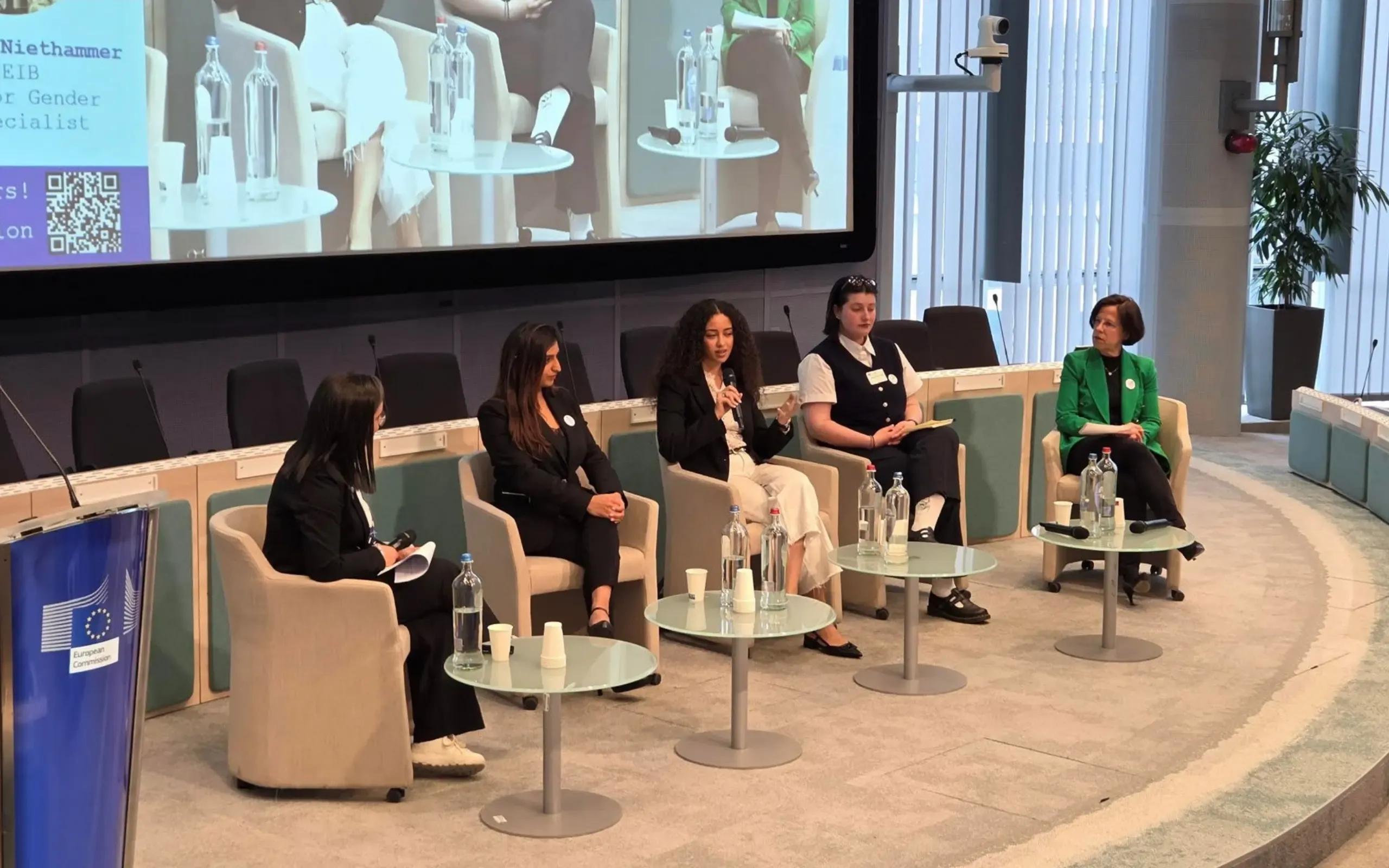
Carmen Niethammer from the European Investment Bank (EIB) pointed to research showing that companies with greater diversity are 70% more likely to capture new markets and 73% more likely to generate innovation revenue. The European Institute for Gender Equality (EIGE) estimates that closing the gender gap in Europe could add between EUR 2 trillion and EUR 3 trillion to the economy by 2050.
The argument extends into sustainability and design. Products and systems built around a narrow set of assumptions create cost, risk, and exclusion: defence equipment designed for only one body type, for instance, can introduce real safety problems in the field. Teams drawn from different disciplines, backgrounds, and regions identify risks which more uniform teams miss, and that matters for resilience planning, supply chains, and mission design alike. Financial instruments are beginning to reflect this. Gender-lens investing and the inclusion criteria adopted by institutions such as the EIB connect diversity to the wider environmental, social, and governance agenda of the space and defence sectors, making D&I part of investment decisions rather than only a matter of institutional policy commitments.
A growing network, and what comes next
DIVERIS has been set up to advance diversity and inclusion across the space and defence sectors, providing a forum through which organisations and individuals can exchange good practices, learn from peers, and build tools together. Members work on shared problems collectively rather than in isolation, drawing on what others in the network have already developed. The network is open and continuing to grow, and its Marketplace of Ideas, which showcased projects from across the ecosystem, is intended to remain a living exchange rather than a one-day display.
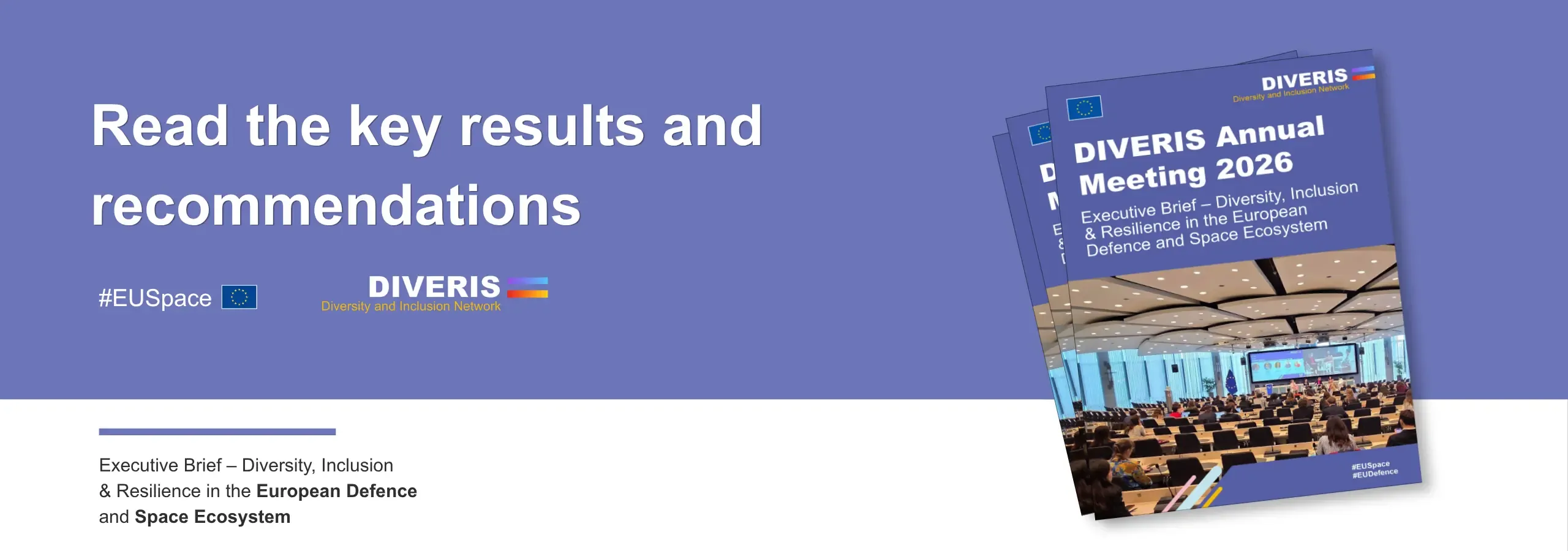
The DIVERIS Annual Meeting report provides both reflections and a set of concrete follow-up actions, among them a shared framework distinguishing outputs from outcomes, and guidance on inclusive recruitment and selection, and further work on decision-making power, accessibility, and impact indicators. As expectations around environmental, social, and governance performance continue to evolve, the network also gives members a place to exchange good practices and preparing for future action.
Readers who want to take part can join the DIVERIS network to connect with peers, report their own diversity and inclusion initiatives, and contribute to the network’s shared repository. To stay informed about the network’s latest initiatives and opportunities, readers can subscribe to the network's newsletter or get in touch at DEFIS-EQUALITY@ec.europa.eu.