
OBSERVER: Teaching science with EU Space
Europe's space sector is growing rapidly, and it needs skilled staff to support its growth. A report from the European Space Policy Institute (ESPI) concludes that demand for space talent remains strong, even as junior professionals struggle to find a foothold and many feel current academic programmes do not prepare them well enough for work in the sector. Closing that gap starts well before applying for a job. Across Brussels and Luxembourg these past months, EU Space activities have had a stronger public-facing presence: at school science fairs, festival stages, and hands-on activity booths, at which space science and its applications were presented to a new generation. In this Observer, we look at how public engagement fits into the wider effort to reinforce Europe's space talent pipeline.
The European space sector is growing, but the people needed to support that growth are not always easy to find. A 2025 report by the European Space Policy Institute (ESPI), drawing on a survey of more than 500 students and young professionals and an analysis of close to 3,000 job postings, found that demand for space talent in Europe remains strong. Yet the same report identifies a structural mismatch between this demand and the supply of people equipped to meet it, particularly in mid-career and cross-disciplinary roles.
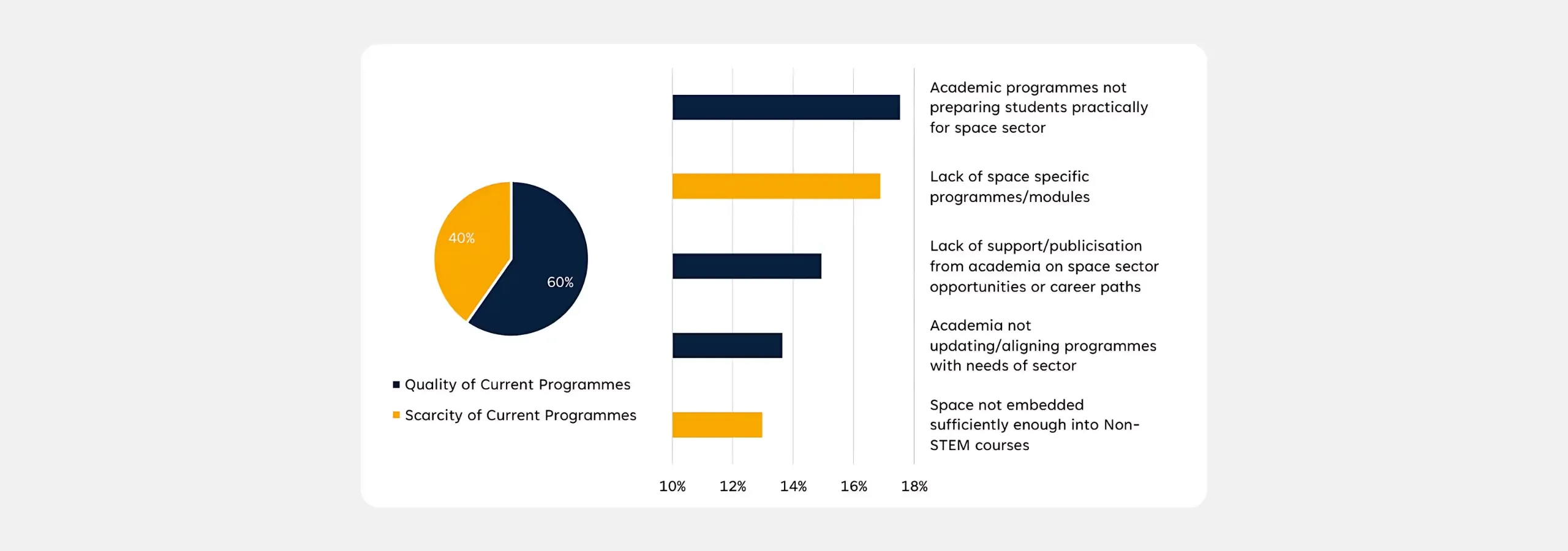
Demand is concentrated at the mid-level, with 41% of vacancies aimed at professionals with three to ten years of experience, while only 18% target junior roles, the report finds. Of all respondents, only 22% believed that current academic programmes provide appropriate entry routes into the sector, with concerns clustered around practical preparation and the scarcity of space-specific courses.
Against this backdrop, how Europe brings new people into space science and space careers matters. Demand is growing across scientific, technical, and increasingly non-technical roles, and early awareness of the sector’s activities and job profiles, and why it matters, plays a part in shaping who eventually applies. Public engagement activities are one strand of this wider effort. Through events in which EU space activities are presented directly to the public, visitors of all ages, and particularly young people, are given the chance to discover space science, technology, and applications first-hand, well before they make any decision about their studies or career.
Why early engagement matters for the space sector
Space careers can feel difficult to apprehend for those outside the sector: an abstract, highly technical field accessible mainly to specialists. A young person with no connection to the sector, with no university nearby offering a relevant course, may never consider a space-related career as something open to him/her. Early, hands-on exposure provides a different way in, replacing abstraction with something visitors can see, touch, and ask questions about.
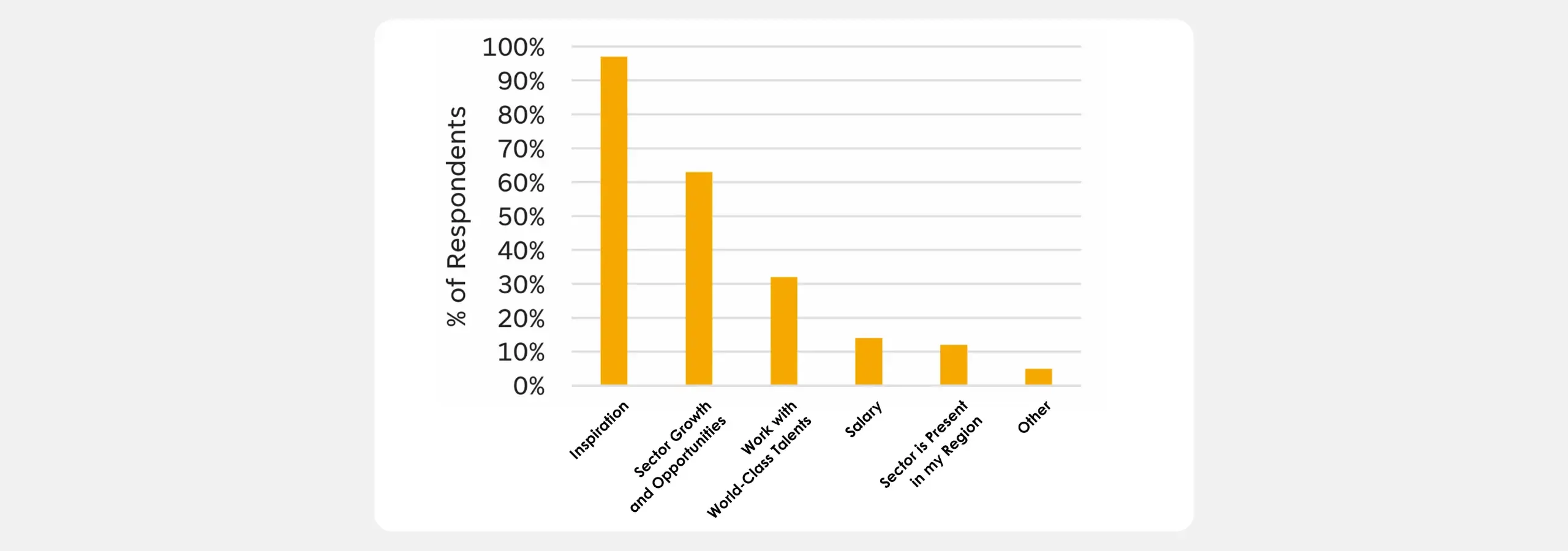
Over 96% of survey respondents in the ESPI study cited inspiration as one of the key reasons driving their ambition to enter the space sector, with space exploration, space science, and a fascination for technology and innovation being the dominant source of that inspiration. This fascination is strongest among students: almost 70% of bachelor's and master's students said they were inspired by exploration, science, and technology, a figure which falls to around 40% within three to five years of entering the workforce. The report suggests this shift may reflect a lack of sustained exploration and science communication which keeps that initial spark alive once people are already working in the field. Public engagement, therefore, addresses the moment before a career path is chosen, when curiosity still has room to grow.
Public engagement in practice
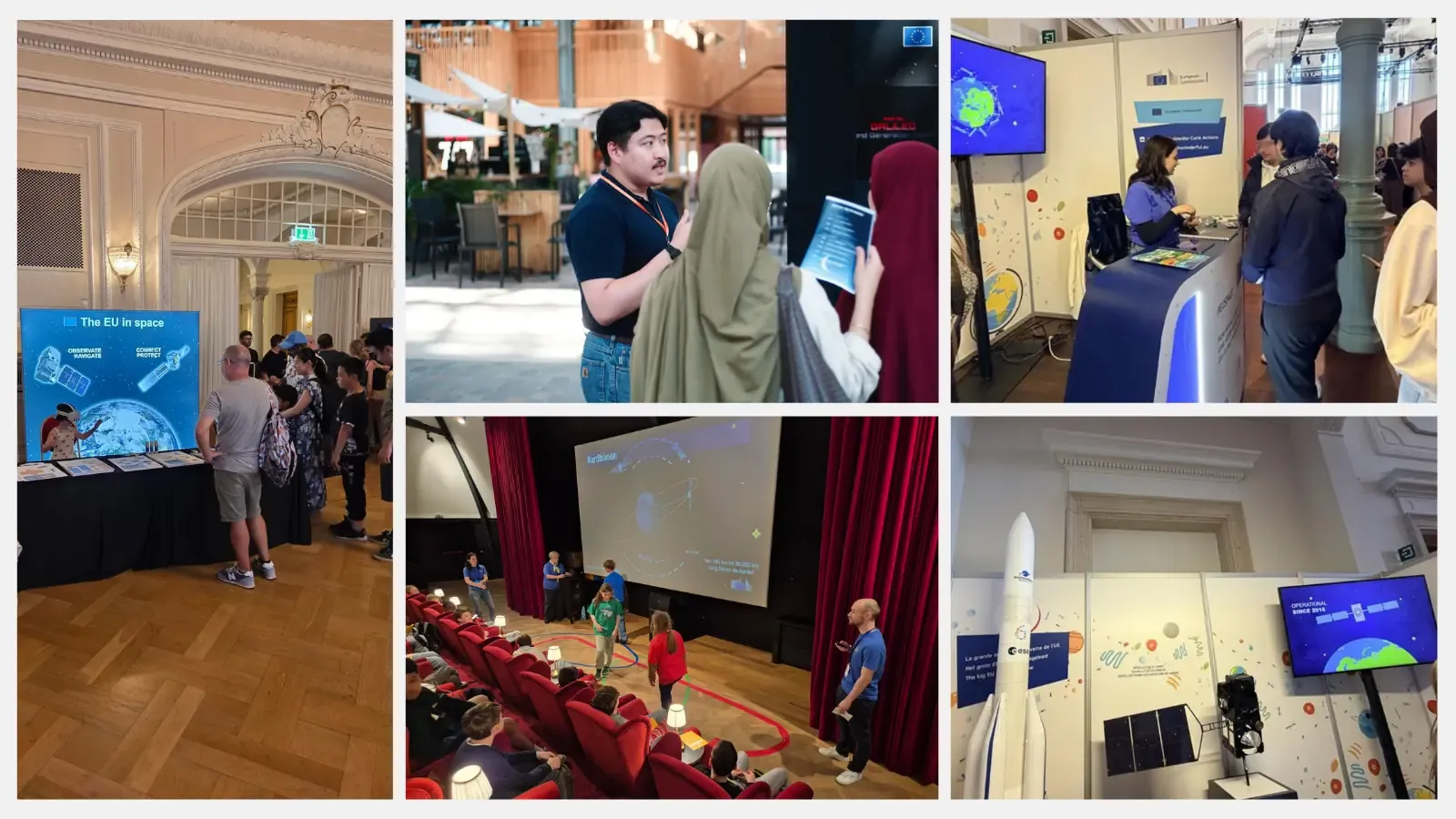
Across three events this spring and summer, EU Space Programme outreach activities connected experts and visitors through direct public engagement. At each event, visitors could see satellite and launcher models up close, ask questions at the EU Space booth, and discover the EU Space programmes and initiatives through hands-on and interactive activities.
In March, Science is Wonderful!, the European Commission's annual science fair, brought researchers from across Europe and beyond to Brussels to meet the public. The 2026 edition welcomed more than 150 researchers from over 30 countries, who shared their work with around 4,500 young visitors from across Belgium and abroad over three days. The fair is built around direct interaction: presentations, hands-on experiments, games, and quizzes designed to let pupils engage with research rather than simply read about it. The EU Space stand featured a model of the Ariane 6 launcher and a mock-up of the Copernicus Sentinel-3 satellite, alongside an interactive quiz and a claw machine which lets visitors win a LEGO satellite model as a prize while learning about satellite technology. A science show in Dutch, Satellietsuperkracht – houden zo!, introduced young visitors to the capabilities of satellites and to EU-funded approaches to tackling space debris, with students invited to participate throughout.
The Summer Space Festival, held in Brussels in June and marking its fifth edition, followed a similar format: two days of talks, meet-and-greets, and educational activities open to families, students, and the curious, with no prior knowledge required. The EU space policy and programmes were featured in the "EU in Space" exhibit, one of several interactive exhibitions at the festival alongside expert talks, hands-on activities, and an inflatable planetarium.
Finally, the Asteroid Day Festival in Luxembourg held its Public Day on 27 June. At a booth during the festival, visitors were introduced to the EU's activities in space and how they benefit citizens across Europe. The day combined stage talks on planetary defence and space careers with a dedicated session of interactive exhibitions. Visitors could build their own paper satellites, colour in space-themed books, and experience a virtual reality (VR) application teaching them about the EU’s space activities.
Contributing to a broader talent and awareness pipeline
Outreach activities during these events contribute to broader science literacy. They make the scale and variety of European space activity more palatable to people who might otherwise never come across it, and can foster interest at a stage when that interest is most readily formed.
This contribution sits alongside other efforts. The European Commission's Space Career Launchpad connects employers with young talent and provides career resources, while graduate and early-career programmes across industry provide formal entry routes once interest has developed into a study or career choice. Public engagement reaches people earlier than these career-support platforms and formal entry routes do, often years before a course choice or job application, and at a scale which includes people who may never otherwise have considered a space-related path.
Reaching this wider audience matters for the kinds of cross-disciplinary and non-technical roles which the ESPI report finds the sector increasingly needs, and for which a STEM background is often not a prerequisite. In these cases, awareness of the space sector as an option still needs to be created. Outreach, formal education, and structured career schemes therefore work as parts of one ecosystem rather than as substitutes for each other.
Sustained engagement and long-term outlook
Interest in space-related studies and careers rarely begins with a single event. It is shaped over time, through formal education, personal curiosity, and practical encounters with how science and technology are used in the real world. Public outreach adds something important to this trajectory: it gives visitors a window into a sector which they may never have considered or may never have imagined joining. This may be especially important for groups which remain underrepresented in the space sector, and which may have fewer opportunities to be exposed to space-related career paths through specialist courses, professional networks, or informal role models. Because Science is Wonderful!, the Summer Space Festival, and Asteroid Day are annual events, they create repeated opportunities for this kind of public engagement. That sustained contact matters over the years it takes for early curiosity to mature into study choices and, eventually, careers. As Europe's space sector expands and its need for talent evolve, public engagement will remain one part of a wider effort by the European Commission to make the sector more visible, more understandable, and more open to the next generation.