
Algal bloom in the Gulf of Oman
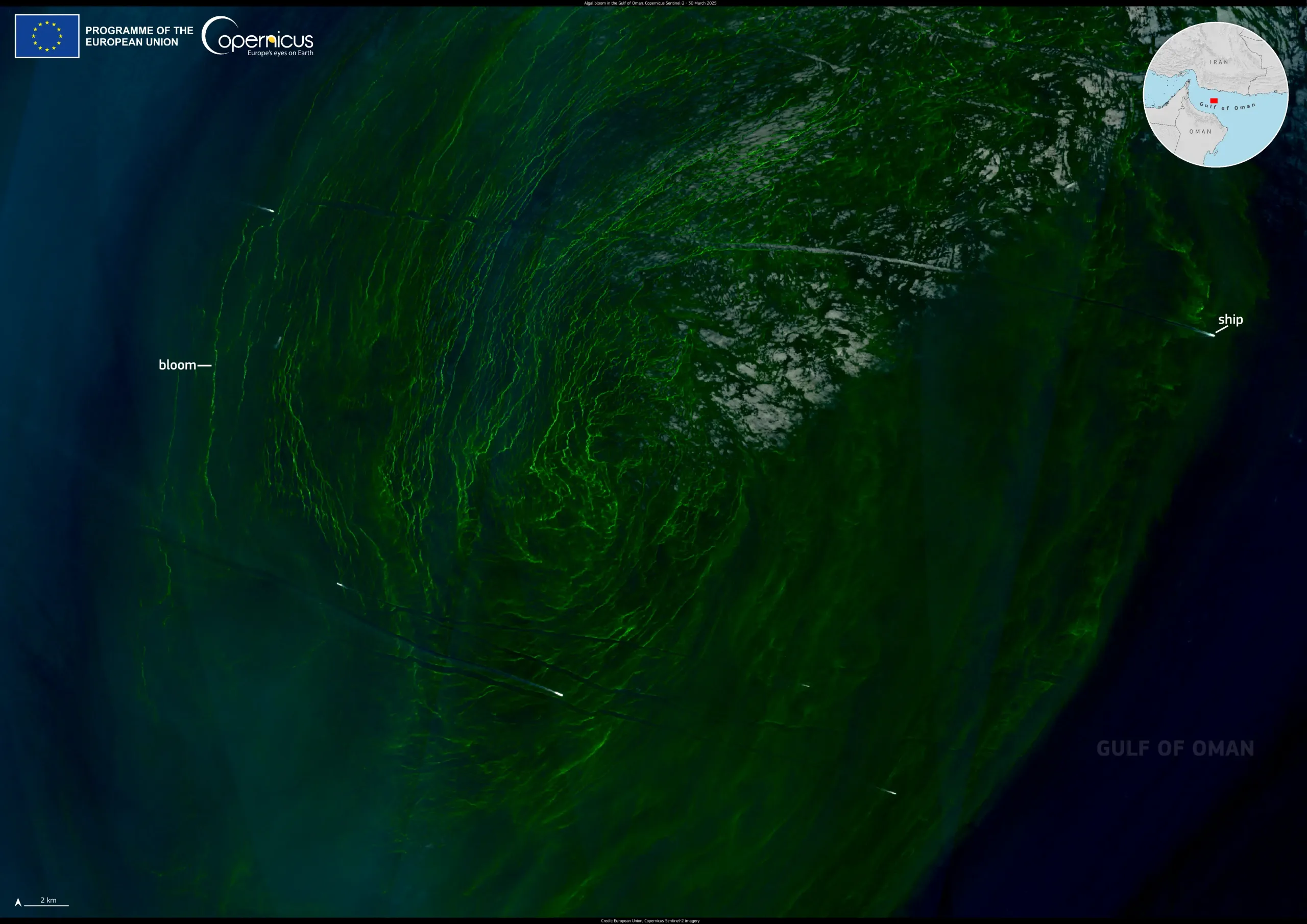
This Copernicus Sentinel-2 image, acquired on 30 March 2025, shows a striking algal bloom in the Gulf of Oman.
Algal blooms are a recurring phenomenon in this part of the Arabian Sea, particularly during winter, early spring, and summer. These blooms are driven by a combination of favourable nutrient levels, temperature, and light conditions. Among the most visible is Noctiluca scintillans, a bioluminescent plankton species that exists in two forms: red and green. The variety pictured here has a photosynthetic symbiont inside called Pedinomonas noctilucae, which is responsible for the vivid green colour. Noctiluca scintillans can have a disruptive impact on marine ecosystems, including oxygen depletion and altered food chains.
The Copernicus Sentinel satellites are useful for monitoring the health of water bodies around the world. Furthermore, the Copernicus Marine Service delivers value-added information to support decision-makers in developing effective policies for addressing the consequences of algal blooms, helping to protect communities, preserve ecosystems, and safeguard economies.

![Download [WEBP, 555.06 KB]](https://eu-space.europa.eu/sites/default/files/images/iotd/20250402_Gulf_20Oman.webp)