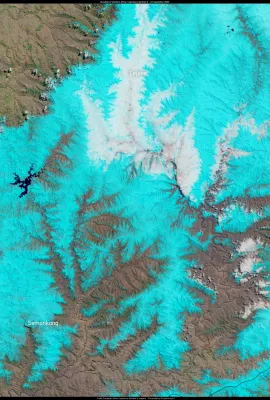
On 21 September 2024, unusually heavy snowfall affected parts of southern Africa, with some areas in Lesotho and South Africa receiving up to two metres of snow. Authorities in South Africa issued warnings about the snowfall and potential for black ice, and three border posts with Lesotho have been closed due to dangerous conditions. The snow...
Results (558)
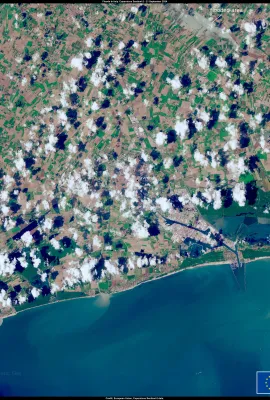
Storm Boris, the powerful weather system which swept across central and eastern Europe at the beginning of September 2024, has caused severe flooding in Italy, particularly in the Emilia-Romagna Region. This area, already devastated by a major flood in May 2023, is once again facing the consequences of the intense rainfall which occurred...
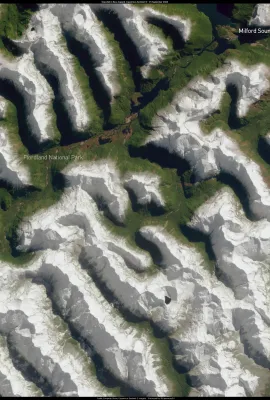
In September 2024, the lower South Island of New Zealand received heavy rain and snowfall, causing widespread disruptions. Power outages, school closures, and road blockages were reported across the region, with authorities issuing warnings for significant snow and rain. Despite the challenges, the fresh snow brought joy to skiers in...
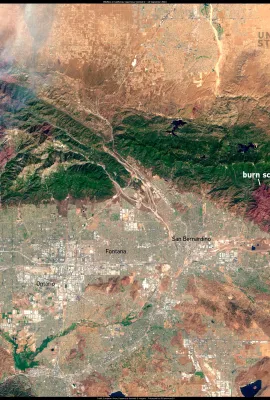
Since the start of September 2024, hundreds of firefighters have been battling two large wildfires in San Gabriel Canyon, spanning both Los Angeles and San Bernardino counties in California, USA. The "Bridge Fire" has burned over 22,100 hectares and injured four people. Authorities have ordered evacuations for some residents, as the blaze has...
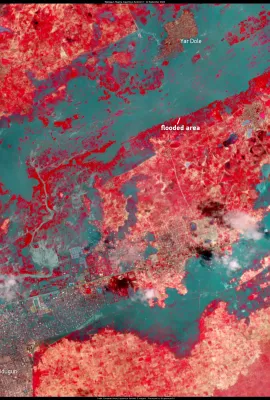
In late August 2024, northeastern Nigeria was struck by intense rainfall, leading to severe flooding. The city of Maiduguri in Borno State was particularly affected when the Alau Dam, situated 20 kilometres south on the Ngadda River, collapsed on 10 September. This disaster has impacted over one million people, with many losing their homes and...
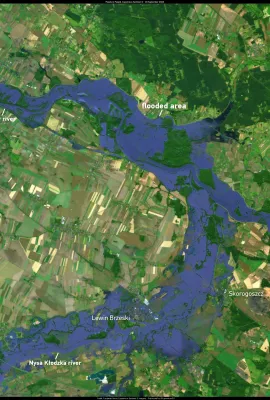
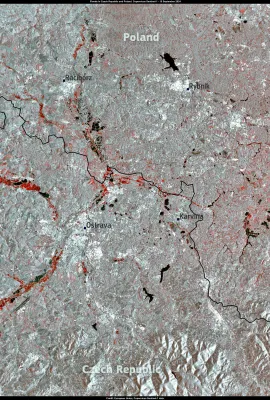
Starting on 11 September 2024, Central and Eastern Europe has been battered by Storm Boris, which brought up to five times the average monthly rainfall for September in just a few days. Seven people died in Poland, seven in Romania, five in Austria and four in the Czech Republic, officials said on Wednesday, with several missing and hundreds of...
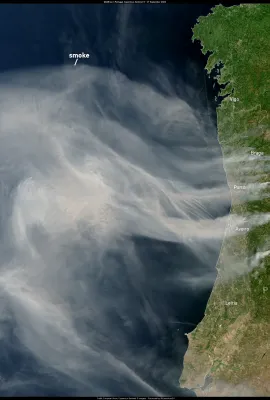
Since 14 September 2024, severe wildfires have been ravaging northern and central Portugal. The fires have affected over 10,000 hectares between Porto and Aveiro, and more than 5,000 firefighters are mobilised to battle the flames. Local authorities have issued warnings as the wildfire risk remains high, with the threat expected to persist...
A low-pressure system named Boris brought heavy rain to central Europe between 11 and 15 September, causing widespread flooding from Poland to Romania and at least seven casualties. In Romania, more than 5,000 homes have been evacuated due to severe flooding, with roads in eight provinces blocked or severely affected. In the Czech Republic, 38...
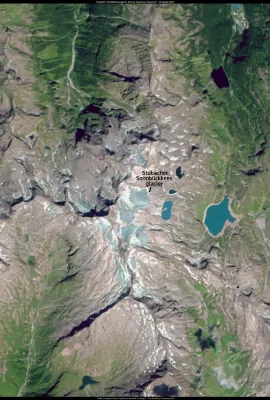
This Copernicus Sentinel-2 image acquired on 10 August 2024 shows the Stubacher Sonnblickkees glacier in the federal state of Salzburg in Austria. Situated at an altitude of 2,700 metres, the glacier has undergone considerable losses in size and mass due to high temperatures. In the last 25 years, it has lost 45 million cubic metres of ice,...
This Copernicus Sentinel-3 image, acquired on 11 September 2024, shows a cold front approaching the coasts of France, Belgium and the Netherlands. Driven by an unusual weather system over Scandinavia and accompanied by cold Arctic air, the front is moving south across Europe, bringing strong winds, a sharp drop in temperatures and early snow...
Several countries in South America have been severely affected by a thick smoke cloud caused by the wildfires ravaging the Amazon rainforest since August 2024. In Brazil alone, the number of fires hotspots reached a total of 152,383 in August, a worrisome 103% increase over to the same period in 2023. The dense smoke has raised significant...
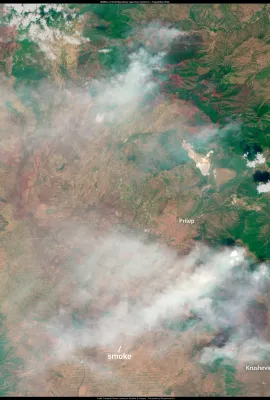
The 2024 fire season has severely affected the Republic of North Macedonia. According to the European Forest Fire Information System (EFFIS), a component of the Copernicus Emergency Management Service, more than 85,000 hectares have burned there since the beginning of the summer. In August, numerous wildfires blazed out of control across the...
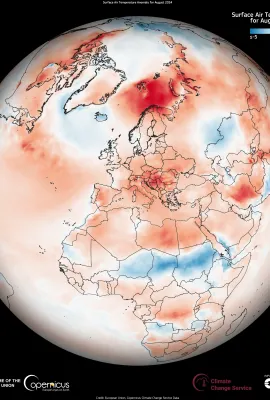
The Copernicus Climate Change Service (C3S) has recently released its latest monthly Climate Bulletin, which highlights that August 2024 was the joint-warmest August globally (together with August 2023), with an average ERA5 surface air temperature of 16.82°C, 0.71°C above the 1991-2020 average for August. This data visualisation, based on C3S...
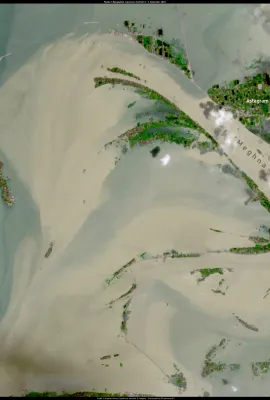
In late August 2024, heavy rains hit eleven districts in eastern Bangladesh, causing severe flooding. The floods, which affected around 5 million people, led to widespread electricity outages and the partial or total submersion of homes and infrastructure, as well as rural roads and agricultural fields. Flooded areas along the Meghna River, one...
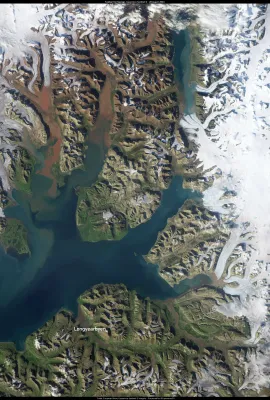
Svalbard, a Norwegian archipelago in the Arctic Ocean, has been severely affected by a prolonged heat wave during the summer of 2024. Data from the Norwegian Centre for Data Service show that four observation stations in Svalbard recorded record-high average summer temperatures, with anomalies up to 3.0°C above normal. Svalbard Airport, located...
The Thousand Islands, or Kepulauan Seribu, visible in this image acquired by one of the Copernicus Sentinel-2 satellites on 6 August 2024, is an archipelago off the coast of Jakarta, Indonesia. Renowned for their rich biodiversity, the coral reefs adorning their waters are home to many marine species. The islands also support unique flora and...
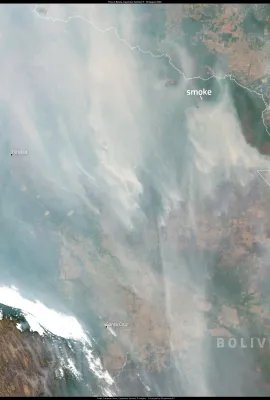
Wildfires activity in Bolivia have reached critical levels in August 2024, resulting in one of the worst fire seasons for the country since 2003, according to data from the Copernicus Atmosphere Monitoring Service (CAMS). On 28 August, local authorities reported 35,536 hotspots across the country, with more than 30,000 fires concentrated in the...
Just a few days after Typhoon Ampil, Japan is now grappling with the aftermath of another powerful storm - Typhoon Shanshan. Shanshan brought torrential rains and strong winds to the southern regions of the country, causing severe flooding and landslides. Authorities issued the highest level of alert, prompting the evacuation of at least...
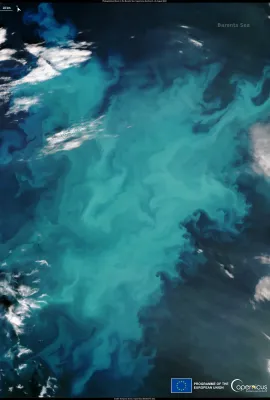
Phytoplankton, tiny photosynthetic organisms, are the base of the marine food chain. Their blooms play a vital role in marine ecosystems and in the regulation of global climate, as they are responsible for a significant proportion of the Earth's oxygen production and contribute to the sequestration of atmospheric carbon. This image, acquired...
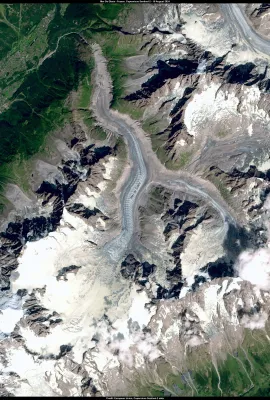
The Alpine Arc is among the regions most threatened by climate change. Over the past two decades, the glaciers of this iconic mountain range in the heart of Europe have lost about a third of their ice volume, receding by an average of 30 metres per year and thinning by 1 to 1.5 metres annually across their entire surface. One of the most...
Showing 221-240 of 558 results