European Union flag
EU Space Policy

Explore EU Space

Results (558)
Image of the Day
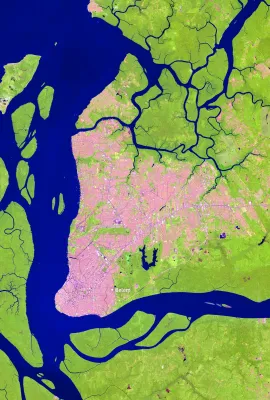
Belém hosts COP30
Earth Observation | Copernicus
Belém, the capital of the state of Pará in northern Brazil, lies near the mouth of the Amazon River and has grown into a key economic and logistical centre for the wider Amazon region. Located within the tropical rainforest zone, the city is the site of both urban expansion and important ecosystems. This false-colour image, acquired by one of...
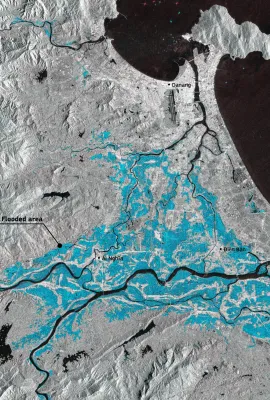
Image of the Day
Devastating flooding in Vietnam
Earth Observation | Copernicus
In late October 2025, severe flooding struck Vietnam after days of intense rainfall. Thousands of residents evacuated their homes, with local authorities reporting at least 37 casualties. The province of Quảng Nam has been particularly affected by the impacts of the flooding. In this image, acquired by one of the Copernicus Sentinel-1...
Image of the Day
The impacts from Hurricane Melissa monitored by Copernicus EMS
Earth Observation | Copernicus
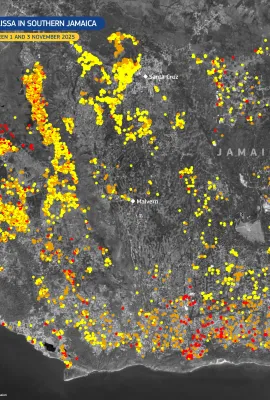
Hurricane Melissa formed over the central Caribbean Sea on 22 October 2025 before moving north-west and making landfall in Jamaica as a Category 5 hurricane, the most powerful ever recorded on the island. As it continued across the Jamaica Channel, it struck the eastern coast of Cuba with sustained intensity (Category 3) before weakening over...
Image of the Day
Earth Observation | Copernicus
On 25 October 2025, the Planchón-Peteroa volcanic complex, located on the Chile–Argentina border, emitted a sustained plume of volcanic gas and fine ash that rose to approximately 600 m above the crater. The plume initially drifted north-north-west; however, shifting wind conditions during the day redirected the ash eastwards, carrying it over...
Image of the Day
Sentinel-2 captures a vivid view of hurricane Melissa's eye
Earth Observation | Copernicus
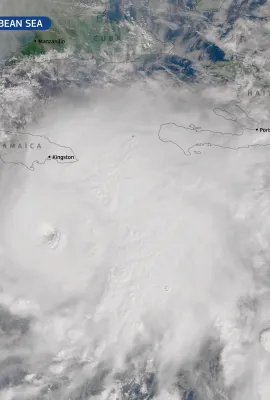
On 28 October 2025, Hurricane Melissa, the most powerful storm to hit Jamaica in history, made landfall on the island with devastating force. With sustained winds reaching 298 km/h and a central pressure of 892 hPa, Melissa already ranks among the most intense hurricanes ever observed in the Atlantic basin. On that day, at 15:55 UTC, one of the...
Image of the Day
Hurricane Melissa
Earth Observation | Copernicus
After forming in the central Atlantic Ocean at the end of October 2025, Hurricane Melissa underwent rapid intensification as it moved westward across the Atlantic, reaching Category 4 status with sustained winds of 225 km/h. The storm then began to move west-north-west, passing through the Greater Antilles and severely affecting the Dominican...
Image of the Day
Devastating landslides and flooding in Chapula, Mexico
Earth Observation | Copernicus
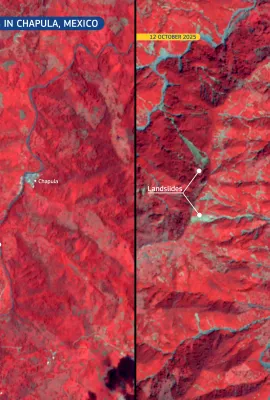
In October 2025, large parts of central and eastern Mexico have faced severe flooding, triggered by torrential rainfall from converging tropical storms. According to local authorities, there have been at least 64 reported casualties, with dozens of people missing. The village of Chapula has been particularly impacted by landslides and flooding...
Image of the Day
Floods on Panay Island, the Philippines
Earth Observation | Copernicus
Extensive flooding swept across Panay Island in the Philippines following heavy rains from Tropical Storm Ramil on 18 October 2025. The storm brought record-breaking rainfall, with Roxas City receiving up to 365.5 mm in just 24 hours – more than a month's worth of precipitation in a single day. According to local authorities, over...
Image of the Day
First image of nitrogen dioxide from Copernicus Sentinel-4
Earth Observation | Copernicus
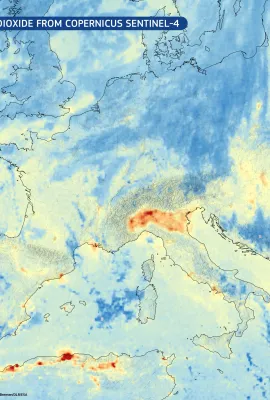
The new Copernicus Sentinel-4 mission has delivered its first images, highlighting concentrations of atmospheric nitrogen dioxide, sulphur dioxide and ozone.  This image, based on the Sentinel-4 very first measurements acquired on 8 October 2025, depicts tropospheric nitrogen dioxide with clear pollution hotspots visible along the Mediterranean...
Image of the Day
The Folgefonna Glacier, Norway
Earth Observation | Copernicus
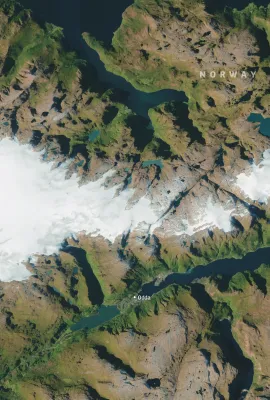
Covering 207 square kilometres and reaching thicknesses of nearly 400 metres, Folgefonna is the third-largest glacier on mainland Norway. For nearly two centuries, this striking natural landmark has drawn tourists to the region for activities such as hiking and skiing. However, due to ongoing ice thinning, researchers estimate that the...
Image of the Day
Coipasa Salar, Bolivia
Earth Observation | Copernicus
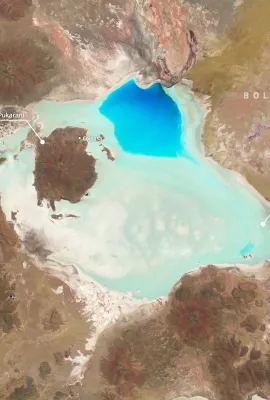
Located next to the Chilean border in the Altiplano region of Bolivia, Coipasa Salar is Bolivia’s second largest salt lake, spanning over 2,000 square kilometres.  Coipasa Salar is rich in deposited minerals and provides essential habitat for flamingo species which settle on the saline shores. This false-colour image from 6 October 2025,...
Image of the Day
September 2025: Arctic and Antarctic sea ice reach their annual minimum and maximum extents, respectively
Earth Observation | Copernicus
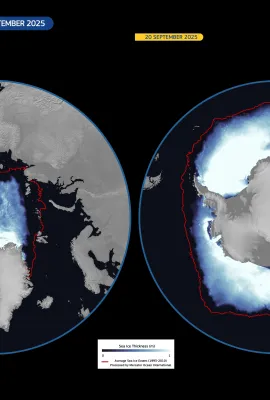
Each September marks the end of the polar summer in the Arctic, when sea ice reaches its annual minimum extent. At the same time, the Antarctic emerges from the austral winter, reaching its annual maximum sea ice extent. These cycles are essential to the Earth's climate system, illustrating how each hemisphere responds to seasonal heating and...
Image of the Day
Severe flooding in Thái Nguyên, Vietnam
Earth Observation | Copernicus
Beginning on 6 October 2025, severe flooding swept through parts of northern Vietnam, reaching the highest water levels recorded in three major rivers in the past 40 years. The floods have resulted in at least eight casualties and forced the evacuation of many residents across the region. According to local authorities, around 30,000 personnel...
Image of the Day
September 2025 was the third-warmest September on record globally
Earth Observation | Copernicus
The Copernicus Climate Change Service (C3S) has published its latest monthly Climate Bulletin, focused on key climate trends in September 2025.  The bulletin reports that September 2025 was the third-warmest September ever globally, with an average ERA5 surface air temperature of 16.11°C, which is 0.66°C above the 1991–2020 average for the...
Image of the Day
Hurricane Priscilla hits Mexico
Earth Observation | Copernicus
Priscilla formed in early October 2025, becoming the fourth major hurricane of this Pacific season. It rapidly strengthened from a tropical depression to reach hurricane status within 48 hours. It swept across a region of high ecological value along Mexico’s western coastline, home to mangrove forests, coastal wetlands, and rich marine...
Image of the Day
The Thwaites Glacier, Antarctica
Earth Observation | Copernicus
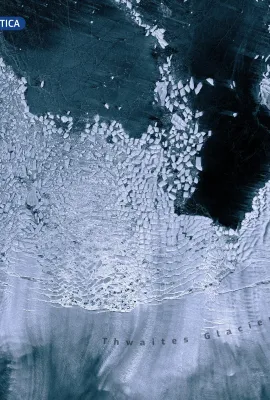
Spanning approximately 120 kilometres in width, Thwaites is one of the widest glaciers both in Antarctica and globally. The glacier flows into the Amundsen Sea and produces smaller calving events and occasional large tabular iceberg detachment from its ice tongue. Scientists are particularly concerned about Thwaites because it is melting at an...
Image of the Day
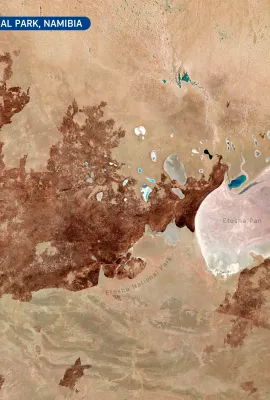
Fire in the Etosha National Park, Namibia
Earth Observation | Copernicus
Etosha National Park, located in northern Namibia, is one of southern Africa’s largest and most ecologically important protected areas.  A major wildfire recently affected the park, destroying approximately 30% of its grazing pasture and spreading beyond its boundaries into areas near the Angolan border. According to authorities, the fire has...
Image of the Day
Assessing ocean conditions: insights from the ninth Ocean State Report (OSR9) from the Copernicus Marine Service
Earth Observation | Copernicus
On 30 September 2025, the Copernicus Marine Service released the ninth edition of the Copernicus Ocean State Report (OSR9), an annual assessment of ocean conditions and changes in the ocean and seas at both European and global scales. A central finding of this edition is that every part of the ocean is affected by what the UN has termed the...
Image of the Day
Gries Glacier in Switzerland
Earth Observation | Copernicus
The Gries Glacier is a significant alpine glacier located in the Swiss Alps, in the canton of Valais. Recent field measurements indicate that the glacier is melting at an accelerated rate. Between 2000 and 2023, it retreated by around 800 metres. Summer 2025 heavily affected the glacier, leading to a reduction in ice thickness of around six...
Image of the Day
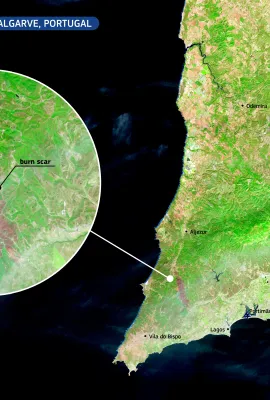
Wildfires in the Western Algarve, Portugal
Earth Observation | Copernicus
In mid-September 2025, a wildfire affected extensive areas of the Western Algarve, Portugal, particularly in the municipalities of Aljezur and Lagos. The fire, now under control, burnt large areas of vegetation and injured 14 people. This false colour image, acquired by one of the Copernicus Sentinel-2 satellites on 22 September 2025, shows the...

Showing 41-60 of 558 results