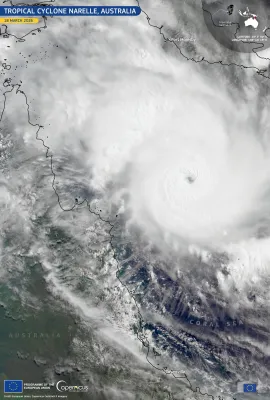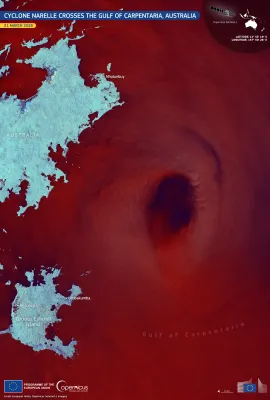
From 20 to 23 March 2026, Tropical Cyclone Narelle moved westward across northern Australia, prompting national warnings.
Results (2025)
23 March marks World Meteorological Day 2026, under the theme “Observing Today, Protecting Tomorrow”.
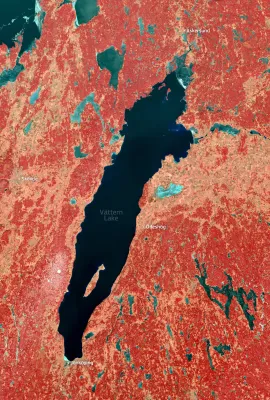
Observed annually on 22 March, World Water Day highlights the importance of protecting freshwater resources worldwide.
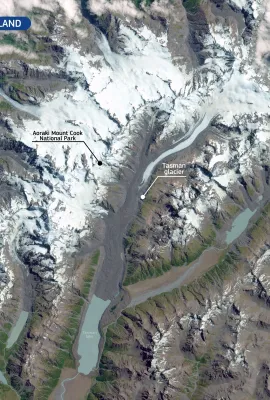
21 March 2026 marks World Day for Glaciers, which is dedicated to raising global awareness of the importance of glaciers and the urgent need to protect them.
Tropical Cyclone Narelle formed on 16 March 2026 in the Coral Sea, off the coast of Queensland, Australia.
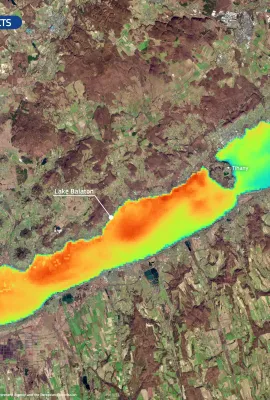
Monitoring water quality in lakes and reservoirs is essential for assessing environmental conditions and supporting water resource management.
Our planet and the space environment surrounding the Earth are regularly affected by variations in solar activity. Though invisible to most of us, these fluctuations trigger space weather events,…
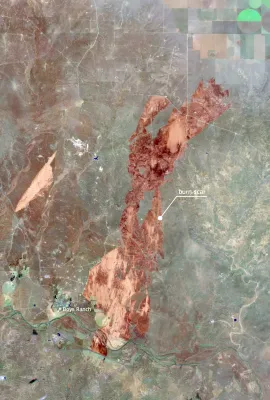
The “Yellow Fire”, which occurred in northwestern Texas in early March 2026, marked one of the first major wildfires of the year in the United States.
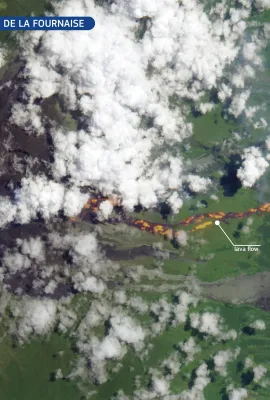
Piton de la Fournaise, one of the most active volcanoes on Earth, dominates the south-eastern part of Réunion Island, a French territory in the Indian Ocean.
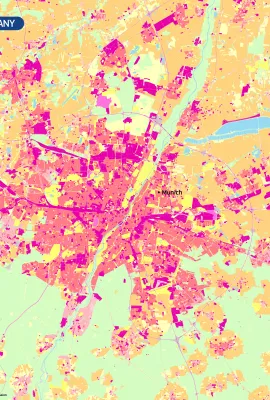
Understanding where economic value is concentrated in a landscape is essential for assessing the potential economic losses caused by disasters, and for managing risks efficiently.
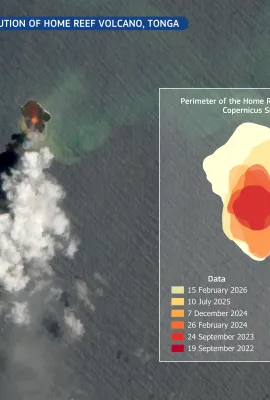
Home Reef is a submarine volcano located in the central Tongan archipelago in the South Pacific Ocean.
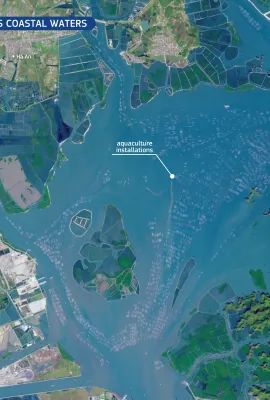
Aquaculture is widely practised along the northern coast of Vietnam, where sheltered coastal waters provide favourable conditions for marine farming.
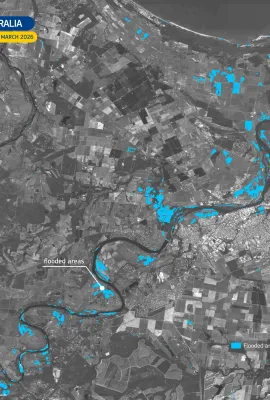
On 10 March 2026, major flooding affected Bundaberg, a city in the state of Queensland, north-eastern Australia.
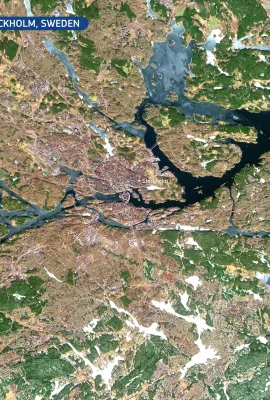
Stockholm, the capital of Sweden, is spread across an archipelago where land and water interlace between Lake Mälaren and the Baltic Sea.
Artificial Intelligence is transforming how Earth Observation data are analysed and used to support environmental monitoring, climate research and action, as well as disaster risk reduction and…
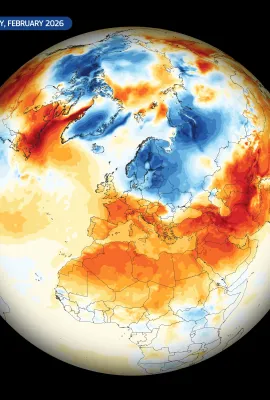
The Copernicus Climate Change Service (C3S) has published its latest monthly Climate Bulletin, focusing on key climate trends in February 2026.
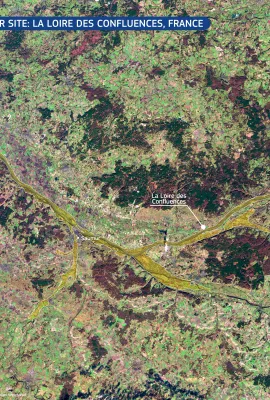
On 26 February 2026, La Loire des Confluences, a river corridor in western France, was designated a Wetland of International Importance under the Ramsar Convention.
The target audience for the workshop includes Copernicus and DestinE users, Earth observation and digital service providers, policy makers, industry, academia, IT experts, etc.
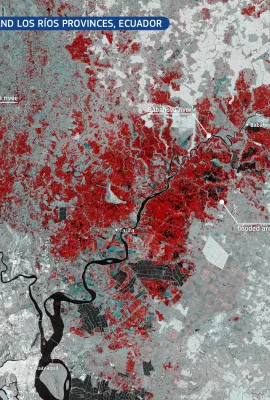
Heavy rainfall took place on the afternoon of 3 March 2026 in western Ecuador.
The workshop will review challenges and opportunities around the new and fast evolving AI/ML landscape and what this means for the future of Copernicus as we prepare for the next MFF 2028-2034.
Showing 241-260 of 2025 results