
OBSERVER: Second EU Access to Space conference maps a path from policy to orbit
Europe's space ambitions depend on a sovereign, resilient, and cost-effective route to orbit. At the second EU Access to Space conference, organised by the European Commission under the theme 'Ready to Launch: From Policy to Orbit', institutions and industry discussed how to turn policy into action. Exchanges centred on the Long-Term Vision for European Space Transportation and three pillars: aggregating institutional launch demand, innovation for next-generation launcher systems, and critical ground infrastructure. In this Observer, we look at some of the highlights from the event.
The second edition of the EU Access to Space conference took place in Brussels on 23 September 2026. Organised by the European Commission, and building on last year’s discussions on policy frameworks, funding models, and strategic partnerships, the conference focused on how to translate policy ambitions into actionable strategies for ensuring Europe’s sovereign, resilient, and cost-effective access to space.
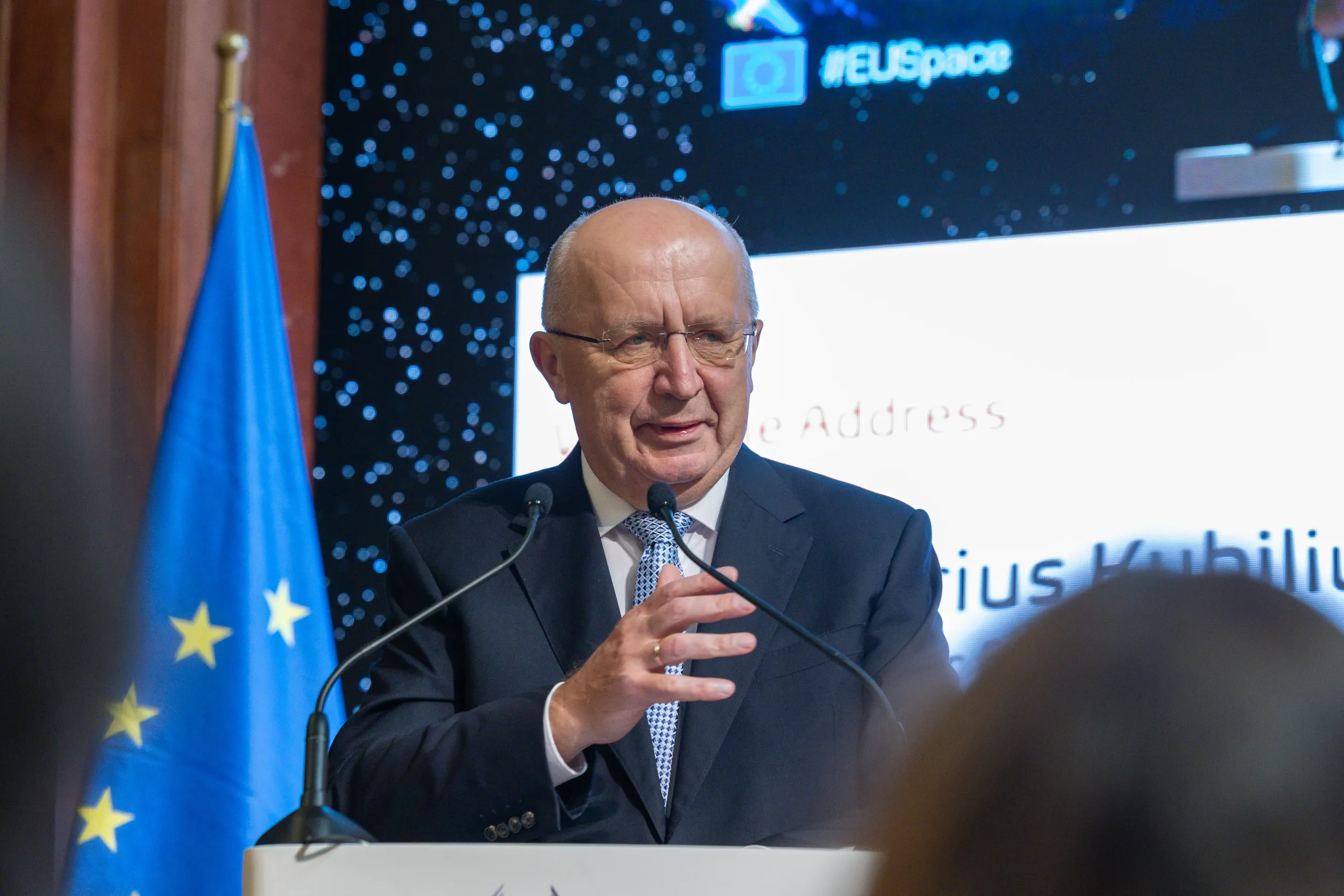
Opening the conference, Commissioner for Defence and Space Andrius Kubilius emphasised that access to space underpins everything else Europe does in orbit. 'Rockets are the beginning and end of space travel,' he said. 'No rockets, no access to space, no future in space.'
Rockets are the beginning and end of space travel… No rockets, no access to space, no future in space.
— Andrius Kubilius
European Commissioner for Defence and Space
Launch demand outpacing capacity
The number of satellites in orbit is rising sharply while launch capacity worldwide lags behind, generating competition for a limited number of slots and rising prices. For the EU alone, the projected requirement is 62 launches by 2034, including launches for Copernicus, Galileo, IRIS2, and the planned Earth Observation Governmental Service (EOGS). Planned annual capacity falls short of projected demand in certain years. Ariane is planned for 10 launches a year, while 14 are needed in 2031 alone. Vega is planned for 6 a year, against the 8 needed in 2030.
The same pattern appears in international comparisons. According to the European Space Agency’s (ESA) 2026 Report on the Space Economy, Europe ranked fourth worldwide by mass launched for government missions in 2025, behind China, the United States, and Russia, and third in public space investment, with 11% of global public space expenditure against 58% for the United States and 15% for China.
From vision to action
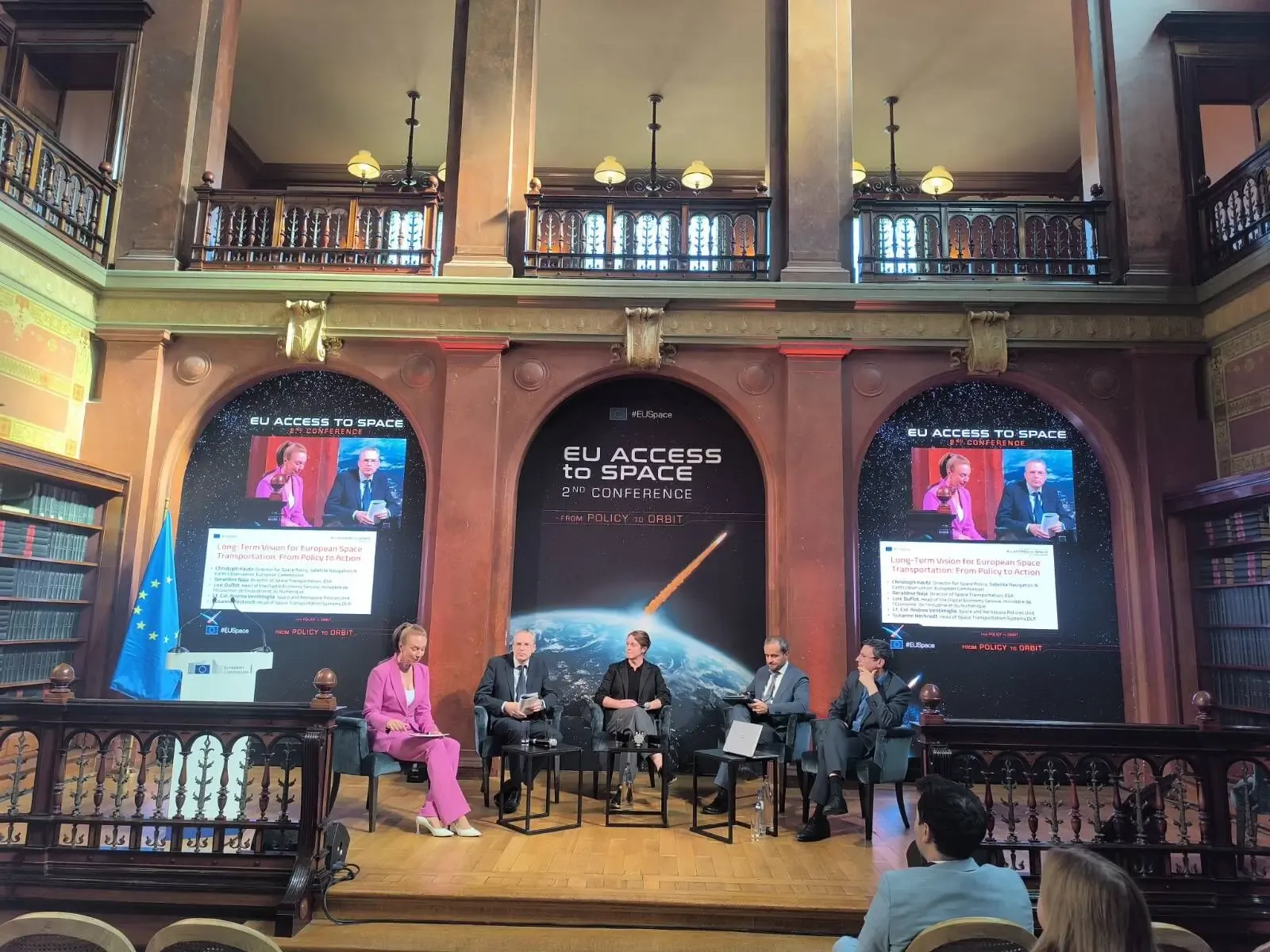
The Long-Term Vision for European Space Transportation was presented at the International Space Summit in Paris by the European Commission, the European Space Agency, and Member States, and defines shared goals for European public players in space over the coming 20 years. A dedicated session on the Long-Term Vision examined what its implementation requires in practice. Christoph Kautz, Director for Space Policy, Satellite Navigation and Earth Observation at the European Commission, described a series of balances which need to be struck: between competition and cooperation, private and public funding, interoperability and resilience, resilience and sustainable pricing, flexibility and defined testing scopes, and dedicated and shared test benches. Delivering the vision, he added, will require Member States, EU institutions, and ESA to work closely with industry.
Strengthening Europe’s access to space ecosystem
Throughout the conference, most discussions revolved around three areas in which these commitments meet practical constraints: aggregating institutional launch demand, innovation for next-generation launcher systems, and critical ground infrastructure.
Demand aggregation is a direct consequence of the launch capacity bottleneck discussed above. Only predictable, consolidated demand can give industry the confidence to invest in capacity rather than compete for isolated contracts.
On launcher innovation, the Commissioner pointed to recent European achievements, among them the Vega-C launch of Sentinel-3C, the first flight of Ariane 64, and the first commercial launch from continental Europe, carried out by Isar Aerospace from the Andøya Spaceport in Norway. Commissioner Kubilius noted that Europe needs launchers which can be flown again and again, and that there is a need for growth in both public and private investment to make this happen. Weeks before the conference, on 27 August 2026, the Meteosat Third Generation Imager-2 (MTG-I2) satellite was launched on board an Ariane 6 launcher from Europe's spaceport in French Guiana, the launcher's first mission to geostationary transfer orbit.
Critical ground infrastructure received sustained attention across the afternoon. Europe operates a spaceport in French Guiana, while a growing number of initiatives are developing elsewhere on the continent at varying stages of maturity. Commissioner Kubilius compared the situation to civil aviation, suggesting that European launch sites may need to interconnect and share services to substantially raise launch cadences. Emerging industrial players will also need access to test and qualification facilities in order to grow.
The road ahead
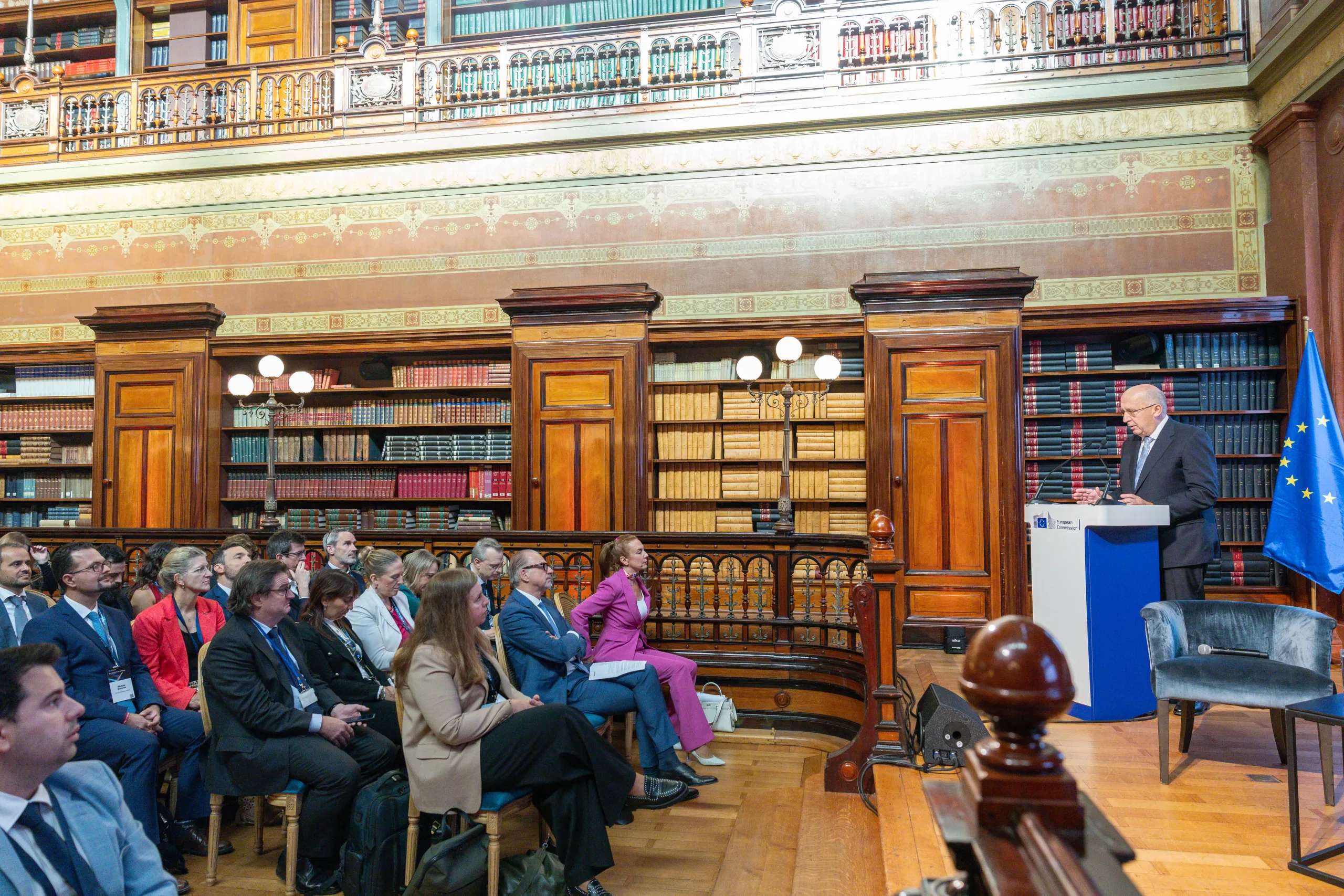
Commissioner Kubilius also announced that he will be conducting an 'access to space tour', visiting European launch sites, manufacturing plants, and test facilities, with the intention of gathering first-hand assessments of bottlenecks and proposed solutions. An action plan on European access to space is planned for 2027, and the Commissioner called for broad public debate on how to accelerate Europe’s access to space, involving all relevant actors.