El Niño warming pattern in the Pacific Ocean
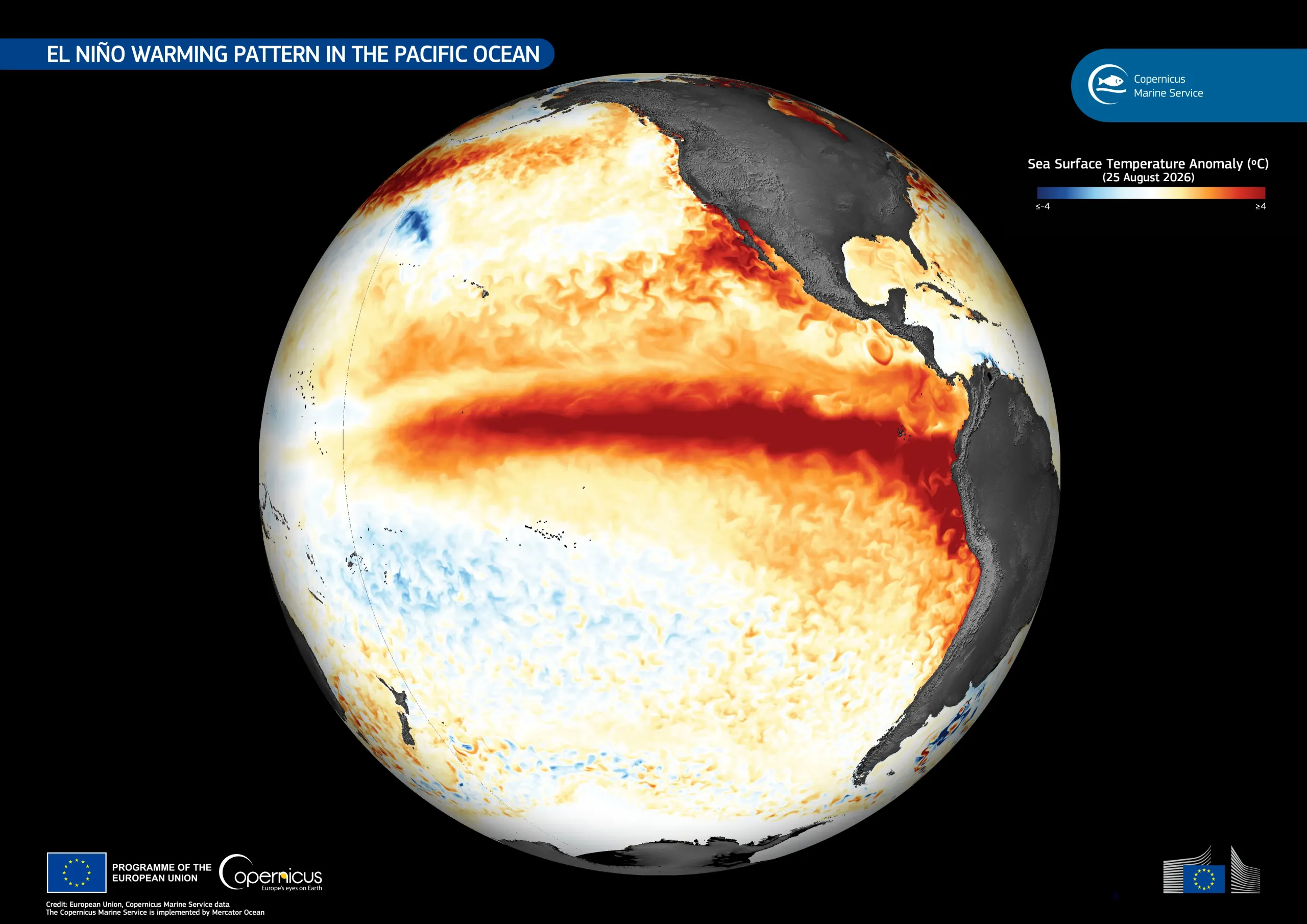
El Niño is a recurring climate phenomenon associated with unusually warm surface waters in the central and eastern equatorial Pacific Ocean. As the warm phase of the El Niño–Southern Oscillation (ENSO), it is linked to changes in atmospheric circulation which can influence weather patterns worldwide. These changes can result in increased rainfall in some regions and reduced precipitation in others, with potential effects on agriculture, water resources, and marine ecosystems.
This data visualisation, based on data from the Copernicus Marine Service, shows sea surface temperature anomalies on 25 August 2026. A distinct band of warmer water, identified by red tones, stretches along the central and eastern equatorial Pacific, illustrating the ongoing El Niño warming pattern.
As climate change continues to affect the ocean, monitoring changes in ocean temperatures is increasingly important. Copernicus Marine Service data support the monitoring of temperature anomalies, contributing to climate forecasting, marine resource management, and preparedness for extreme weather events.