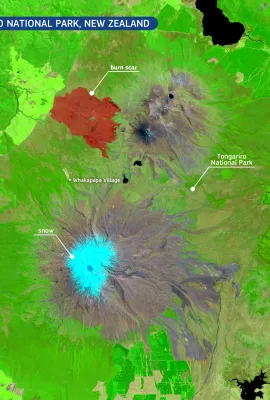
On 8 November 2025, a wildfire swept through nearly 3,000 hectares of alpine ecosystem in the Tongariro National Park, New Zealand. The fire damaged important habitats for native species on the North…
Results (2104)
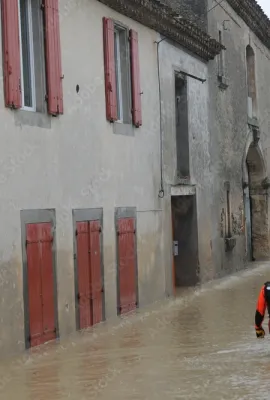
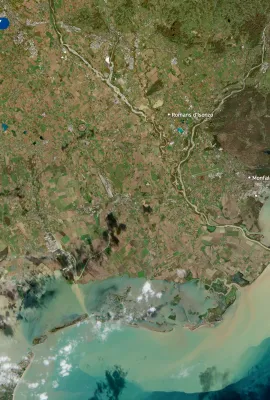
On 18 November 2025, intense flooding and a devastating landslide struck the Friuli Venezia Giulia region in northern Italy following prolonged, intense rainfall. The area surrounding the towns of…
Europe is facing an increasingly complex mix of natural, technological, and human-driven risks, and the need for science which can guide preparedness is stronger than ever. At the EU Science for…
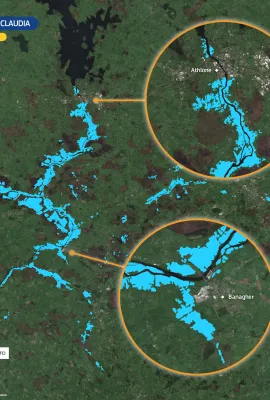
On 14 November 2025, Storm Claudia swept across Ireland, bringing severe weather conditions and significant flooding to the Leinster and Munster provinces. The Copernicus Emergency Management Service…
The acceleration of the clean energy transition across Europe offshore wind farms has made offshore wind farms essential for reducing greenhouse gas emissions and ensuring a more sustainable future. …
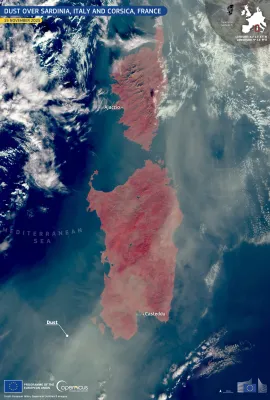
On 14 November, a dust storm originating in North Africa swept across the western Mediterranean. This Copernicus Sentinel-3 image, acquired on 15 November, clearly shows the phenomenon: a thick…
Copernicus Sentinel-6B was successfully launched earlier this morning at 06:21 CET from Vandenberg Base in California. The satellite sent its first signal down to Earth at 07:54, confirming that it…
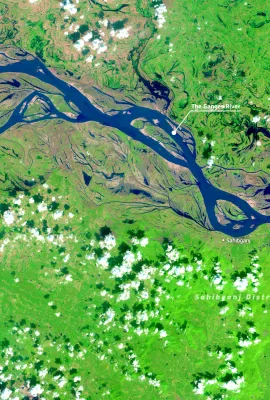
This image, acquired one of the Copernicus Sentinel-2 satellites on 25 October 2025, shows a meandering stretch of the Ganges River in eastern India. Flowing through the district of Sahibganj in the…
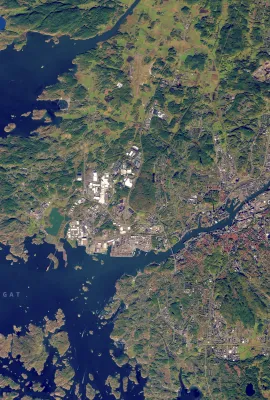
On 18 October 2025, one of the Copernicus Sentinel-2 satellites acquired this image of Gothenburg, Sweden’s second largest city. Gothenburg is located on the country’s western coast along the…
Each year, EU Space data and services help rescue 2 000 people in distress.
The everyday impacts of poor air quality can be harmful and far-reaching. Accessible, reliable information is essential to raise public awareness and empower local governments to take effective…
Biodiverse ecosystems are essential to the overall health of our planet. That’s why much of the world – EU Member States among them – has pledged to protect and restore global biodiversity.
Civilian flights use EGNOS for more than just navigation: aircraft rely on navigation signals to help them land safely. That’s where EGNOS’ Safety of Life (SoL) service comes in.
In the spring of 2025, the Soviet-built Cosmos-482 Descent Craft, originally designed to land on Venus, instead began making an uncontrolled re-entry into Earth’s atmosphere.
From harmful gases to tiny particles, the air we inhale is filled with invisible pollutants.
Climate change and environmental degradation are impacting the frequency and severity of disasters.
The Copernicus Security Service (CSS), among other things, covers also maritime safety, sustainability, and surveillance, under its Copernicus Maritime Surveillance (CMEMS) component.
The Copernicus Security Service (CSS) is helping peacekeepers prepare for different scenarios through detailed use cases as part of the Support to EU External and Security Actions (SESA) component…
Wildfires in Europe are becoming more severe and more frequent. That’s why the mapping and monitoring products provided by the Copernicus Emergency Management Service (CEMS) will become increasingly…
The EU is installing renewable energy at a never-before-seen pace, with Poland among the top five producers of solar power on the continent.
Showing 461-480 of 2104 results