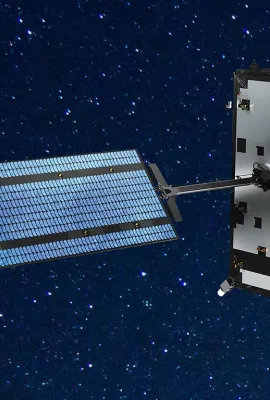
The Galileo High Accuracy Service (HAS) provides free access to an accurate positioning solution using a Precise Point Positioning algorithm in real-time.
Results (2081)
The EGNOS Safety of Life (SoL) Service improves the accuracy and reliability of GPS, and soon, Galileo, and provides timely alerts when navigation performance degrades.
EGNOS Open Service (OS) provides free and accessible use of EGNOS services to any user equipped with a GPS/SBAS-compatible receiver.
The EGNOS Safety of Life (SoL) assisted service for Maritime Users (ESMAS) is the first Satellite-based Augmentation System (SBAS) service tailored to maritime users.
EGNOS Data Access Service (EDAS) provides ground-based access to EGNOS data through the Internet in near real-time. With a controlled access system, EDAS allows users to connect to a variety of services which provide raw GPS, GLONASS, and EGNOS data, plus EGNOS augmentation messages.
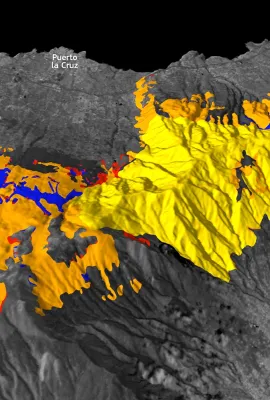
The Copernicus Emergency Management Service (CEMS) works to increase resilience, prevent the loss of life and property, and reduce damage to ecosystems before, during, and after disasters.
The Galileo Public Regulated Service (PRS) is a robust, encrypted navigation service for the European Union and partner countries’ government-authorised users.
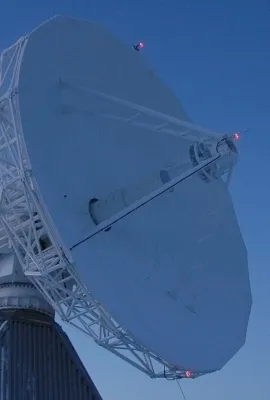
The Galileo Search and Rescue Service (SAR) swiftly relays distress signals to search and rescue crews, thereby supporting life-saving missions.
Galileo’s Open Service (OS) is a free Positioning, Navigation, and Timing (PNT) service for global users. It is embedded in almost all smart devices such as smartphones, smartwatches, wearable health devices, in-vehicle navigation devices, and many more.
Satellite Navigation services are the backbone of many of today’s activities such as guiding you on your phone when you need directions or helping you keep track of your food delivery.
Satellite-based Earth Observation provides us the tools we need to better understand and monitor our planet.
The EU owns and manages infrastructure in space and on the ground which provide space-based data and services to governments, businesses, researchers, and citizens. Dive into our components pages, where you’ll learn how our Earth Observation, satellite navigation, and other EU Space activities bring you key services every day.
As the space sector expands, driven by rapid technological progress and growing activity from both commercial and government players, it’s becoming increasingly important to make sure these developments are environmentally sustainable.
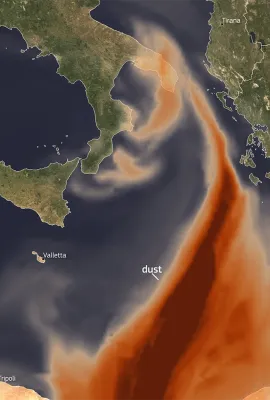
The Copernicus Atmosphere Monitoring Service (CAMS) works to provide quality-assured data and information on the atmospheric composition with a focus on air pollutants and greenhouse gases.
Over the past two decades, the European Union (EU) has steadily expanded its role in space to ensure that Europe fully benefits from the data and services provided by space-based technologies.
Horizon Europe is the EU’s framework programme for research and innovation for the 2021-2027 period. EU Space is funded through Horizon Europe’s ‘Digital, industry and space’ cluster.
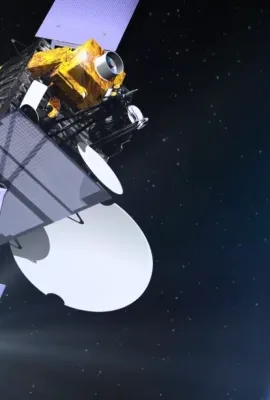
In-Space Operations and Services (ISOS) will improve the performance, resilience, and sustainability of space assets.
In-Orbit-Demonstration and Validation (IOD/IOV) is the EU’s programme to help new technologies be tested in orbit.
From helping you message friends to supporting actors in the midst of a humanitarian operation, secure connectivity and internet access has become a baseline necessity for much of our lives.
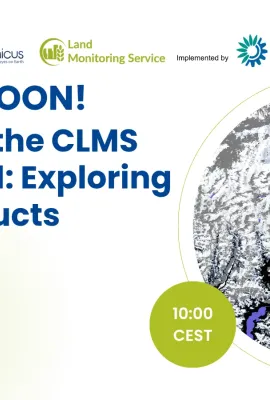
On 19th of May 2026 the Copernicus Land Monitoring Service (CLMS) will host the first webinar of the event series aimed at showcasing the new High Resolution Water, Snow and Ice (HR-WSI) product suite.
This Webinar will focus on the HR-WSI Snow products and will provide:
A general overview of the HR-WSI project &product portfolio
Showing 2041-2060 of 2081 results