
Phytoplankton bloom in the Barents Sea
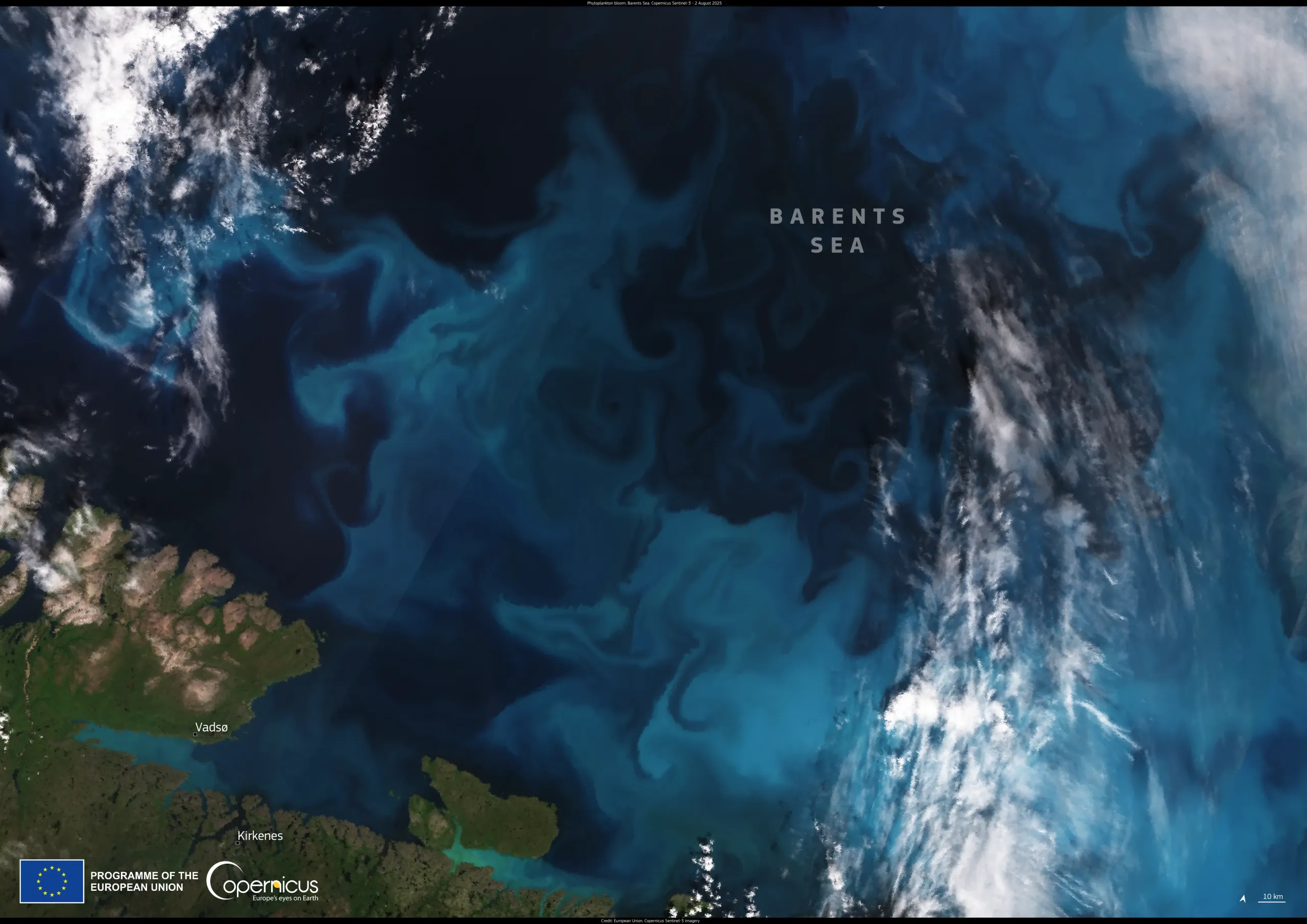
This image, acquired by one of the Copernicus Sentinel-3 satellites on 2 August 2025, shows vivid turquoise and milky-blue swirls in the Barents Sea, north of Scandinavia. These striking patterns are caused by a large phytoplankton bloom, microscopic photosynthetic organisms that form the base of the marine food chain and contribute significantly to carbon sequestration and oxygen production.
In the Arctic Ocean, including the Barents Sea, blooms are triggered by increased sunlight and melting sea ice, which create ideal growth conditions during summer. Climate driven Atlantification, an ongoing process which is making the Arctic Ocean warmer and saltier, is extending the bloom season and shifting their geographical extent northward.
Sentinel-3 satellite data enables scientists to monitor bloom dynamics, assess ocean health, and study the impacts of climate change on polar marine ecosystems.
![Download [WEBP, 537.76 KB]](https://eu-space.europa.eu/sites/default/files/images/iotd/20250805_PhytoplanktonBloom_0.webp)