
Sediments along the coast of eastern Iceland
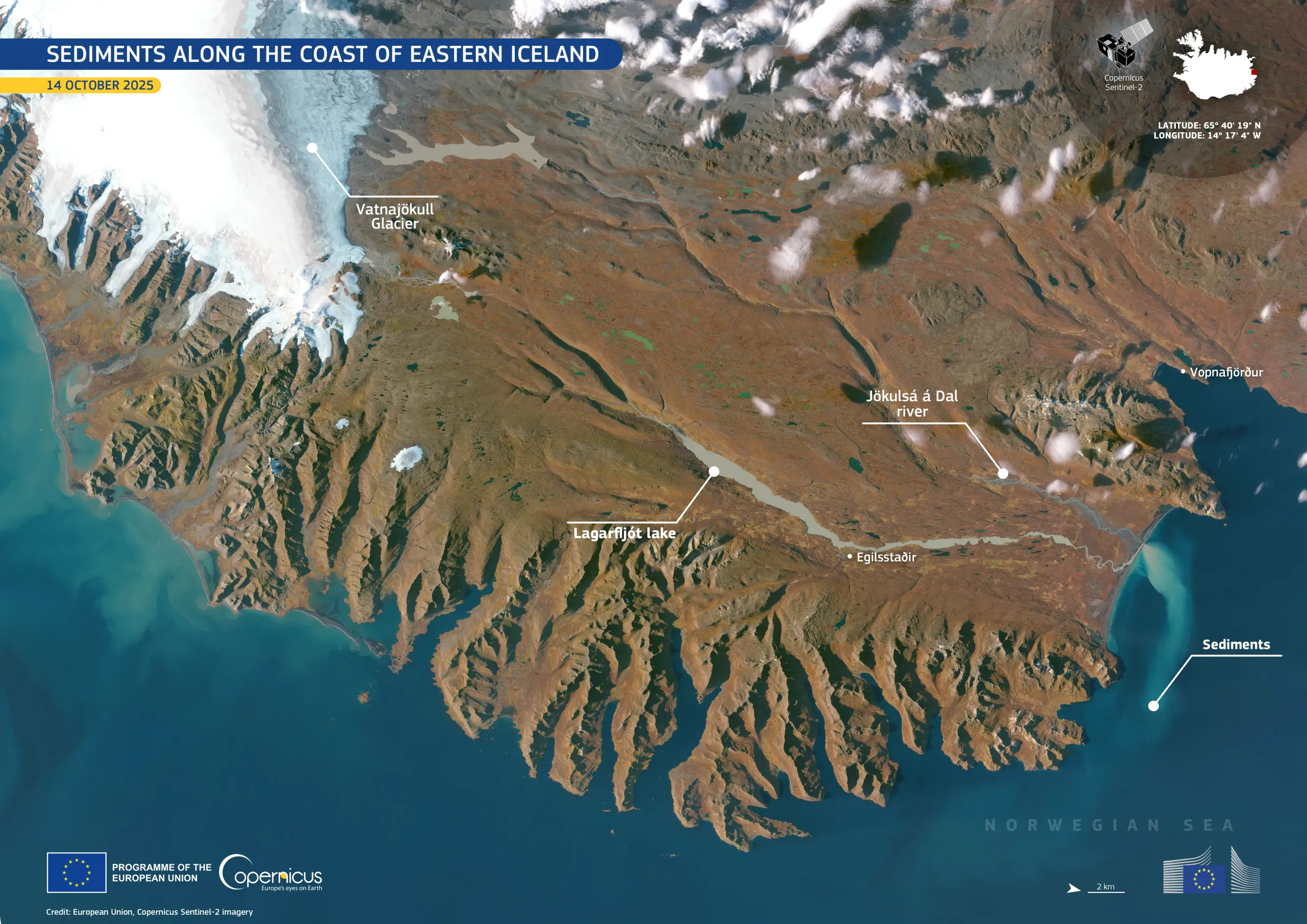
With a length of around 150 km, the Jökulsá á Dal is among Iceland’s longest rivers. It carries meltwater and sediments from Vatnajökull, Europe’s largest glacier, across the eastern highlands. The Jökulsá á Dal river flows into Lagarfljót Lake, a long and narrow waterbody uniquely classified as both a river and a lake, before reaching the Norwegian Sea. Discharge from the river typically peaks in early October, driven by glacial melt and seasonal highland flooding, which are vital for supporting local agriculture and ecosystems.
This Copernicus Sentinel-2 image, acquired on 14 October 2025, reveals a sediment plume extending approximately 25 km north-east from Héraðssandur Bay, where glacial waters mix with the sea. The milky-white appearance of Lagarfljót Lake reflects the high concentration of suspended glacial sediments, while the Vatnajökull Glacier is visible to the left of the image.
Copernicus free and open data delivers valuable insights into coastal and glacial systems, advancing our understanding of the environmental impacts of glacial melt.
![Download [WEBP, 1.65 MB]](https://eu-space.europa.eu/sites/default/files/images/iotd/20251026_Iceland_20sediments.webp)