World Meteorological Day 2026: Observing Today, Protecting Tomorrow
23 March marks World Meteorological Day 2026, under the theme “Observing Today, Protecting Tomorrow”. In this context, monitoring atmospheric composition and long-range transport of aerosols is key for understanding how local events can have global impacts.
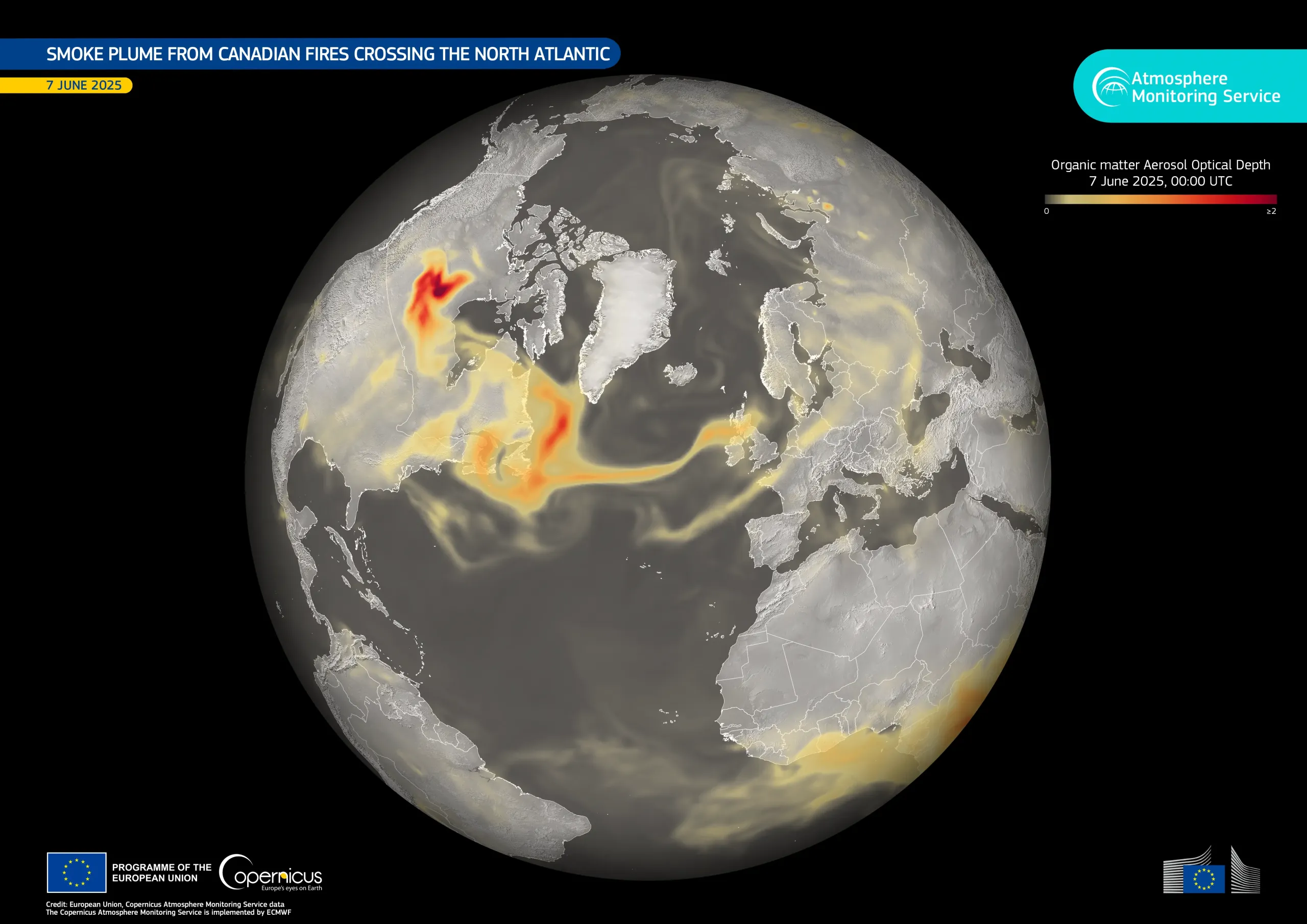
One of these examples is the wildfire crisis which affected Canada in early summer 2025. Persistent, large-scale fires burned across central regions of the country, releasing vast quantities of smoke aerosols into the atmosphere, which were then transported by strong winds across the Atlantic and reached Europe, affecting air quality thousands of kilometres away from their source.
This data visualisation, based on Copernicus Atmosphere Monitoring Service (CAMS) data, shows smoke plumes travelling across the Atlantic and reaching Europe on 7 June 2025 at 00:00 UTC. According to CAMS, June and July 2025 saw severe wildfire activity in Canada, with daily total wildfire intensity and emissions consistently above the 2003-2024 average throughout the summer.
Copernicus data, including CAMS forecast models, play a key role in observing and predicting extreme weather events, supporting air quality forecasts, early warning systems, and informed decision-making.