
DG DEFIS talks space sustainability at SpaceTechExpo Europe Conference

On 14 November 2023, DG DEFIS attended for the first time the SpaceTechExpo Europe conference in Bremen, Germany. The SpaceTechExpo is an annual 3-day space industry conference organised into three themes: industry, smallsats and mobility connectivity. It is attended by approx. 6000 visitors and counting 650 exhibitors from approx. 40 countries.
During the VIP panel on ‘Autonomous, Sustainable and Launch-ready: Assessing the Future for European Space and its Sector of Primes, SMEs and Start-ups’, DG DEFIS discussed priorities for the EU space domain with panellists from PwC, Airbus Defence and Spae, OHB, and ArianeGroup.
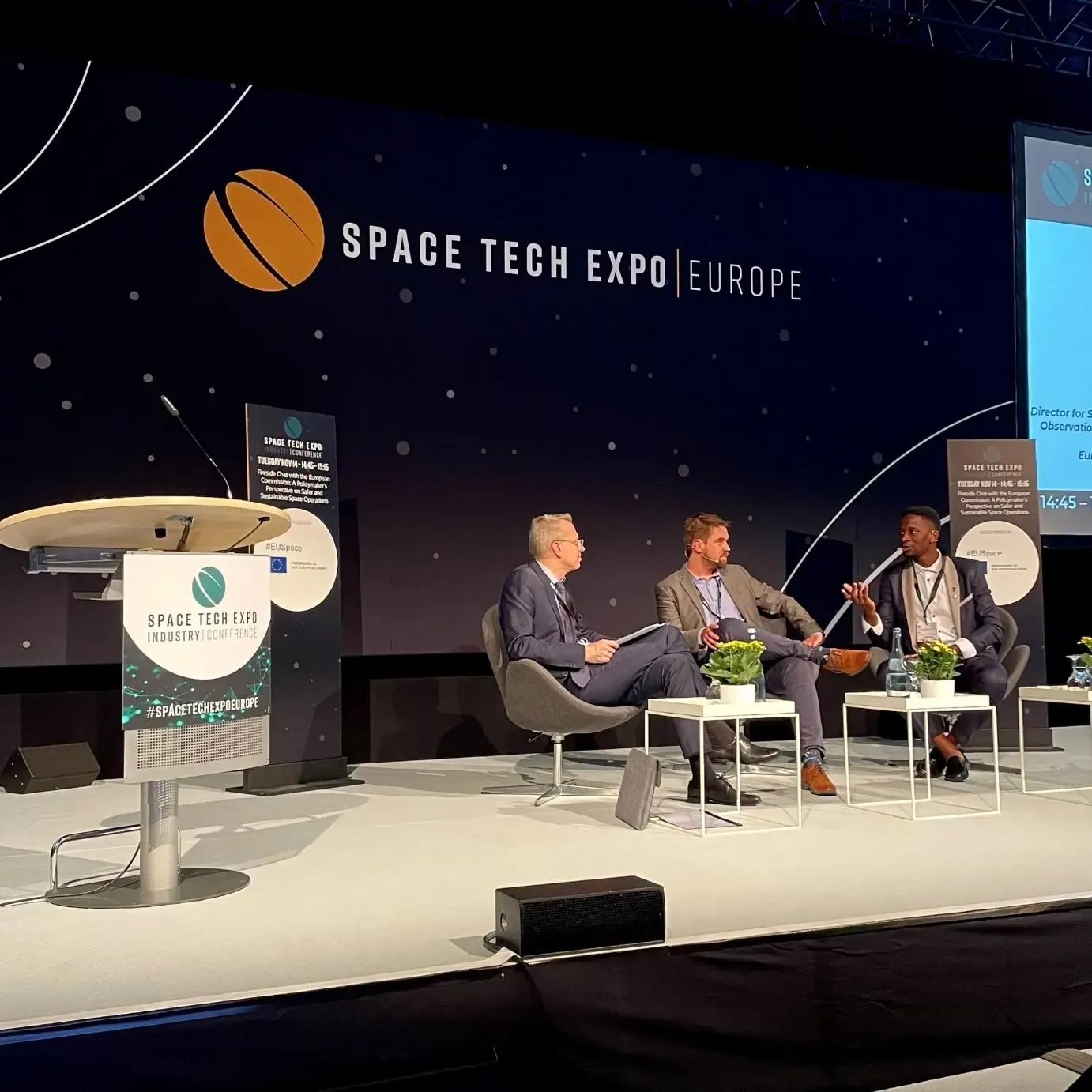
In the afternoon, DG DEFIS chaired its own ‘Fireside Chat with the European Commission: A Policymaker’s Perspective on Safer and Sustainable Space Operations’. DG DEFIS exchanged views with OKAPI:Orbits and SES on space safety and sustainability, in particular how to define common rules that enable EU space industry to remain competitive, how to address costs linked to regulatory limitations, and measures to encourage adherence to voluntary rules, such as through space labels.
Background
DG DEFIS’ participation in this event supports the implementation of the EU approach on STM.
More information
Supporting Material
JOINT COMMUNICATION TO THE EUROPEAN PARLIAMENT AND THE COUNCIL An EU Approach for Space Traffic Management An EU contribution addressing a global challenge
An EU Approach for Space Traffic Management

The EU approach on Space Traffic Management (STM) proposed by the Commission and the High Representative therefore aims at keeping space operations safe, space orbits usable, and space accessible for decades to come while ensuring and further fostering the competitiveness of the EU space industry.
EU Space Surveillance and Tracking (EU SST) is the cornerstone of EU STM strategy. EU SST fosters innovation and supports European industrial capabilities for strategic autonomy. The EU Industry and Start-ups Forum on STM (EISF) unites stakeholders to define R&D priorities.