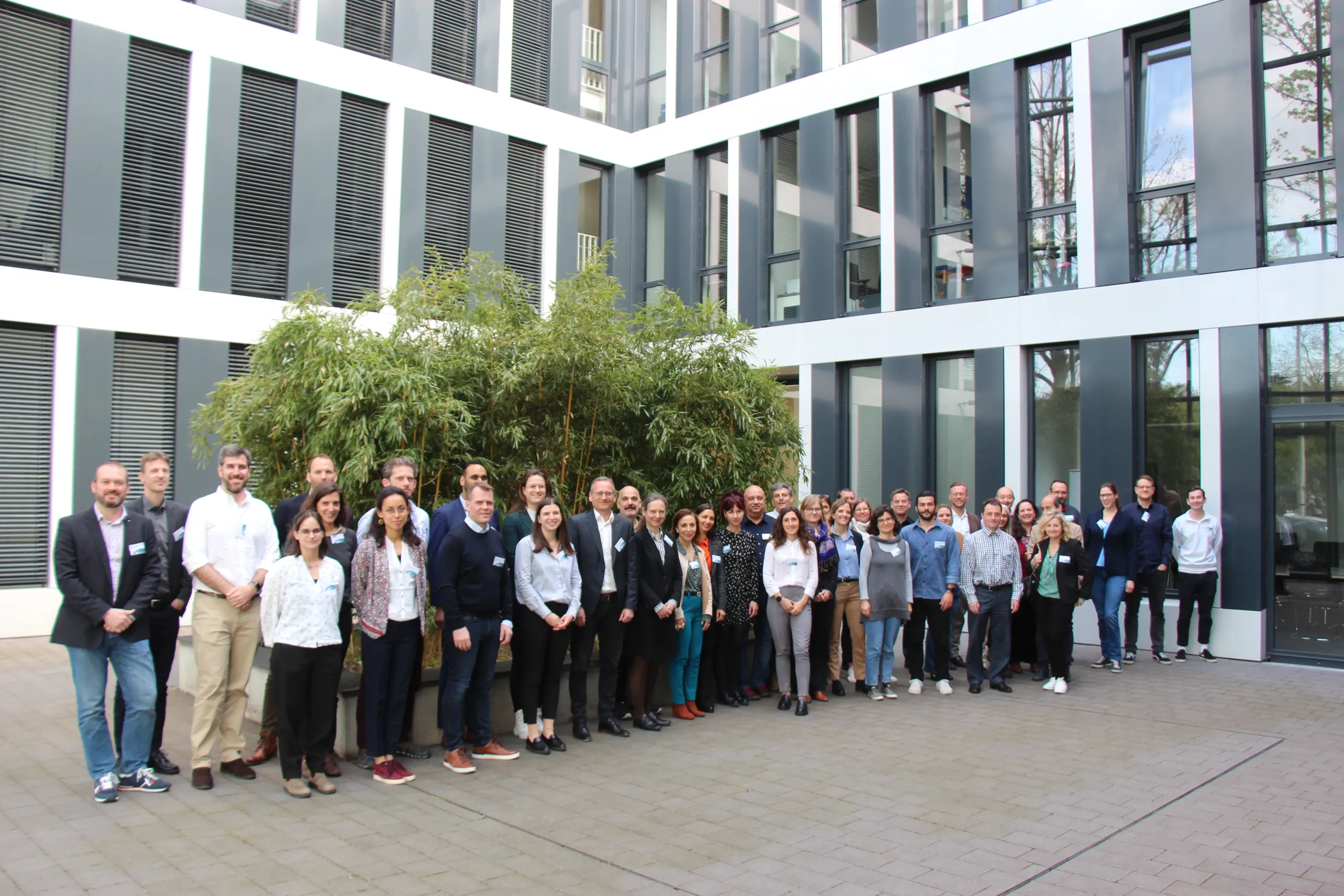
FPCUP Workshop
On 19 and 20 April, more than 25 different institutions from 17 European countries met to exchange current project results at this year's FPCUP workshop in Bonn. While the current status of the overall project was presented at the beginning, 17 partners reported on their current activities. The agenda can be found here. Once again, the meeting showed the importance of sharing experiences and collaborating across borders in order to enhance the uptake of Copernicus. ?
The Framework Partnership Agreement on Copernicus User Uptake (FPCUP) is an EU-funded project that aims to increase the number of Copernicus users and applications derived from Copernicus data or products. The overall project, with 50 partners and 220 activities, is coordinated by the German Space Agency (DLR).
You can find the Workshop-Report by clicking here, which gives you a summary of the workshop.
All Presentations from the workshop can be found here:
- FPCUP - State of Play
- An overview of French FPCUP actions - Robin Faivre (CNES)
- Overview of the Estonian actions and lessons learned in the FPCUP project - Krista Alikas (TO)
- Main results and future perspective for SRTI-BAS on FPCUP actions - Kamelia Radeva, Lachezar Filchev (SRTI-BAS)
- Overview of the Italian FPCUP actions - Andrea Taramelli (ISPRA)
- First results from recently ended FPCUP actions in Spain - Sergio Lourenso Prieto (CDTI)
- CAMS Downstream – successful improvement of air quality forecast in Germany - Sabine Robrecht (DWD)
- Copernicus Academy CZ office - bringing Copernicus into universities in the Czech Republic - Premysl Stych (CUNI)
- Professional training for environmental agencies (PTEA) - Katrin Koch (GFZ)
- Seamless Web: A user-friendly and tailored information platform on sub-seasonal to decadal climate predictions for Germany - Miriam Tivig (DWD)
- Do-it-yourself: mapping and monitoring human settlement expansion in Africa with Sentinel-1 and Sentinel-2 imagery - Marta Sapena Moll (DLR)
- WG Africa Training of Trainers Program - Carolina Sá (PT Space)
- Reporting of Emissions from LULUCF: Practices, Needs, Gaps and Solutions - Ali Nadir Arslan (FMI)
- The use of Sentinel-1 and Sentinel-3 data for the operational assessment of snow wetness in Norway and Romania - Vasile Crăciunescu (Meteo Romania)
- Copernicus4Schools-The Great Disaster Challenge - Kamelia Radeva (SRTI-BAS)
- Copernicus Events for Business Innovation in Portugal - Carolina Sá (PT Space)
- Copernicus SMEs – Atlantic Ocean Interactions - João Campos (AD AIR Centre)
- GEOSPATIAL Intelligence for Environmental Compliance Assurance - Interaction with User Organisations - Ion Nedelcu (ROSA)