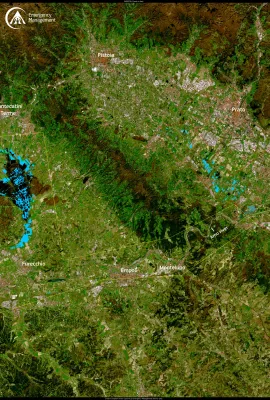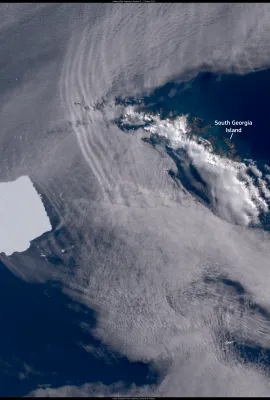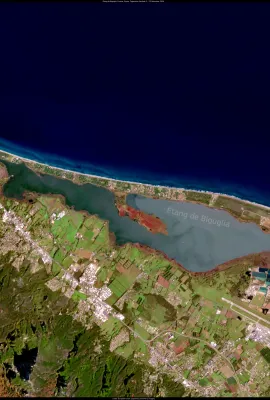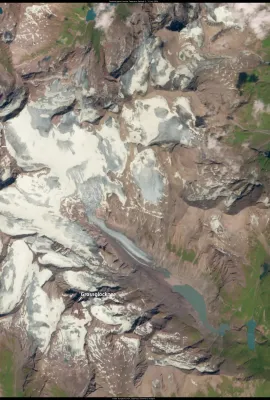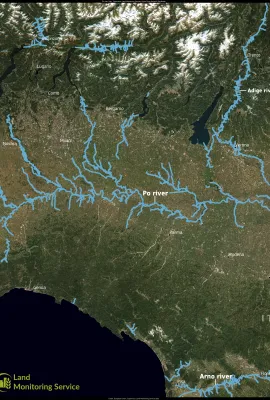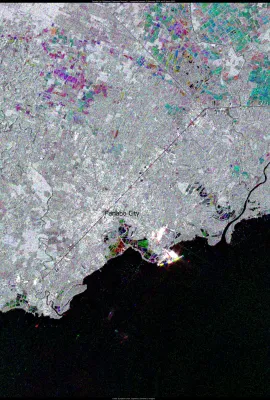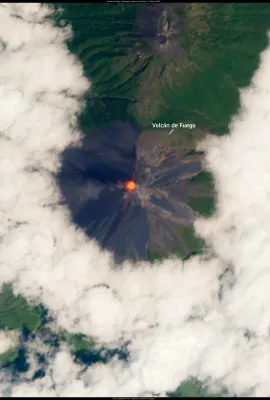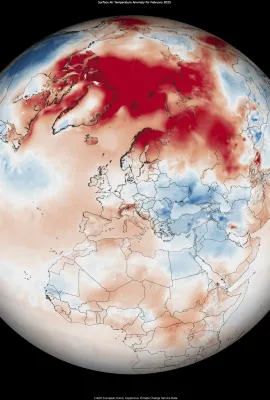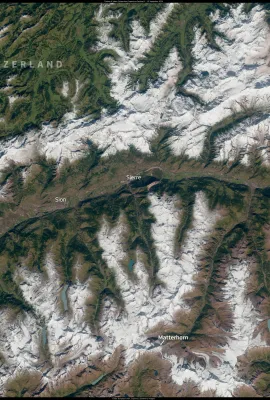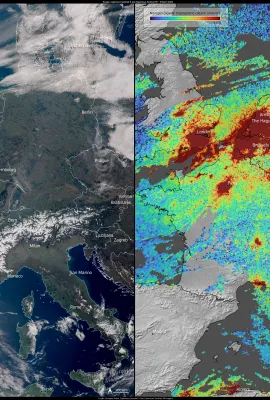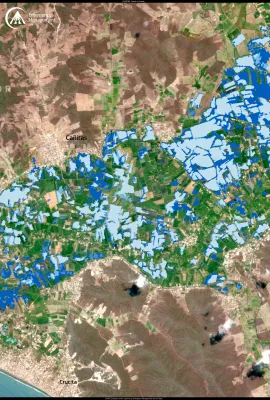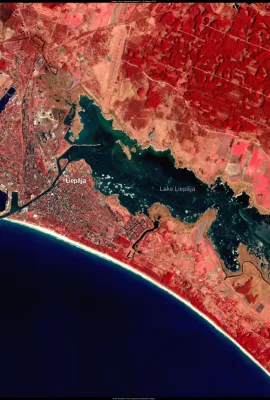
In the face of natural or man-made disasters, the Copernicus Emergency Management Service (CEMS) provides On-Demand Mapping services leveraging satellite imagery and other geospatial data. This information is key to supporting response and recovery efforts around the globe, particularly regarding floods, earthquakes, landslides, hurricanes,...
Results (1987)
The National Collaboration Programme will be driven by a dialogue between and amongst the Member States and the EEA. It will focus on capacity building by raising awareness and increasing the countries’ practical experience with the CLMS.
Located on Ireland’s east coast, Dundalk Bay is a Natura 2000 site, recognised for its importance to an impressive range of marine and coastal species. It is protected under the European Birds Directive due to its role as a habitat for wintering waterbirds and migratory species. The bay's mudflats, sandflats, and estuarine ecosystems support...
This Copernicus Sentinel-3 image from 3 October 2024 shows Hurricane Kirk when it was about 2,000 km southwest of the Azores Archipelago. On the same day on which the image was acquired, Kirk swelled to a Category 4 storm in the central Atlantic Ocean as it made its way northeast, skirting the Caribbean islands and the eastern coast of the...
A recent analysis of the UNESCO World Heritage Sites threatened by climate change suggests that 17 of the 50 most at-risk sites are located on European territory. While flooding and drought were the leading potential hazards to the landmarks, coastal erosion, landslides, extreme temperatures, and storms could also pose threats to these...
The document contains results from exploring the existing practices in geospatial data product usage in Bulgaria.
This image, acquired by one of the Copernicus Sentinel-2 satellites on 1 October 2024, shows a series of ephemeral lagoons formed after torrential rains in Erg Chebbi, a sea of star dunes in the Sahara Desert in Morocco. These lagoons were formed by heavy rains in recent weeks. After seven years of drought, rainfall caused rivers from the Atlas...
This image, acquired by one of the Copernicus Sentinel-2 satellites on 18 June 2024, shows colourful fields of crops along the blue-coloured Danube River flowing through Austria and Slovakia. The cities of Vienna and Bratislava are visible in the left and right of the image, respectively. Copernicus plays a key role in enabling smarter,...
This year, over half of the Netherlands' electricity has been produced from renewable sources like wind and solar power. In total, 32.3 billion kilowatt-hours were generated from renewables, accounting for 53% of the country's electricity production. Wind energy saw a significant increase, rising by a third to 17.4 billion kilowatt-hours, with...
On 3 October 2024, DG DEFIS and EEAS hosted the 2nd meeting of STM subgroup 1 on civilian and military STM requirements.
The most recent edition of the EU Copernicus Ocean State Report (OSR 8) reveals a changing ocean, with record-breaking temperatures, dwindling polar sea ice, and marine heatwaves, including those in the Mediterranean Sea, which penetrated to depths of up to 1500 metres below the surface of the ocean. Other regions, such as the Baltic Sea and...
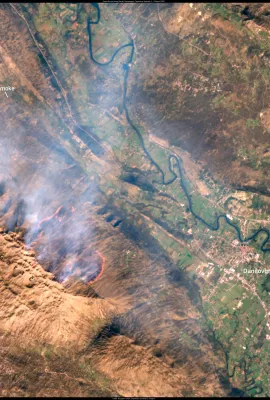
On 29 September 2024, a wildfire broke out in the Peloponnese (Greece), prompting the evacuation of several villages. 350 firefighters were dispatched to battle the blaze, which spread rapidly due to strong winds. At least two deaths caused by the fire have been reported. Greece has been affected by more than 4,500 wildfires during the summer...
The call for participation for the sessions from November 2024 to May 2025 is now open!
The deadline to apply is 6 October 2024.
The survey aims to set a gap analysis of regional landscape and spatial planners for Copernicus Land data/products.
This Copernicus Sentinel-2 image, acquired on 10 September 2024, shows the Guadiana Estuary on the border of Portugal and Spain where the Guadiana River meets the Atlantic Ocean. This region is rich in biodiversity, with wetlands, salt marshes, a variety of fish and bird species, and at least 460 recorded plant species. Its waters play a...
This Copernicus Sentinel-2 image acquired on 24 September 2024 shows a depleted Lake Tefé in northwestern Brazil. The city of Tefé, located along the Solimões River—one of the Amazon’s main tributaries—is also visible. This part of the Amazon Basin is currently facing record-low water levels due to an unprecedented drought. In 2024, the Amazon...
As of September 2024, nine provinces in Cambodia have been affected by severe flooding, which has damaged thousands of homes and led to the evacuation of hundreds of families. At least 9,000 hectares of rice paddies have been impacted by the flooding. Authorities have issued warnings to residents living along the Mekong River, the waters of...
Hurricane Helene made landfall in northwestern Florida, USA, on 26 September 2024 as a powerful Category 4 storm and one of the largest storms in the Gulf of Mexico in the last century. With maximum sustained winds reaching 225 kilometers per hour, Helene triggered widespread hurricane, wind, and flash flood watches and warnings for 60 million...
The newly launched Copernicus Sentinel-2C satellite has captured an image you wouldn't expect – a spectacular view of the Moon. While the satellite is typically focused on Earth Observation, this image was acquired on 20 September as part of its calibration process. The Moon’s stable and well-known light intensity provides a perfect reference...
WG Africa | Rome & Online | English
Showing 701-720 of 1987 results