
OBSERVER: EU Space Days 2026 brings the European space community together in Nicosia
Space is increasingly central to the EU's security, resilience, and economic future. Against that backdrop, EU Space Days 2026 brought together senior EU decision-makers, industry leaders, start-ups, and researchers in Nicosia, Cyprus, for two days of high-level discussions on the state and direction of Europe's space endeavours. Organised under the auspices of the Cyprus Presidency of the Council of the EU, the event covered topics ranging from defence and strategic autonomy to workforce development and quantum communications. In this Observer, we take a look at some of the key highlights and forward-looking messages.
EU Space Days 2026 took place in Nicosia, Cyprus, on 26 and 27 May, bringing the European space community together for the EU's flagship annual event dedicated to space policy, industry, innovation, and strategic autonomy. Organised under the auspices of the Cyprus Presidency of the Council of the EU, the event signalled Cyprus's growing role in the European space ecosystem. Participants included representatives from EU institutions, Member States, EU agencies, space organisations, industry, SMEs, start-ups, investors, researchers, and defence and security stakeholders, making the event both a policy forum and a space for business exchange and networking.
As a Member State increasingly engaged with the space sector and as holder of the Council Presidency, Cyprus gave the event an institutional framing which reinforced a recurring message across both days: space is a shared European responsibility, with an expanding number of Member States becoming active participants. This was also reflected in the months leading up to the event. In March 2026, Cyprus completed the first activation and operational use of secure satellite communication services delivered through Governmental Satellite Communications (GOVSATCOM), following the launch of the service's initial operations in January 2026.
Space as a shared European priority
The agenda showcased the EU space policy and programmes as a coherent set of interconnected strategic priorities, not as a collection of separate technical portfolios. Recurring themes included strategic autonomy, the competitiveness of the European space sector, space for security and defence, dual-use technologies which can serve both civil and defence needs, as well as the regulatory framework being proposed through the EU Space Act.
This year’s event placed particular focus on the convergence of space, defence, and secure connectivity, driven by evolving geopolitical tensions and hybrid threats. Speakers addressed the need to reduce strategic dependencies, protect critical space infrastructure, and ensure Europe's continued autonomous access to and use of space in a contested environment.
The proposed EU Space Act was a consistent reference point across both days. Its focus on safety, resilience, sustainability, and competitiveness drew discussion on how Europe can support innovation while establishing a more coherent governance framework for space activities.
The competitiveness of the European space sector was addressed in terms of both large established actors and the broader ecosystem. The expansion of investment and innovation opportunities for European start-ups and SMEs featured as a priority, reflecting a recognition that the future of the sector depends on supporting a wider and more diverse industrial base, rather than only relying on the capabilities of large prime contractors.
"Europe now needs to get down to business on the space economy which will triple in size in the next 10 years."
— Andrius Kubilius
Commissioner for Defence and Space
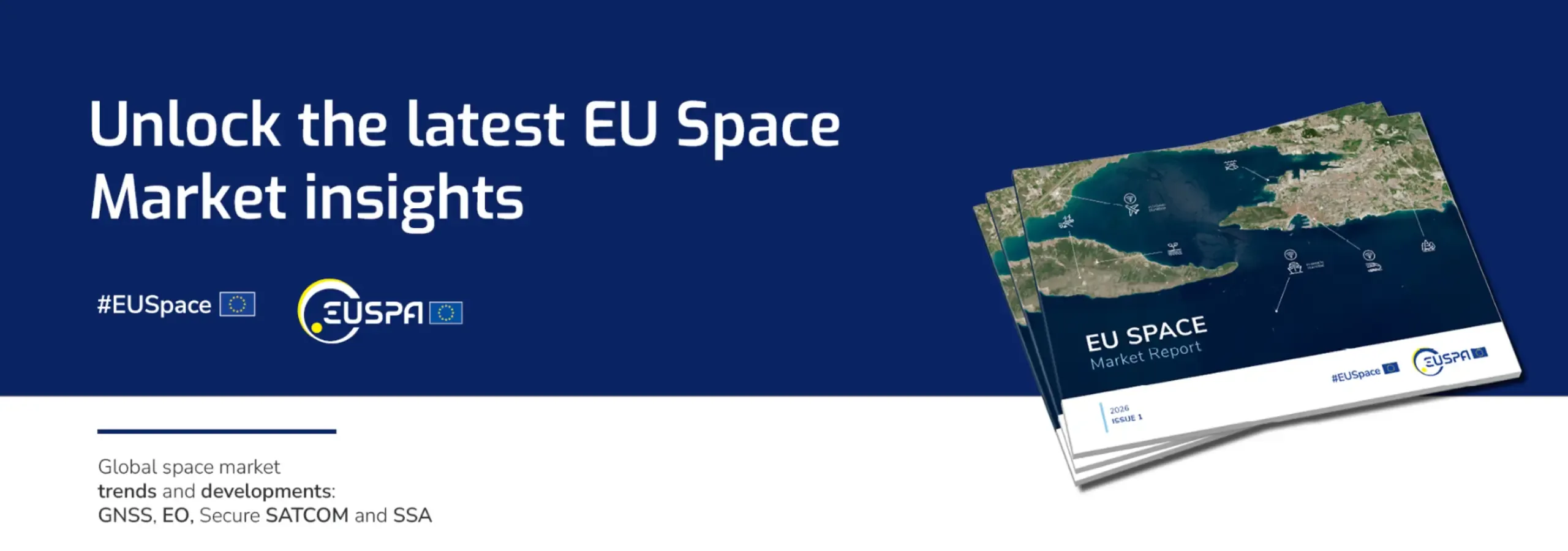
At the event, the European Union Agency for the Space Programme (EUSPA) released the new EU Space Market Report. Expanding beyond Earth Observation and GNSS to cover Secure Satellite Communications and Space Situational Awareness (SSA), the report reflects the growing convergence between the EU Space Programme's components. Its headline projections point to a sector in sustained expansion: GNSS-linked revenues are expected to rise from €300 billion in 2024 to €580 billion by 2034, while Earth Observation revenues are projected to more than double over the same period. The report also shows how space technologies are supporting sectors ranging from agriculture and aviation to urban development, climate monitoring, and disaster response.
Protecting people, heritage, and infrastructure
Across the event, speakers showed how space-based services are being used to support security and resilience, from civil protection, border management, maritime situation awareness, and climate monitoring to the preservation of cultural and natural heritage. In these areas, space data is no longer only a scientific resource, but is increasingly used to support operational monitoring, early warning, risk assessment, and decision-making.
Copernicus received particular attention as a source of actionable data for public authorities and operational users. The Copernicus World Heritage Hub was discussed during the Agora session “Using Copernicus Data”. The Hub brings together datasets and tools from different Copernicus services to support the monitoring, conservation, and management of cultural and natural heritage sites, helping bring Earth Observation data closer to this specific user community. The wider session then showed how Copernicus data can be applied in practice, with examples ranging from monitoring erosion, landslides, fire risk, heat stress, looting, and ground motion to supporting risk assessment and conservation planning for heritage sites.
Space safety was also featured in the discussion. Navigation, weather forecasting, emergency communications, and financial transactions are among the services Europeans rely on daily, many of which depend on satellite infrastructure operating safely and reliably in orbit. This year’s EU Space Days celebrated a decade of EU Space Surveillance and Tracking operations, a milestone which served as a reminder that Europe's space capabilities contribute not only to innovation and competitiveness, but also to resilience, security, and the protection of space infrastructure. As the number of objects in orbit increases, space is becoming more congested, with tens of thousands of catalogued debris objects and many more too small to track. Even a small piece of space debris can damage or destroy a satellite, while the rising number of operational satellites adds further complexity to space operations. In this context, EU Space Surveillance and Tracking was presented as a key capability for keeping satellites and space operations safe, combining Member State sensors, operational centres, and EUSPA’s front desk to provide collision avoidance, re-entry analysis, and fragmentation analysis services for European and international users.
Building for the future
The second day looked ahead to the structural investments and policy decisions which will determine Europe's position in the global space economy over the coming decade. As Rodrigo da Costa, Executive Director of EUSPA, put it: "Space is not tomorrow, space is today. Space is providing added value today, with a huge potential for growth".
Skills and workforce development emerged as one of the most widely acknowledged challenges facing the sector. Multiple speakers identified a gap between the ambitions of Europe's space agenda and the availability of trained professionals to support them. Across engineering, data science, regulatory affairs, and project management, the sector's workforce requirements were described as a critical constraint, one which no single institution or Member State can address alone.
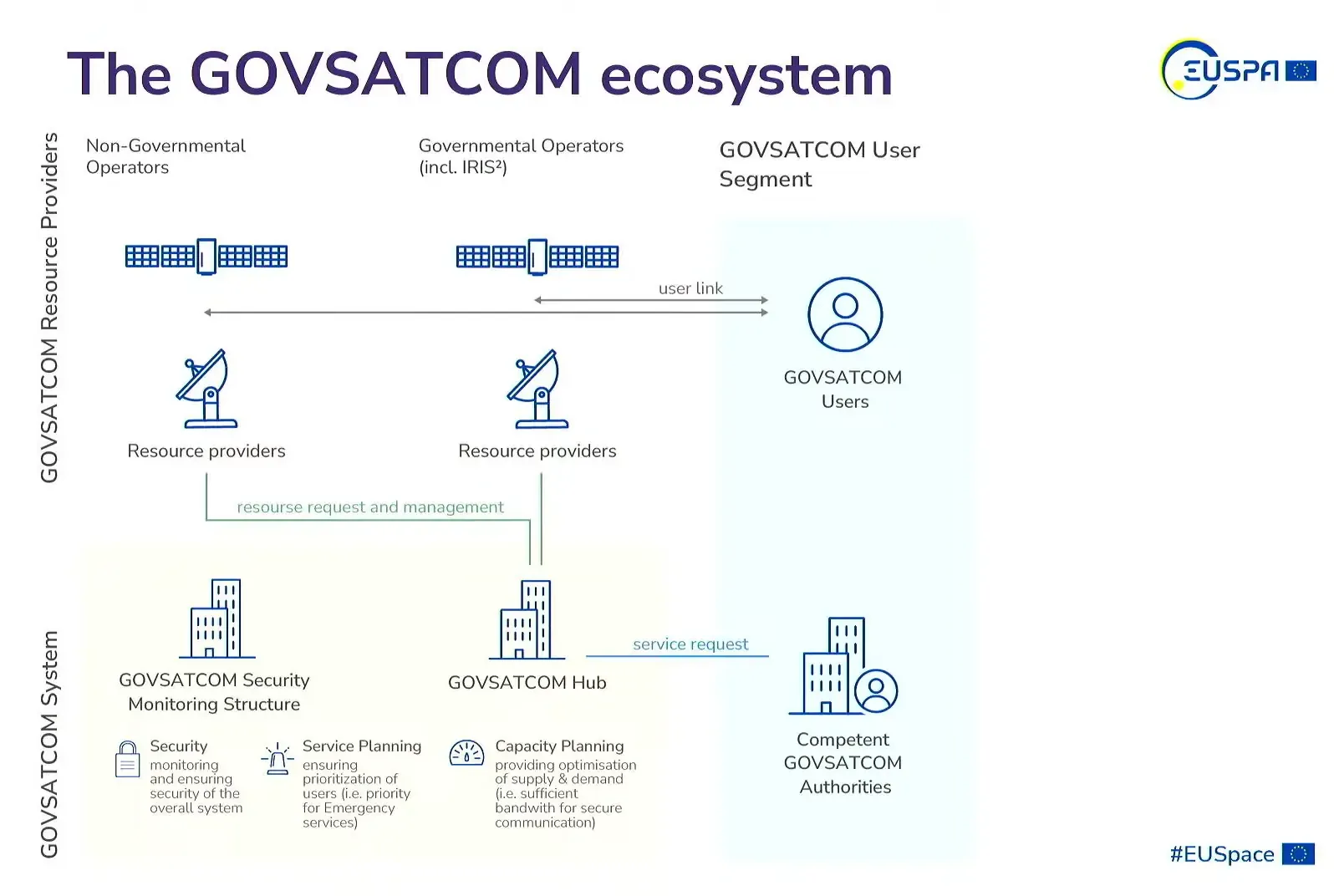
Space infrastructure as a long-term investment in EU sovereignty was another major theme of the day. GOVSATCOM was presented as a new capability within the EU Space Programme, designed to provide authorised governmental users with secure satellite communications during crises and other security-critical situations. Georgios Synnefakis, GOVSATCOM Programme Manager at EUSPA, put the underlying principle plainly: "GOVSATCOM is an implementation of the one for all, all for one motto". He added that the service is built on the principle of pooling and sharing satellite communication resources across Member States, so that no country faces a crisis without secure connectivity.
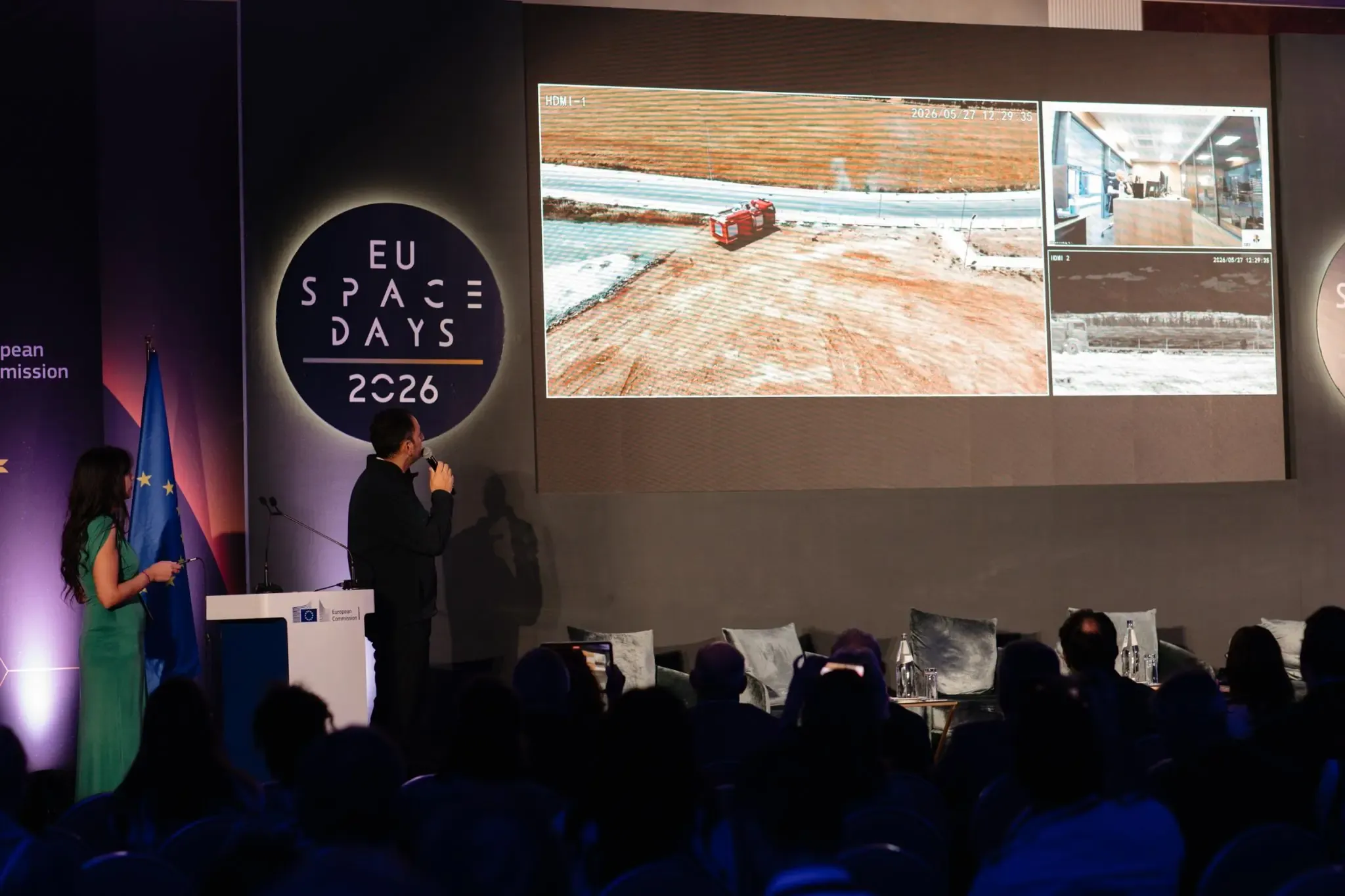
This principle was illustrated through a live demonstration based on a wildfire response scenario. In the scenario, a team from the First Special Forest Operations Unit of Greece deployed in Cyprus used an emergency response vehicle equipped with a satcom-on-the-move terminal connected to the Hellas Sat 3 satellite to map the affected area and assess the extent of the fire before deploying on site to carry out extinguishing operations. The demonstration showed how thermal camera footage, drone imagery, and push-to-talk communications from the field could be transmitted via satellite to the coordination centre in Athens, Greece, to the conference venue, and to other authorised users through a network stream. The exercise demonstrated how EU GOVSATCOM can support resilient communications and situational awareness when field teams need to share live operational information beyond the affected area.
The development of EU GOVSATCOM alongside the future IRIS² constellation was discussed in terms of both capability and strategic independence. Reducing Europe's reliance on non-European connectivity services was presented as a priority with direct implications for defence readiness, public service delivery, and economic resilience.
Continuing the conversation at the EU Space Networks General Assembly
Held alongside EU Space Days 2026, the General Assembly of the EU Space Networks gave members an opportunity to continue the discussions opened during the main event and reflect on the future direction of the Networks. It also connected these discussions to operational capabilities on the ground.
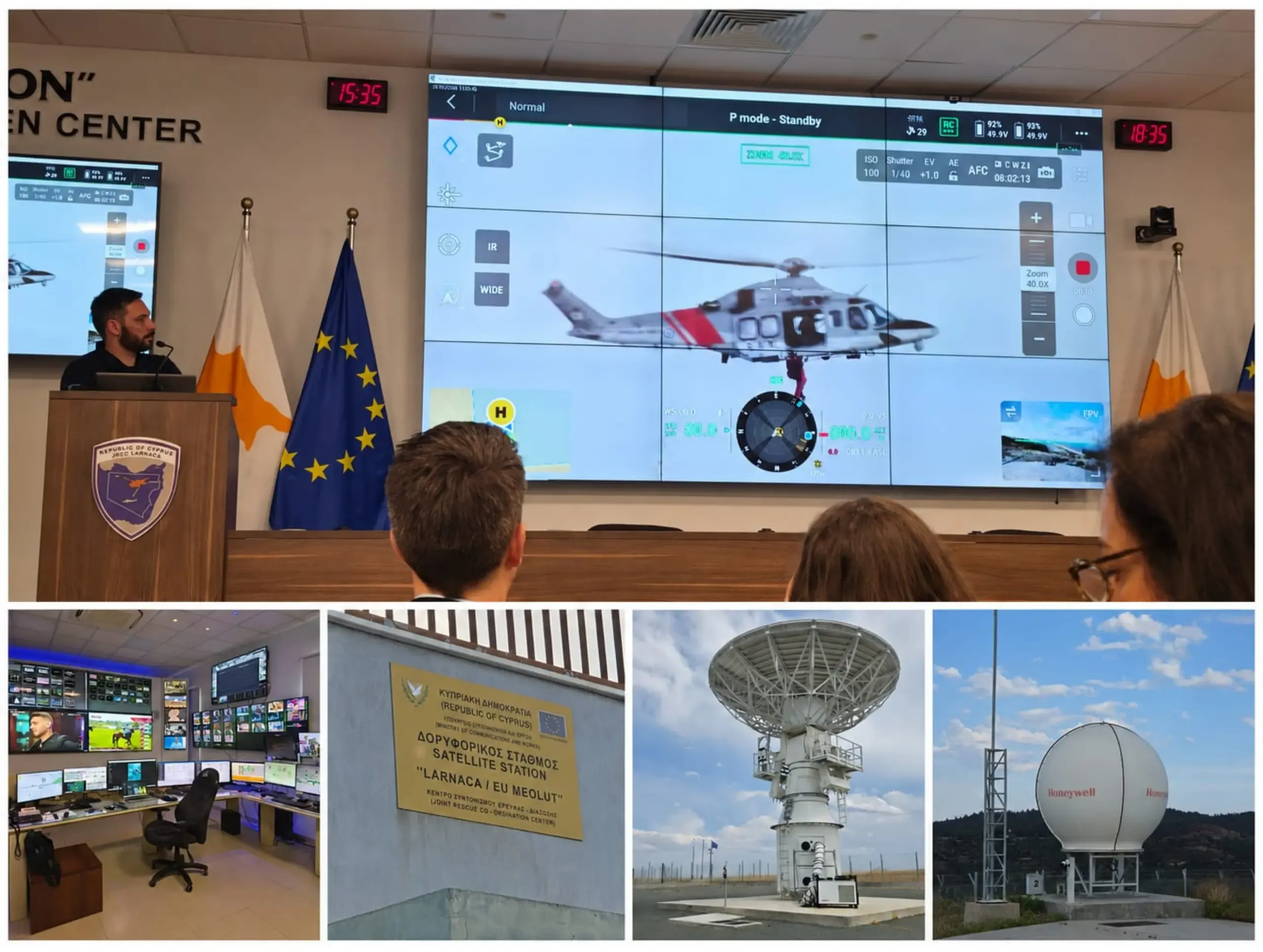
Members participated in a live demonstration of Search and Rescue (SAR) capabilities at the Joint Rescue Coordination Centre (JRCC) Larnaca, including a presentation of the centre, analysis of a SAR exercise, and a tour of the premises. Additional visits to the Eratosthenes EO satellite receiving station, the satellite ground infrastructure in Kofinou which supports the EU GOVSATCOM operations, and the Galileo MEOLUT, a specialised ground station which receives distress signals relayed from emergency beacons on boats, aircraft, or carried by hikers, gave participants a closer view of how European space infrastructure and services support crisis response, secure connectivity, operational coordination, and the delivery of space-enabled services across Europe.
Looking ahead
EU Space Days 2026 made clear that Europe’s space agenda is grounded in operational capabilities which support users every day. Throughout the event and its associated activities, speakers and demonstrations showed how EU Space services are being used for navigation, Earth Observation, secure connectivity, space safety, crisis response, cultural heritage protection, and operational decision-making.
The discussions also pointed to the next steps for Europe’s space sector. Skills, competitiveness, secure connectivity, quantum communications, space safety, and the proposed EU Space Act all featured as priorities for the years ahead. From Copernicus, Galileo, and EU SST to EU GOVSATCOM and IRIS², EU Space Days 2026 showcased a sector built around both existing services and emerging capabilities, with a growing focus on autonomy, resilience, and the evolving needs of users across Europe.