According to the World Drought Atlas, droughts directly affect up to 55 million people worldwide each year. Among the most costly and dangerous natural hazards, droughts affect access to drinking water, agriculture, energy, trade, and navigation. They also threaten ecosystems and the essential services they provide.
Results (253)
Since 2012, Copernicus has provided data and services to users worldwide, supporting advancements in Earth Observation (EO) and addressing environmental, emergency, and security challenges. As these challenges continue to evolve, this key component of the EU Space Programme must adapt to effectively address them.
Read the Newsletter #4 to meet the project and check out our current Activities and Actions!
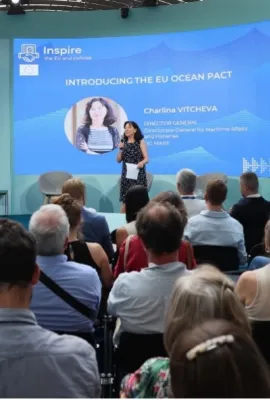
Oceans are essential ecosystems for our planet, yet they face threats from climate change, pollution, and other human-caused factors. The UN Decade of Ocean Science for Sustainable Development has outlined ten challenges to address in the coming years to ensure we manage our oceans and their resources sustainably—and Earth Observation (EO) data...
Frontex, the European Border and Coast Guard Agency, supports EU Member States and Schengen-associated countries in managing the EU’s external borders and combating cross-border crime. To this end, it has established the European Border Surveillance System (EUROSUR), which includes a range of services, such as the EUROSUR Fusion Services,...
GEO, the global Group on Earth Observations (EO) is an intergovernmental partnership for people, nature, and the planet hosted by the World Meteorological Organisation (WMO).
As winter approaches, the Northern Hemisphere faces growing challenges linked to climate change, with unpredictable snowfall patterns and shorter snow seasons impacting ecosystems, water resources, and industries. These shifts underscore the importance of tools like the Copernicus Land Monitoring Service (CLMS), which provides critical data on...
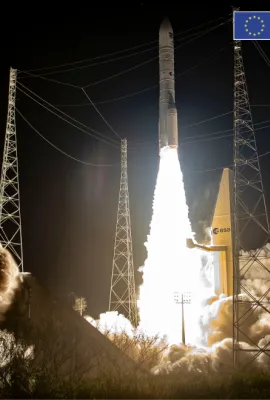
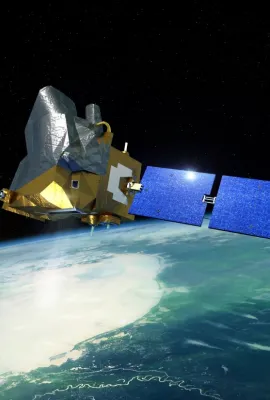
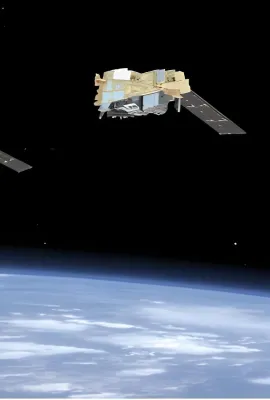
A brand-new Copernicus Sentinel satellite was successfully launched from the European Spaceport in French Guiana on board a Vega C rocket operated by Arianespace on December 5, 2024, at 18:20 local time or 22:20 CEST. The satellite sent its first signal to Earth at 00:12 CET, indicating it was successfully placed into orbit.
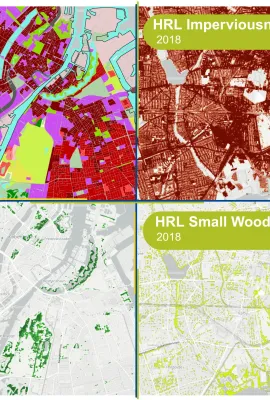
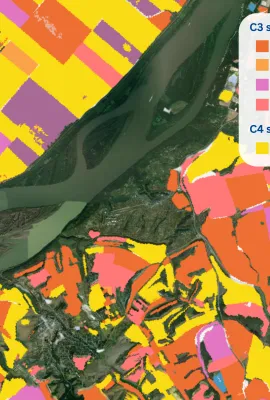
In just under half a century, the global population has doubled from four billion in 1975 to eight billion in 2022. This rapid growth has transformed the planet, driving the expansion of the built-up surface—houses, buildings, parking lots etc.—at an unprecedented rate. Yet, this development has been uneven, with some regions undergoing more...
In its 3rd meeting on 3 December 2024, the STM main group, co-chaired by DG DEFIS and EEAS, were debriefed on latest activities on STM subgroups followed up by a presentation of the consolidated replies shared by STM main group members to three follow-up STM questions.
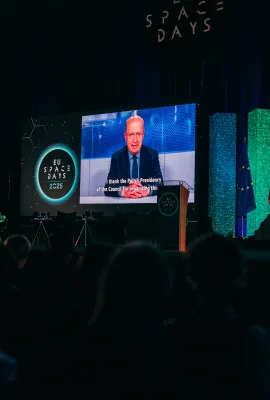
EU Space Days, formerly known as EU Space Week, is the Union's flagship event for space policy and the EU Space Programme.
On 27 November 2024, DG DEFIS and EEAS hosted the 3rd meeting of STM subgroup 1 on civilian and military STM requirements.
For the last decade, Copernicus Sentinel-1 has been delivering a wealth of radar data for a wide range of applications to users around the world. Building on the legacy of pioneering European satellite missions such as ERS and ENVISAT, Sentinel-1 has provided invaluable data serving diverse sectors and many types of users in a variety of...
Last year, with a prize pool of €1 million, CASSINI Challenges supported innovative commercial solutions using EU Space data from EGNOS, Galileo, and/or Copernicus. Dozens of companies and startups participated, presenting ideas, prototypes, or products, with tailored solutions focused on specific innovation areas.
The 12th National Seminar on Snow, held on the name day of "Pyry" (meaning "blizzard" in Finnish), took place at the Arctic Centre in Rovaniemi. The event included a session by FPCUP SNOWLOADS, reaching a wide audience and presenting key results.
Starting November 1st, 2024, an updated version of the snow load information system for Bavaria is available as a second German test version.
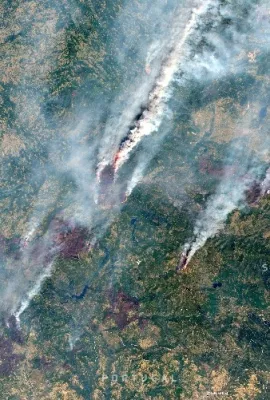
In 2023, over 90 million people worldwide were affected by disasters ranging from floods and wildfires to droughts. In a world where so many are impacted, there is a critical need for effective early warnings, monitoring efforts, and emergency response tools.
Cursos on-line que impartiremos el próximo mes de noviembre, dentro de la programación INTERCOONECTA de la AECID (Agencia Española de Cooperación Internacional para el Desarrollo), y en el contexto del programa FPCUP (Framework Partnership Agreement on Copernicus User Uptake) de la Comisión Europea.
We invite you to join a collaborative effort to gather data on national-level building characteristics to improve urban climate models.
Showing 61-80 of 253 results