
OBSERVER: Copernicus— Enhancing Life on Earth by Improving Quality of Life and Contributing to a Sustainable Future
Copernicus, the European Union's flagship Earth Observation programme, has been instrumental in providing essential insights which have been used to address a range of societal challenges.
Making a tangible impact on citizens and the planet
Every single day, Copernicus generates several terabytes of Earth Observation (EO) open data. This data is used to meticulously track and analyse almost every aspect of the Earth's surface. It provides essential insights into atmospheric composition, sea level height, vegetation life cycles, sea and land surface temperatures and much more. By providing accurate and reliable data on the impacts of climate change, Copernicus is playing a critical role in supporting global efforts to mitigate and adapt to these effects. It will becoming a tool for monitoring greenhouse gas emissions for the verification of the commitments stemming from the Paris Agreement on Climate Change, developing innovative tools to evaluate progress towards achieving the United Nations Sustainable Development Goals (SDGs), and contributing to the transition towards a more sustainable, low-carbon economy in support of the EU Green Deal. Copernicus is a powerful source for assessing the state of the environment and addressing the challenges our planet faces.
Securing our future meals
Copernicus data, services and products provide a strong foundation for the implementation of effective food security policies and practices. Since the early days of EO, low spatial resolution satellite-based vegetation health indicators have been used broadly for agricultural monitoring and drought detection. In particular, farmers benefit from up-to-date information on soil moisture, crop growth and weather conditions. Today, the Copernicus Sentinel-2 satellites provide state-of-the-art high-resolution free data which have considerably improved agricultural monitoring and crop management capabilities. Sentinel-2 satellites observe the Earth’s entire surface every 5 days at a resolution of 10 metres, making terabytes of new open data available every day. The Copernicus satellite image below, obtained by comparing the NDVI (Normalized Difference Vegetation Index) derived from Copernicus Sentinel-2 images of March and April 2020, illustrates different stages of plant development in Puglia, Italy. Healthy and growing crops appear in blue tones and crops that grow more slowly appear in green tones. This information has enabled farmers to optimise their production, reduce water usage and improve their yield. Moreover, Copernicus has provided businesses with reliable information on the environment and climate, enabling more effective decision-making on issues related to sustainability and environmental impact.
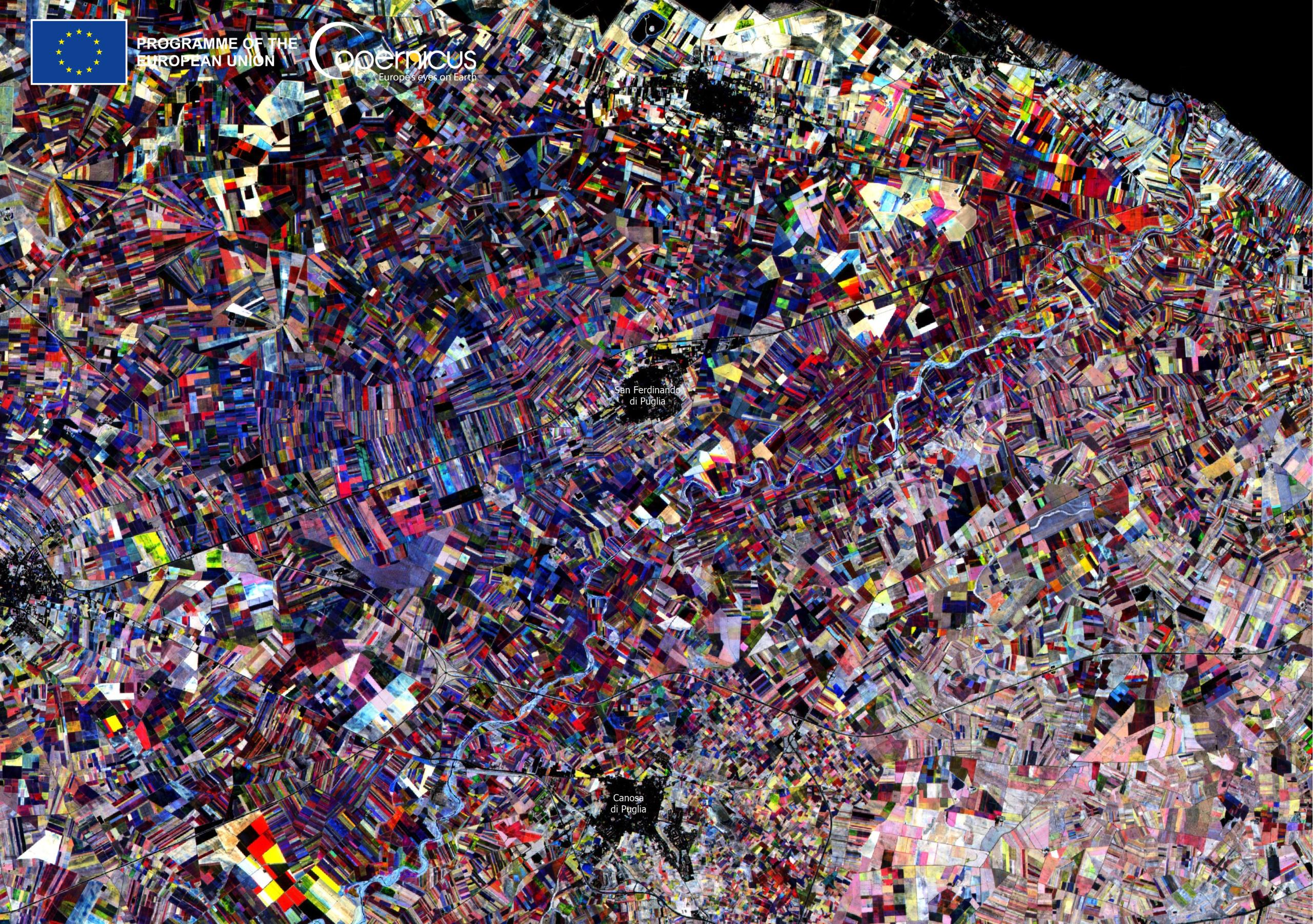
Credit: European Union, Copernicus Sentinel-2 imagery
Helping people manage allergy symptoms and stay safe in the summer sun
With a quarter of Europeans affected by pollen allergies, the Copernicus Atmosphere Monitoring Service (CAMS) plays a key role in managing the symptoms of hay fever and allergies across Europe. CAMS provides essential data to support doctors and their patients in efficiently managing their symptoms. The service works with the European Aeroallergen Network (EAN) to monitor and forecast allergens such as birch, olive, grass, ragweed and alder pollen which are the major causes of allergic rhinitis or hay fever. Using in situ data supplied by over 600 pollen monitoring ground stations spread across Europe, CAMS provides four-day forecasts on pollen concentration levels for the five most common types of allergenic pollen.

On a smaller scale, the Personalised Allergy Symptoms Forecasting System (PASYFO) allows mobile phone users in Lithuania and Latvia to access tailored symptom forecasts.

Credit: European Union, Copernicus Atmosphere Monitoring Service
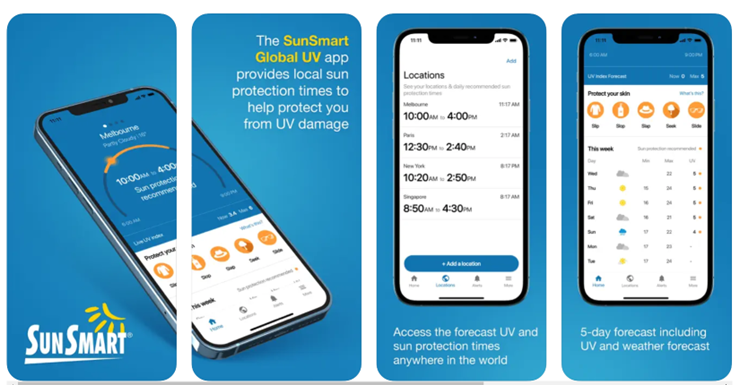
Moreover, thanks to CAMS, people can access information on UV radiation levels and take appropriate precautions to prevent overexposure. For example, tourists visiting beaches can check the UV index forecast to plan their activities and apply appropriate sunscreen at appropriate times. The SunSmart App, launched in collaboration between the WMO, WHO, UNEP and ILO, uses the data and information produced by CAMS to generate five-day global forecasts by location. The app enables users to search for this information and highlights specific time periods when sun protection is recommended. The ultimate goal of the app is to assist people worldwide in reducing the incidence of skin cancer and UV-related eye damage.
Increasing fisheries’ profitability and supporting sustainable practices
Copernicus plays a crucial role in supporting European fishers with its Copernicus Marine Service (CMEMS). By providing real-time data on oceanographic conditions, such as water temperature, currents and wind patterns, CMEMS helps fishers plan their fishing trips to maximise their catch and the profitability of their operations. In addition to helping them identify the most productive areas, CMEMS’ advanced mapping and data visualisation tools also helps fishers better adjust their practices and avoid overfishing in areas where fish stocks may be declining.

The service has already helped fishers achieve impressive catches, such as a French skipper who used the service to locate a patch of warm water, leading to a catch of 13 tonnes of tuna. Furthermore, the Spanish company Satlink uses Copernicus data to provide their Tuna Electronic Monitoring System which tracks fishing vessels and monitors their activities to ensure compliance with regulations and sustainable fishing practices. With concerns about overfishing and environmental damage on the rise, Copernicus is an invaluable tool for promoting responsible fishing and supporting the livelihoods of fishers across Europe.
Saving lives and responding to natural disasters
From floods and fires to landslides and other natural hazards, the Copernicus Emergency Management Service (CEMS) is key source of information during times of crisis. This vital service provides early warning information and geodata in a matter of hours to first responders and emergency services, allowing them to assess the situation and respond effectively. For example, CEMS provides essential data on flood extent, fire hotspots and the impact of the disaster on the affected population and infrastructure, enabling authorities to allocate resources to the areas that need them the most. With CEMS, emergency services can quickly access the information they need to make informed decisions that mitigate the impact of natural disasters and protect people's lives and livelihoods. For example, during the 2021 volcanic eruption on the island of La Palma, Spain, CEMS provided support for the post-disaster assessment efforts. Concretely, the CEMS Rapid Mapping Team provided information to the authorities managing the emergency response on the extent of the lava flows and the damage sustained by buildings and other assets (built-up, roads etc.).

Credit: European Union, Copernicus Emergency Management Service
What does the future hold for Copernicus?
Copernicus is not just a programme on paper, but a real-life changer that makes a concrete impact on people's lives. With people relying on its data for health purposes, the most influential news media publications using its data and information to illustrate their articles globally and businesses developing products that serve communities across various sectors, continued support for Copernicus and close partnership with its international stakeholders will be essential in ensuring its success and impact in the years to come.
As Copernicus enters its next phase of growth and development, it is poised to play an even more significant role in shaping the future of the European Union and the world. One of the key focus areas is climate change, which has become an increasingly urgent global issue. Copernicus plays a key role in monitoring and assessing the impact of climate change on the planet, and in developing solutions to mitigate its effects. In addition to climate change, Copernicus will continue to support a wide range of applications in various sectors, including disaster management, agriculture and security. As technology progresses, it may also explore new ways of leveraging emerging technologies, such as artificial intelligence and machine learning, to enhance its capabilities and expand its reach.