
OBSERVER: The Digital Space Ecosystem - A platform connecting Europe’s space community
Europe’s space strategy does not only rely on satellites and launch systems, but also on the digital infrastructures which connect people, ideas, and capabilities across the continent. As Europe’s space landscape grows both in scale and in complexity, so does the need for an accessible way to join and participate. The Digital Space Ecosystem responds to this need by providing a collaborative online platform that showcases Europe’s space actors, initiatives, products and services, and opportunities all in one place. In this Observer, we explore how the platform works, what it provides to different communities, and how it supports collaboration across the European space ecosystem.
What is the Digital Space Ecosystem?
As Europe’s space sector continues to diversify and develop, collaboration increasingly depends on the ability of actors to find one another, exchange information, and identify opportunities easily and efficiently. The Digital Space Ecosystem is an online platform developed by the European Commission to support this interaction by bringing together public authorities, agencies, industry, research organisations, academia, and professionals (investors, consultants, etc.) active across the European space landscape. Rather than replacing existing programme websites or institutional portals, the platform focuses on enabling connections between people, organisations, their products and services, and activities which shape Europe’s space ecosystem.
At its core, the Digital Space Ecosystem functions as a single digital entry point for European space actors across the European Union, the European Economic Area, and Horizon Europe associated countries. Its primary purpose is to support collaboration, knowledge exchange, provide digital workspaces for dedicated communities, and create visibility across this diverse community.
Core functionalities
Hubs
Domain-focused Hubs form the backbone of the platform and serve as the starting point for user interaction. Each hub focuses on a specific topic or area of interest, creating a dedicated digital space where relevant actors can gather, exchange information, and collaborate.
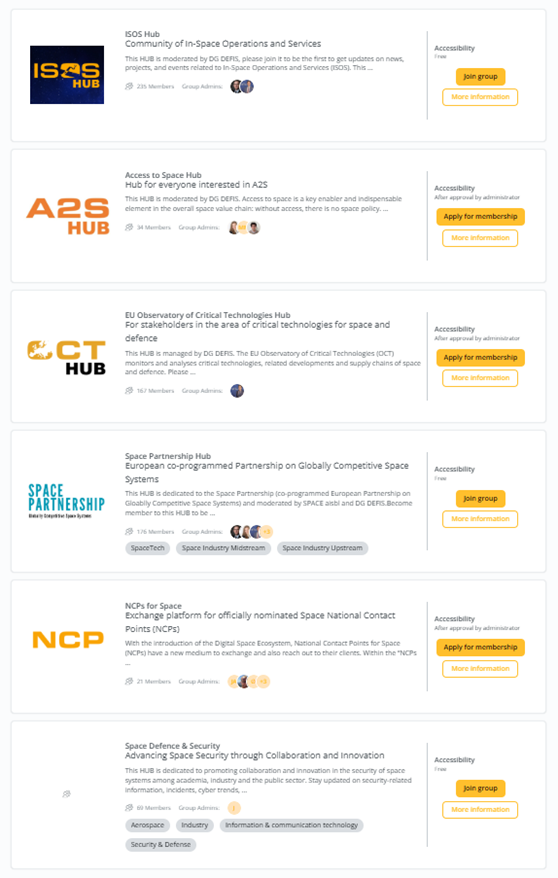
Within hubs (digital workspaces), members can participate in topic-focused discussions, share documents and updates, as well as access technology and document vaults (depending on the hub configuration) that support ongoing work. Active community management helps structure interactions and ensures that hubs remain active and relevant to their members. By organising collaboration around shared interests, hubs help users navigate the platform more effectively and identify where their expertise or needs align with others. In addition, hubs can complement dedicated EU Space initiative pages by serving as focal points for updates related to specific topics, such as in-space operations and services (ISOS). Hubs can be created for specific topics, initiatives or temporary for working groups.
Community, organisations, and professional profiles
Beyond hubs, the platform also includes a dedicated community space which allows individual professionals to interact directly. This includes a catalogue of validated members, direct messaging functionality, and the ability to arrange one-to-one meetings. These features support informal exchanges alongside more structured collaboration, helping users build professional connections across the European space sector.
Organisations also play a central role on the platform. Startups, companies, public institutions, and research facilities can create pages outlining their capabilities, areas of activity, and interests. These pages make it easier for potential partners to identify relevant expertise. The platform therefore supports interaction at multiple levels of the ecosystem by bringing individual and organisational profiles together in one environment.
The marketplace and access to capabilities
The marketplace brings together several closely linked functionalities which support practical collaboration. It serves as a central access point for the community’s products and services, testing and validation facilities, and member-driven offers and requests.
Products and services are presented through an interactive catalogue, supported by factsheets which describe key features, application areas, and relevant capabilities. Testing and validation facilities are also visible through the marketplace, helping organisations identify where technologies can be assessed or demonstrated. In parallel, a requests board allows members to post needs or proposed solutions, supporting more targeted collaboration.
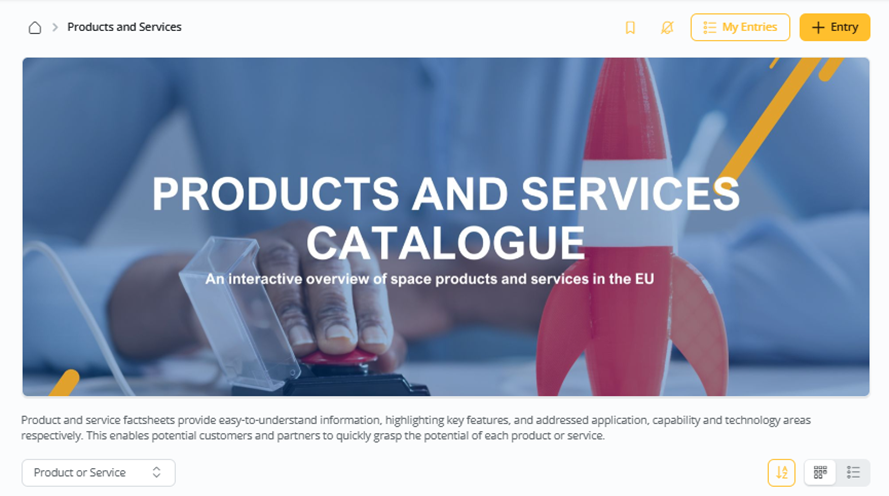
Automatic matchmaking functions can link these elements by connecting offers and requests based on organisation profile settings. This helps users identify potential partners more efficiently and supports early-stage cooperation without requiring extensive manual searches.
Opportunities, projects, and events
The platform also consolidates information on funding opportunities and ongoing EU space activities. The EU Funding opportunities section provides an overview of relevant funding calls and programmes, such as the various funding instruments accessible through CASSINI. Matchmaking tools linked to procurement and grants opportunities help users identify potential partners at European, national, or regional levels.
Space projects are presented through individual project cards which highlight past and ongoing initiatives. These cards enable partner exploration and allow outcomes of projects to be shared more widely, including through social media content linked to the platform.
The platform also helps to simplify event management through tools which support the organisation of workshops, webinars, and conferences. Digital meeting rooms and networking functions allow participants to exchange knowledge and connect before, during, and after events.
Matchmaking, partnerships, and collaboration tools
Matchmaking functions are embedded across the platform to support partnership building. Through the ecosystem tab, users can access searchable lists of member organisations and individuals, create calls for partners, and explore collaboration opportunities linked to funding opportunities.
Matchmaking is based on user and organisation profile settings, enabling needs-based partner identification among hundreds of registered entities. Hubs further support collaboration by allowing users to connect with relevant organisations within specific topic areas as well as work together and exchange news in closed digital workspaces. Together, these tools support consortia building in a way that reflects how partnerships form in practice.
Who is the platform for
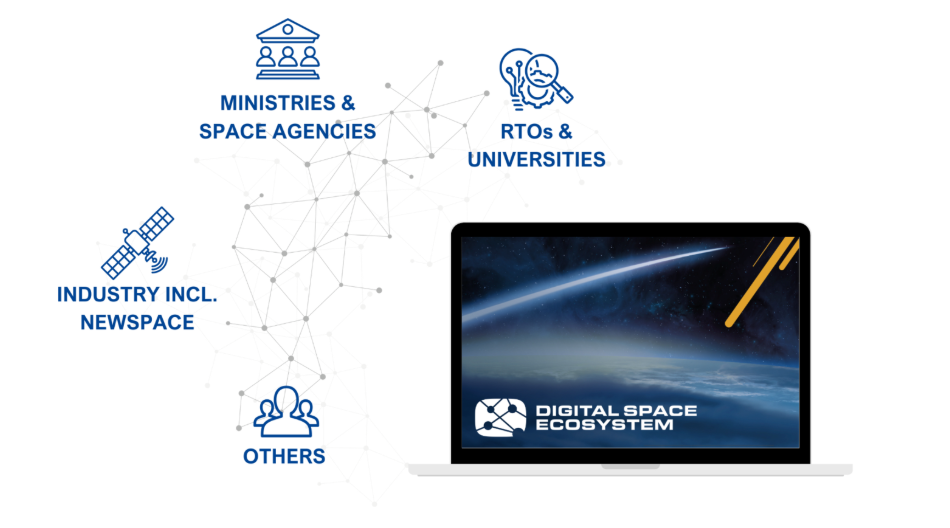
The Digital Space Ecosystem is designed to serve the needs of a broad range of stakeholders. Industry actors, including NewSpace companies, can use the platform for partner discovery, market visibility, and access to funding and collaboration opportunities. Ministries and space agencies benefit from improved visibility of industry capabilities, support for national ecosystems development, and alignment with policy and investment activities.
Research and Technology Organisations and universities can use the platform to support research-to-market pathways and identify industrial partners. Other actors, including innovators in parallel domains, investors, space lawyers, and accelerators, can also engage through cross-sector interaction enabled by and through the platform.
A shared digital space shaped by its users
The Digital Space Ecosystem is designed to evolve with its community. Its content, relevance, and usefulness will depend on active participation from users across Europe’s space sector. As more actors engage, the platform will strengthen its role as a shared digital space for Europe’s space community.
Interested organisations and individuals are invited to join, contribute, and take part in shaping how collaboration develops across the European space ecosystem.