Zeebrugge, Belgium
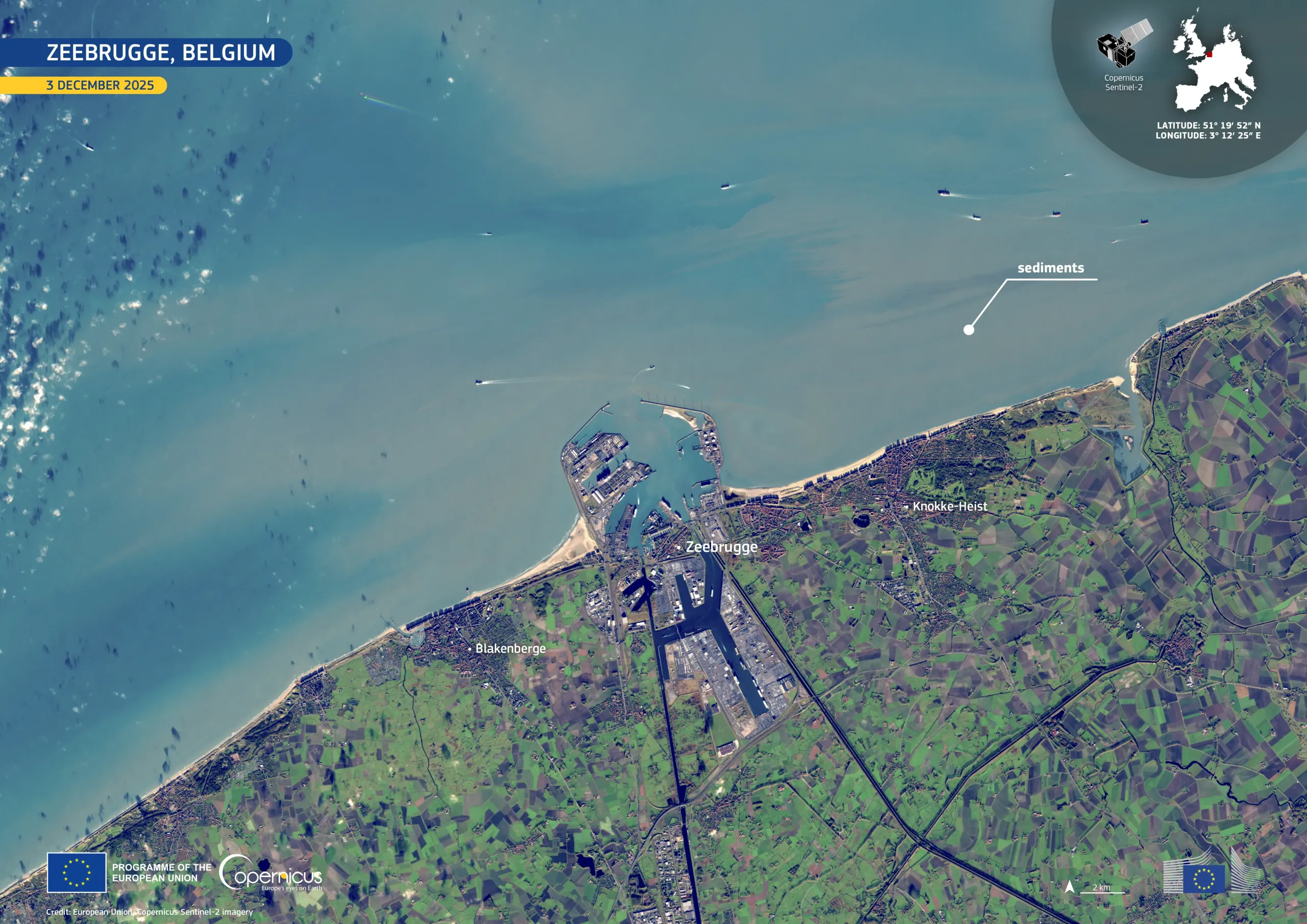
On 3 December 2025, waters along Belgium’s North Sea coast showed clear colour contrasts, revealing active sediment dynamics driven by tidal currents and shallow bathymetry. Such conditions favour the frequent resuspension of sediments, leading to spatially variable turbidity along the coast.
This image, acquired on 3 December 2025 by one of the Copernicus Sentinel-2 satellites, shows suspended sediments distributed along the shoreline and around the Port of Zeebrugge. The lighter, turbid plumes visible in the water mark areas of elevated sediment concentrations shaped by tidal circulation, while port infrastructure and maritime traffic locally modify water movement and sediment dispersal patterns.
Open data from the Copernicus Sentinel-2 satellites supports regular monitoring of coastal sediment dynamics and water quality. These observations provide valuable information for port management and environmental monitoring in Europe’s intensively used coastal zones.