
Near-Earth Objects (NEOs) are comets and asteroids (space rocks) that are approaching the Earth or are in an orbit close to Earth. They played a role in the evolution of our planet, and, even today, enter the Earth’s atmosphere regularly.
The possible risks of large space rocks entering the Earth’s atmosphere have led to EU efforts to track and study NEOs. These efforts will help to better understand the risks involved with NEOs. This is useful for potential future NEO missions should a deflection procedure be required to reduce the likelihood of a collision with Earth.
Near-Earth Objects (NEO) subcomponent
NEO is a subcomponent of the Space Situational Awareness (SSA) component of the EU Space Programme. It coordinates and improves European capabilities and activities related to the monitoring of space rocks whose orbits approach or cross the Earth's orbit. It supports activities that:
- map Member States' capabilities to detect and monitor NEOs
- promote networking among Member States' facilities and research centres through a yearly conference
- develop a European catalogue of physical properties of NEOs
- study potential missions for a rapid response service
NEO activities
Space Situational Awareness (SSA) — Europe's comprehensive programme monitoring space hazards through three pillars: tracking orbital objects (EU SST), space weather monitoring (SWE), and near-Earth object detection (NEO) to protect assets in space and on Earth.
Space Situational Awareness (SSA) provides accurate information on the space environment, ensuring uninterrupted space services for EU citizens. Essential for strategic autonomy, SSA takes a holistic approach to monitor main space hazards: collisions, fragmentation, re-entry, space weather, and near-Earth objects.
Other Space Situational Awareness subcomponents
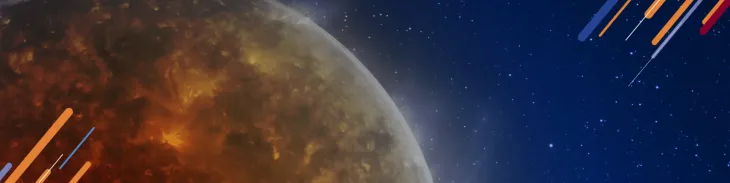
Geomagnetic storms and solar flares can harm satellite electronics in space and impact electricity grids on Earth. Understanding the effects of space weather is key to mitigate the risks associated with them.
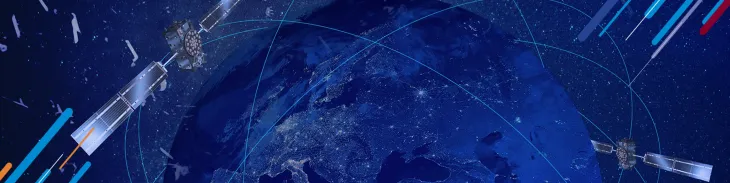
The SST subcomponent protects satellites from collisions in space, monitors their re-entries into Earth’s atmosphere, and assesses in-orbit fragmentations